
ATR6600Pro 1064nm: Handheld Raman for Rapid Drug Detection
2024-11-08
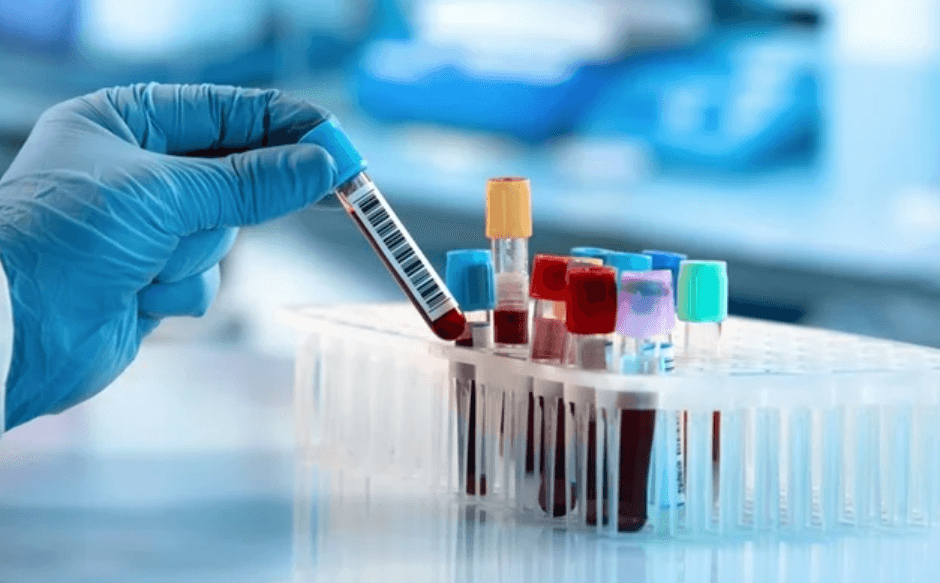
According to the authoritative release by the China National Narcotics Control Commission, drugs refer to narcotics and psychotropic substances regulated by the state that can cause addiction. Drugs are categorized into traditional drugs, synthetic drugs, and new psychoactive substances. Currently, with the continuous emergence of various drugs, they pose serious threats to people's lives, health, and social stability. The state and public security departments have been increasing their efforts and commitment to anti-drug work. One of the urgent needs in drug enforcement is how public security officers can quickly identify whether a substance is a drug and determine its type during inspections.
Natural Drugs
Natural drugs are substances extracted directly from plants that produce drugs, such as opium, heroin, and cannabis.
Synthetic Drugs
Synthetic drugs are artificially created through chemical synthesis, such as methamphetamine (crystal meth), ecstasy, yaba, and ketamine (K powder).
New Psychoactive Substances (NPS)
New psychoactive substances include "fun water," "fairy water," and "popping candy."
Principle of Raman Scattering
When light is shone on a material, a portion of the light gets scattered. During this process, photons collide with the molecules of the material, either losing or gaining energy. According to Planck’s equation E=hv=hc/λ (where h is Planck’s constant), a change in photon energy E results in a change in frequency v, which leads to scattered light with a frequency different from the incident light. This phenomenon is known as Raman scattering.
- Different molecular bonds produce distinct characteristic spectra, which can be used to identify substances.
- The intensity of Raman scattered light is proportional to the concentration of molecules, allowing for quantitative measurements.
- Raman spectra serve as the "fingerprint" of a substance, making its compositional analysis highly accurate.
- Detection can be performed through packaging.
- Only weak laser irradiation is used, ensuring no damage to the sample.
Advantages of Raman Spectroscopy
Traditional methods for drug detection primarily rely on reagent-based tests, colloidal gold methods, chromatography, and mass spectrometry.
1. Reagent and Colloidal Gold Methods
- These methods can only detect a limited number of drug types at a time, which is insufficient given the rapid emergence of new drugs.
- Additionally, the need for sampling and contact-based detection can lead to several issues, such as contamination or mishandling.
2. Chromatography and Mass Spectrometry
- These techniques are effective for identifying drug types but are expensive, not portable, and require time for analysis, making them less suitable for rapid drug detection.
3. Raman Spectroscopy
- Raman spectroscopy uses laser light to produce a Raman scattering spectrum from the sample. Since different substances have unique molecular structures, they produce distinct patterns on a Raman spectrum.
- Drugs are typically composed of various chemical substances, allowing Raman spectroscopy to determine the composition, type, and concentration of drugs.
Unique Advantages of Raman Spectroscopy
Due to its non-contact nature, fast results, and high resolution, Raman spectroscopy holds a unique advantage in the rapid detection of drugs.

Introduction to the ATR6600 Pro
Optosky is a leading company in Raman spectroscopy in China, having developed multiple national standards based on Raman technology. The ATR6600 Pro is a groundbreaking product launched by the company, building on 20 years of experience in Raman spectroscopy research. It offers the following advantages:
1. A newly designed high-throughput optical path structure and signal processing technology, making it the fastest detection device in the world.
2. It is the thinnest Raman spectrometer globally, weighing less than 950 grams, making it extremely portable.
3. Drug detection speed is four times faster than conventional handheld Raman spectrometers.
4. A library of over 1,000 drug spectra.
5. Equipped with a 1064 nm light source, effectively suppressing fluorescence interference, enabling the accurate detection of drugs like heroin, yaba, and ivory products.
Product Recommendation | Process Monitoring and Quantitative Measurements with Raman Spectroscopy
Raman Spectroscopy in Chemical Identification
Related Article

Discover the Optosky ATR1600 ultra-micro Raman spectrometer—a 210g pocket-sized device for on-site, non-destructive gemstone identification. With a 20,000+ substance spectral library, dedicated jewelry edition, Bluetooth smartphone APP, and PDF reporting, it enables rapid screening of natural, synthetic, and treated gemstones at exhibitions, pawnshops, and markets.
ATR1600: The 210g Pocket Raman Gem Identifier
Explore how micro-confocal Raman spectroscopy, combined with SERS, enables rapid, non-destructive, molecular-level screening of veterinary drug residues such as malachite green, enrofloxacin, and chloramphenicol in aquatic products. Learn how Optosky’s ATR8100 supports microscopic localization, multi-wavelength excitation, mapping imaging, and portable on-site testing—while clarifying its role alongside LC-MS/MS confirmation.
Applications | Micro-Raman Drug Residue Screening in Seafood
Discover how Raman spectroscopy enables label‑free cancer diagnosis by reading molecular fingerprints of cells. From key Raman peaks and AI‑powered classification to the ATR8800 confocal platform, this article explores the frontiers, challenges, and clinical potential of Raman‑based cancer detection.
How Raman Spectroscopy Sees Through Cancer Cells: Label‑Free Cancer Diagnosis
Optosky successfully delivered and commissioned multiple ATP9100 field spectroradiometers at a university in Northwest China. The project included installation, performance verification, and on‑site training – supporting agricultural remote sensing, ecological monitoring, and geological surveys while building a standardized spectral research platform.
Case Study | ATP9100 Acceptance at Northwest University