Analysis of Natural Diamonds by Fourier Transform Infrared Spectroscopy
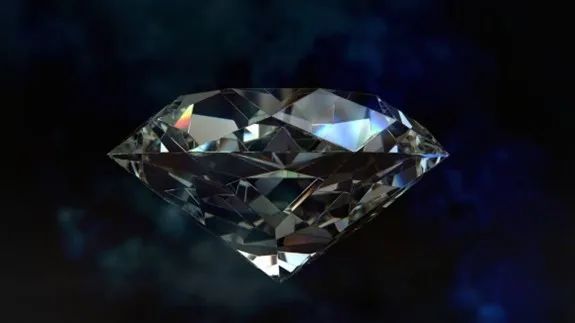
Fourier transform infrared spectroscopy is one of the most important analytical methods in the field of mineralogy. It is also the preferred method for diamond analysis, such as diamond identification and classification. Diamonds are not only the hardest gemstones on earth, they are also the most expensive. Unfortunately, it is this value that makes it the subject of fraud.
Imitation or synthetic?
When it comes to “fake” diamonds, we must distinguish between diamonds synthesized from carbon materials and imitations made from non-carbon materials. This article mainly discusses the latter.
Perhaps the most well-known imitations are cubic zirconia and moissanite. Although at first glance they look very similar to diamonds, experts can quickly identify them by their luster or color.
If you want to be 100% sure, then Fourier transform infrared spectroscopy is a good choice. The principle is that the chemical composition of imitations is essentially different from that of real diamonds.
Diamond analysis using Fourier Transform Infrared Spectroscopy
Zirconia (ZrO2) can be identified simply by the so-called "thermal conduction test", but the same cannot be said for moissanite (SiC), whose thermal properties are very similar to diamonds. Ironically, since real diamonds are natural products, they have certain thermal and electrical conductivity, therefore, false positives sometimes occur.
Therefore, thermal conductivity testing is not always the best choice. Other methods used to reveal the true appearance of imitations are very complex and often rely on experienced gemologists to identify them.
At this time, Fourier transform infrared spectroscopy comes into play again! Since the chemical composition of imitations is different from that of real diamonds, they can be easily identified using Fourier transform infrared spectroscopy. Best of all, you don’t have to be an expert to identify it! The following figure shows the different spectra of the imitation and the genuine product. The difference is very obvious.
FITR spectra of diamond, cubic zirconia and moissanite.
The results are clear. Even a layman can easily distinguish the FTIR spectra of diamonds and imitations. But what about synthetic diamonds? What about melee diamonds embedded in jewelry?
Even they can be identified by Fourier transform infrared spectroscopy by providing insight into their chemical composition.
Talk about the application of near-infrared spectroscopy technology in the petrochemical field
FT-IR Microinfrared Spectroscopy To Detect Particles And Impurities In Liquid Drugs
Related Article