Basic Principles and Applications of Infrared Transmission
2024-01-10
Basic principles of infrared transmission
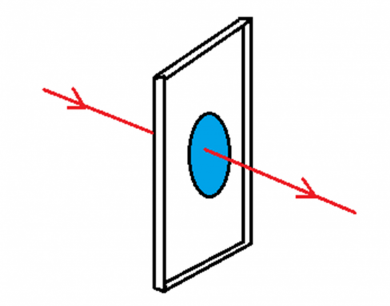
When an infrared beam strikes a sample surface, the incident beam interacts with the sample in a variety of ways. As shown in Figure 1, first, the light is specularly reflected on the surface of the sample and does not pass through the sample, which is called reflected light; second, the light enters the interior of the sample particles and is absorbed by the sample; third, the light is changed by the sample when passing through the sample. In the direction of propagation, scattering occurs; fourth, the light irradiates the sample to excite the sample to produce fluorescence; fifth, the light does not interact with the sample and directly passes through the sample. The infrared transmission spectrum reflects the sample's ability to transmit different infrared light bands. To obtain the infrared transmission spectrum, you need to first obtain the original spectral information of the infrared light (background spectrum), and then obtain the spectrum of the infrared light transmitted through the sample, and combine the latter with By dividing the former, the infrared transmission spectrum of the sample can be obtained (as shown in Figure 2). The transmittance T on the ordinate of the transmission spectrum is generally expressed in percentage (%), representing the outgoing light intensity (I) and the incident light intensity (I0) Ratio.
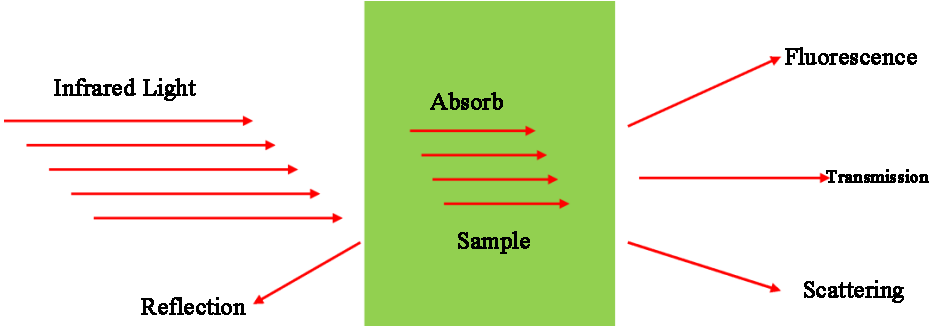
Figure 1
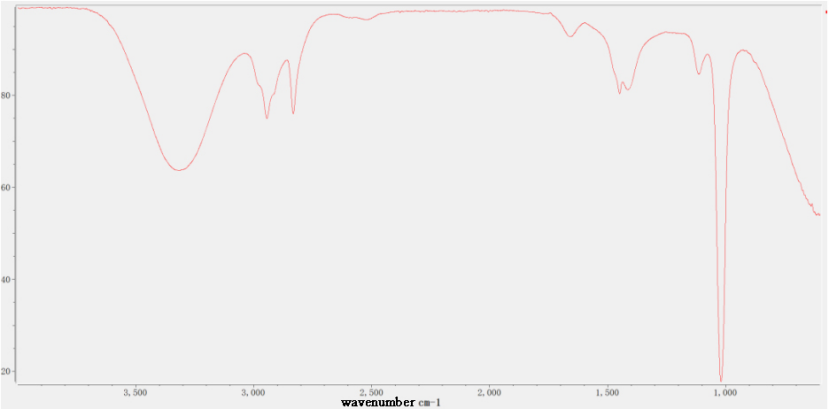
Figure 2
When using transmission accessories, in addition to testing the transmission spectrum, we often also test the absorption spectrum. The ordinate is the absorbance A. The absorbance satisfies the Lambert-Beer law A=Kbc. K is the molar absorption coefficient, which is related to the absorption The properties of the substance are related to the wavelength λ of the incident light; b is the thickness of the absorption layer; c is the concentration of the light-absorbing substance. The relationship between transmittance and absorbance is A=-lgT=-lg(I/I0).
Common transmission accessories
Conventional transmission accessories (Figure 3). This accessory is often used for solid powder testing. Generally, the sample is ground together with potassium bromide powder, and then the sample is pressed into a transparent solid tablet using a tablet press, and then tested. Testing using transmission accessories requires the use of a tablet press and mold, mortar, and dried potassium bromide. It also requires the use of samples of appropriate concentration and the tablets are required to be transparent. Sample preparation requires a long time, so now conventional tests often Use ATR attachment for testing. For samples that need to be tested for absolute transmission (such as silicon wafers), parallel light is required for testing. Optosky ATP8900 provides a parallel light sample compartment and transmission accessories with different sized apertures to facilitate user testing.
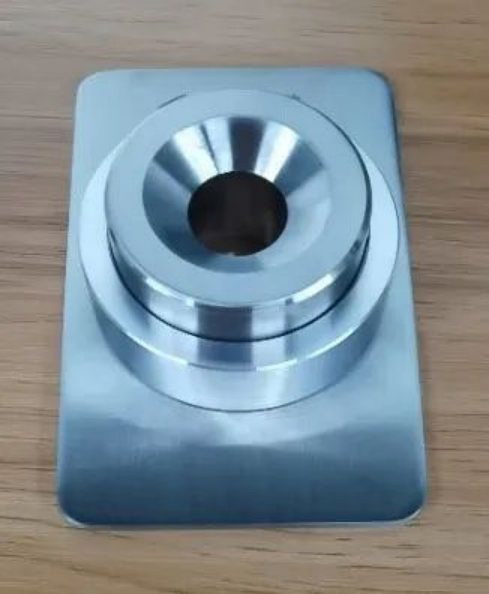
Figure 3
Liquid transmission accessories (Figure 4). The transmission test of liquid samples generally uses liquid coating or liquid pool for testing. For different liquid samples, different types of liquid pools need to be selected. Figure 4 shows a sealed liquid pool with a fixed 100-micron optical path zinc selenide window and a 100-mm optical path high-purity PVDF liquid pool.
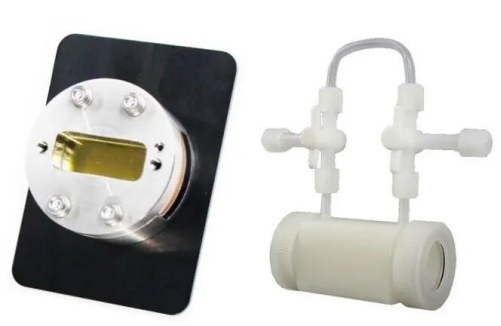
Figure 4
Gas transmission accessories (Figure 5). For gas samples, a gas cell is required for testing. Depending on the concentration of the gas, gas cells with different optical path lengths are needed. Optosky can design gas cells with various optical path lengths, various volumes, various materials, various windows, and precise temperature control according to the actual needs of users. Based on the user's actual application, Optosky designed a special gas cell with a 24-meter optical path for the user, and developed the online gas analyzer ATP8900-G.
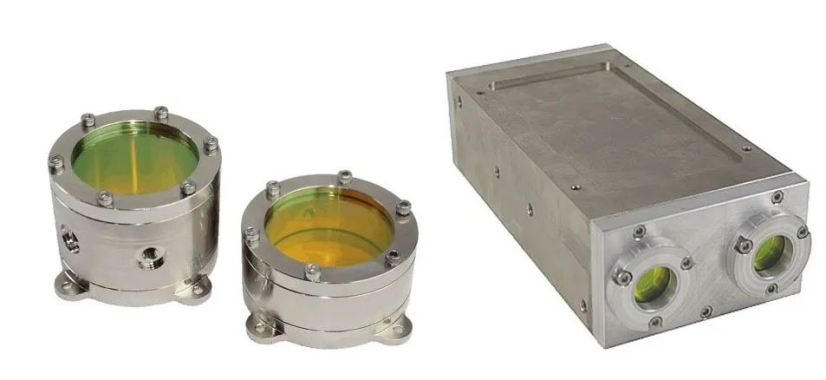
Figure 5
Measurement and precautions of transmission spectrum
For solid powder samples, when pressing the tablets, you need to pay attention to the fact that the potassium bromide needs to be dried before use, the sample and the potassium bromide must be ground evenly, and the tablets need to be uniform and transparent, otherwise it will be difficult to obtain a better spectrum. When measuring the absolute transmission spectrum, parallel light needs to be used, and care must be taken to ensure that the sample is perpendicular to the optical path.
For liquid samples, you need to select a liquid cell with an appropriate optical path. After using the liquid cell, you must clean the liquid cell before making the next measurement. In particular, you need to pay extra attention when doing quantitative analysis to avoid error results caused by sample residue.
For gas samples, it is also necessary to select a gas cell with a suitable optical path. When using it, attention must be paid to the sealing of the gas cell to avoid gas leakage. For the measurement of some special gases such as hydrogen fluoride, a gas cell made of special materials is required to avoid corrosion of the gas cell by hydrogen fluoride.
In actual use, we often find fluctuations in water and carbon dioxide in the spectrum, which are often caused by fluctuations in water and carbon dioxide in the environment. Nitrogen purging is generally used to reduce the interference of water and carbon dioxide, but this does not This problem cannot be completely solved. For more demanding spectral testing, Optosky has developed the vacuum Fourier transform spectrometer ATP8900AD, which can solve this problem very well. As shown in Figure 8, we tested the spectra under normal pressure (blue) and vacuum conditions (red) respectively. We can find that the absorption of water and carbon dioxide disappears, so that we can easily eliminate their influence on the spectrum during testing. interference. Especially in the far-infrared band, the absorption peak of water is more obvious, and the vacuum infrared spectrometer can obtain high-quality spectra.
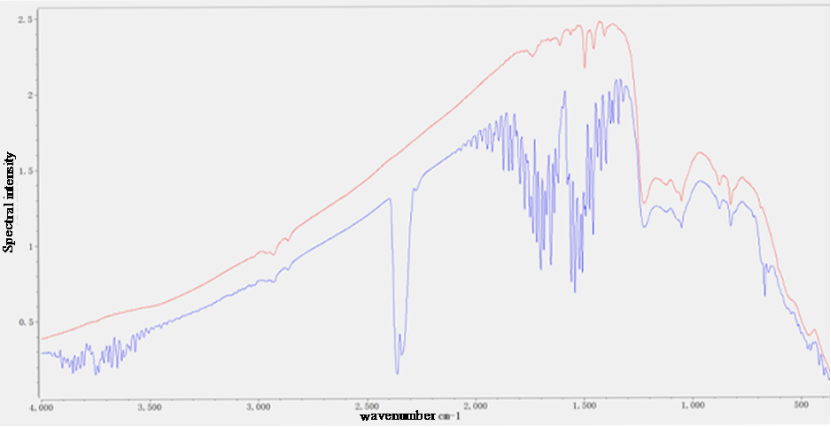
Figure 6
Application of transmission spectrum
-
Transmittance test. Such as automobile glass, glasses, sunglasses, sun protection film, mobile phone TV display, plastic packaging and other related materials transmittance measurement.
-
Oil analysis. Monitor the water, anti-wear components, oxidation value, nitration value, sulfonation value, soot and other species in gasoline, diesel and lubricating oil to judge the quality of the oil.
-
Gas analysis. Monitoring of carbon monoxide, nitric oxide, nitrogen dioxide, sulfur dioxide and other related gases in incineration plants, steel plants and atmospheric environments.
Keywords
infrared spectrometer;fourier transform infrared;diffuse reflection;specular reflection;ir spectrum;
Principles and Applications of ATR
New Product Launche|IR1000Pro FT-IR Online PAT Spectrometer
Related Article
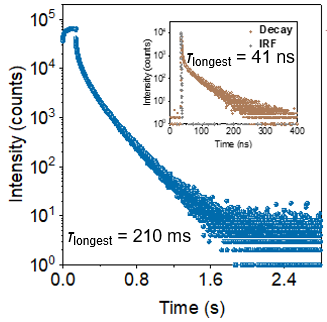
This article mainly describes the application of fluorescence spectrometer in the development of organic room temperature phosphorescent materials.
Fluorescence Spectrometer Develops Organic Room-Temperature Phosphorescent Materials

This article highlights the advantages of near-infrared (NIR) spectroscopy for real-time moisture analysis, focusing on its non-destructive nature and precision. It features a case study on silica granulates in the rubber industry, showcasing how accurate moisture measurements can enhance quality and efficiency. The piece encourages businesses across various sectors to leverage NIR technology for better decision-making and operational improvements.
NIR Spectroscopy for Measuring Moisture in Granulates
Unlock the potential of Near-Infrared (NIR) spectroscopy for monitoring epoxy resin curing. This non-destructive method provides real-time, precise insights, enhancing product quality in manufacturing and 3D printing. Discover more in our application note!
Quantitative Evaluation of Epoxy Resin Using NIR