
Identification of Medical Raw Materials by Raman Spectrometer
author: Joy
2022-01-06
Traditional inspection methods to detect raw and auxiliary materials of medicine to identify the impact of packaging on test results will lead to a large increase in quality inspection workload, and cost a lot of manpower and financial resources, and greatly increase the risk of human error. The use of handheld Raman spectrometer for material receiving identification and improve work efficiency has become a necessary means, but also as far as possible to reduce the cost of testing, handheld Raman spectroscopy as a new, efficient, rapid, nondestructive testing method has been accepted by more and more users.At the same time, some pharmaceutical companies want their devices to be as efficient as possible in penetrating various packaging materials.
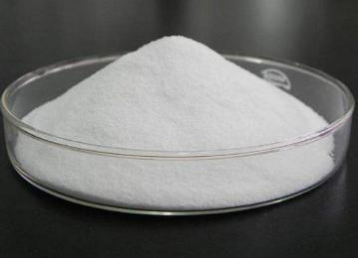
Fig 1Pharmaceutic Adjuvant
Principle: Raman Scattering Spectroscopy
Light on matter scatters both elastic and inelastic. The scattered light of elastic scattering has the same wavelength as the excited light, while the scattered light of inelastic scattering has the longer and shorter components than the excited light, collectively known as the Raman effect.
Test Substance: Sucrose (AR grade)
Packing Material: transparent white PE bottle, transparent PE bottle and transparent PE ziplocking bag.
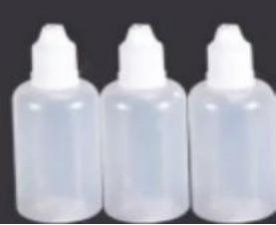
Fig 2Transparent White PE Bottle
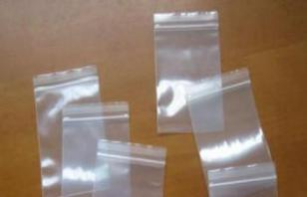
Fig 3Transparent PE Ziplock

Fig 4Transparent PE Bottle
Test Result:
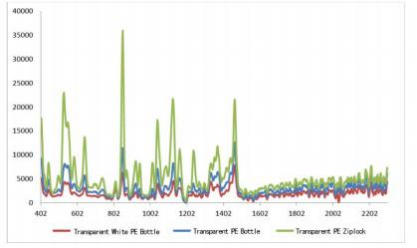
Fig 5Raman Spectra Measured By Different Packaging
1.The instrument can detect the contents through transparent or even non-transparent packaging;
2. The packaging material will reduce the Raman signal, the thicker the packaging, the weaker the Raman signal;
3. Identification effect: transparent thin packaging > transparent thick packaging > non-transparent thin packaging;
2. The packaging material will reduce the Raman signal, the thicker the packaging, the weaker the Raman signal;
3. Identification effect: transparent thin packaging > transparent thick packaging > non-transparent thin packaging;
4. Pharmaceutical enterprises mostly use double packaging of raw materials (outer paper bucket or plastic bucket + inner PE bag), so the instrument can not be opened inside.In the case of layer packaging, the contents are tested to meet customer identification needs.
Conclusion:
Raman spectroscopy is a legal analysis method recognized by The Chinese Pharmacopoeia, the United States pharmacopoeia and the European Pharmacopoeia, which is suitable for 100% identification of raw materials, intermediates and packaging materials.Raman spectroscopy is a modern analysis method based on Raman scattering phenomenon. It is widely used in medicine because of its advantages of high sensitivity and simple operation, which does ot require special pretreatment of samples during detection. The handheld Raman spectrometer instrument is intuitive and simple to operate. It uses a matteroffact, nondestructive sampling design to quickly test various compounds in a transparent, sealed package, effectively minimizing contamination and exposure risks.
Related Products:
ATR6500
ATR6600
Related Products:
ATR6500
ATR6600
Identification Cultural Relics With Raman Spectrometer
Using Raman Spectroscopy To Detect Liquid Preparations
Related Article

Discover the Optosky ATR1600 ultra-micro Raman spectrometer—a 210g pocket-sized device for on-site, non-destructive gemstone identification. With a 20,000+ substance spectral library, dedicated jewelry edition, Bluetooth smartphone APP, and PDF reporting, it enables rapid screening of natural, synthetic, and treated gemstones at exhibitions, pawnshops, and markets.
ATR1600: The 210g Pocket Raman Gem Identifier
Explore how micro-confocal Raman spectroscopy, combined with SERS, enables rapid, non-destructive, molecular-level screening of veterinary drug residues such as malachite green, enrofloxacin, and chloramphenicol in aquatic products. Learn how Optosky’s ATR8100 supports microscopic localization, multi-wavelength excitation, mapping imaging, and portable on-site testing—while clarifying its role alongside LC-MS/MS confirmation.
Applications | Micro-Raman Drug Residue Screening in Seafood
Discover how Raman spectroscopy enables label‑free cancer diagnosis by reading molecular fingerprints of cells. From key Raman peaks and AI‑powered classification to the ATR8800 confocal platform, this article explores the frontiers, challenges, and clinical potential of Raman‑based cancer detection.
How Raman Spectroscopy Sees Through Cancer Cells: Label‑Free Cancer Diagnosis
Optosky successfully delivered and commissioned multiple ATP9100 field spectroradiometers at a university in Northwest China. The project included installation, performance verification, and on‑site training – supporting agricultural remote sensing, ecological monitoring, and geological surveys while building a standardized spectral research platform.
Case Study | ATP9100 Acceptance at Northwest University