
Raman Spectroscopy Tests Material Surface Properties Characterization
author: Joy
2022-01-07
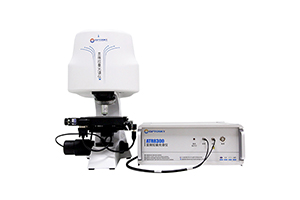
Artificial liver support system is an important transition method for patients with liver failure waiting for donor liver transplantation. Multilayer flat paneltype artificial liver is a research hotspot of biological type artificial liver.In order to improve the affinity of liver cells on the surface of the material,requires amination modification and sericin graft modification on the surface of PU film.use Raman spectroscopy to testPU, Surface amination modified polyurethane (PU-NH2) And sericin grafted polyurethane (PU-SS)The surface chemical groups of the membrane, membrane molecular structure, hydrophilicity and hydrophobicity, surface roughness and surface morphology were characterized.
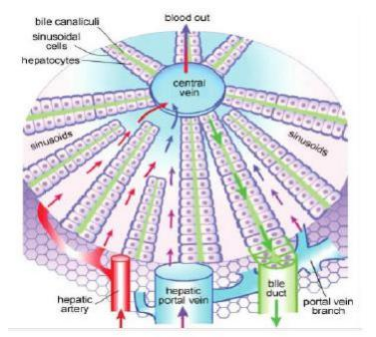
Fig 1.Schematic Diagram Of Hepatic Cell Structure
Principle: Raman Scattering Spectroscopy
Raman spectroscopy is used for the determination of molecular skeleton.PU, PU-NH2 and PU-SS diaphragms were dried in an electric blast drying oven, then cut into 1cm×1cm pieces and tested under a Raman microscope (ATR8300). Scanning range 600-4000cm-1.
Test Result:
Test Result:
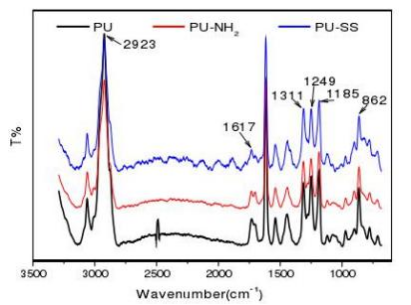
Fig 2.Raman Spectrogram Of PU 、PU-NH2 And PU-SS Films
Conclusion:
Raman spectra show that the characteristic absorption peaks in the spectra of the three diaphragms are as follows: the characteristic absorption peak generated by ring respiration of benzene ring at 862 cm-1, the characteristic absorption peak generated by deformation vibration of CH2 at 1185 cm-1, 1249 cm-1 and 1311 cm-1, the characteristic absorption peak generated by deformation vibration of CH2 at 1185 cm-1, 1249 cm-1 and 1311 cm-1. The stretching vibration of benzene ring at 1617cm-1 produced the characteristic absorption peak, and the strong symmetric vibration of -CH2 at 2878 and 2923 cm-1 produced the characteristic absorption peak. It is proved that the polyurethane membrane has no obvious change on the structure of the material before and after modification, PU-SS. Other characteristic absorption peaks of the diaphragm in the range of 1500-3000 cm-1 are due to the fact that after sericin molecules are attached or adsorbed to the surface of PU-NH2, the connection of sericin on the rough surface amplifies The Raman scattering, resulting in subtle differences of Raman spectra.The amino modification and sericin graft modification have no significant effect on the molecular framework of polyurethane.
Related Products:
Quantitative Determination Of Blood Glucose By Raman Spectroscopy
Identification Cultural Relics With Raman Spectrometer
Related Article

Discover the Optosky ATR1600 ultra-micro Raman spectrometer—a 210g pocket-sized device for on-site, non-destructive gemstone identification. With a 20,000+ substance spectral library, dedicated jewelry edition, Bluetooth smartphone APP, and PDF reporting, it enables rapid screening of natural, synthetic, and treated gemstones at exhibitions, pawnshops, and markets.
ATR1600: The 210g Pocket Raman Gem Identifier
Explore how micro-confocal Raman spectroscopy, combined with SERS, enables rapid, non-destructive, molecular-level screening of veterinary drug residues such as malachite green, enrofloxacin, and chloramphenicol in aquatic products. Learn how Optosky’s ATR8100 supports microscopic localization, multi-wavelength excitation, mapping imaging, and portable on-site testing—while clarifying its role alongside LC-MS/MS confirmation.
Applications | Micro-Raman Drug Residue Screening in Seafood
Discover how Raman spectroscopy enables label‑free cancer diagnosis by reading molecular fingerprints of cells. From key Raman peaks and AI‑powered classification to the ATR8800 confocal platform, this article explores the frontiers, challenges, and clinical potential of Raman‑based cancer detection.
How Raman Spectroscopy Sees Through Cancer Cells: Label‑Free Cancer Diagnosis
Optosky successfully delivered and commissioned multiple ATP9100 field spectroradiometers at a university in Northwest China. The project included installation, performance verification, and on‑site training – supporting agricultural remote sensing, ecological monitoring, and geological surveys while building a standardized spectral research platform.
Case Study | ATP9100 Acceptance at Northwest University