Transmission Measurement

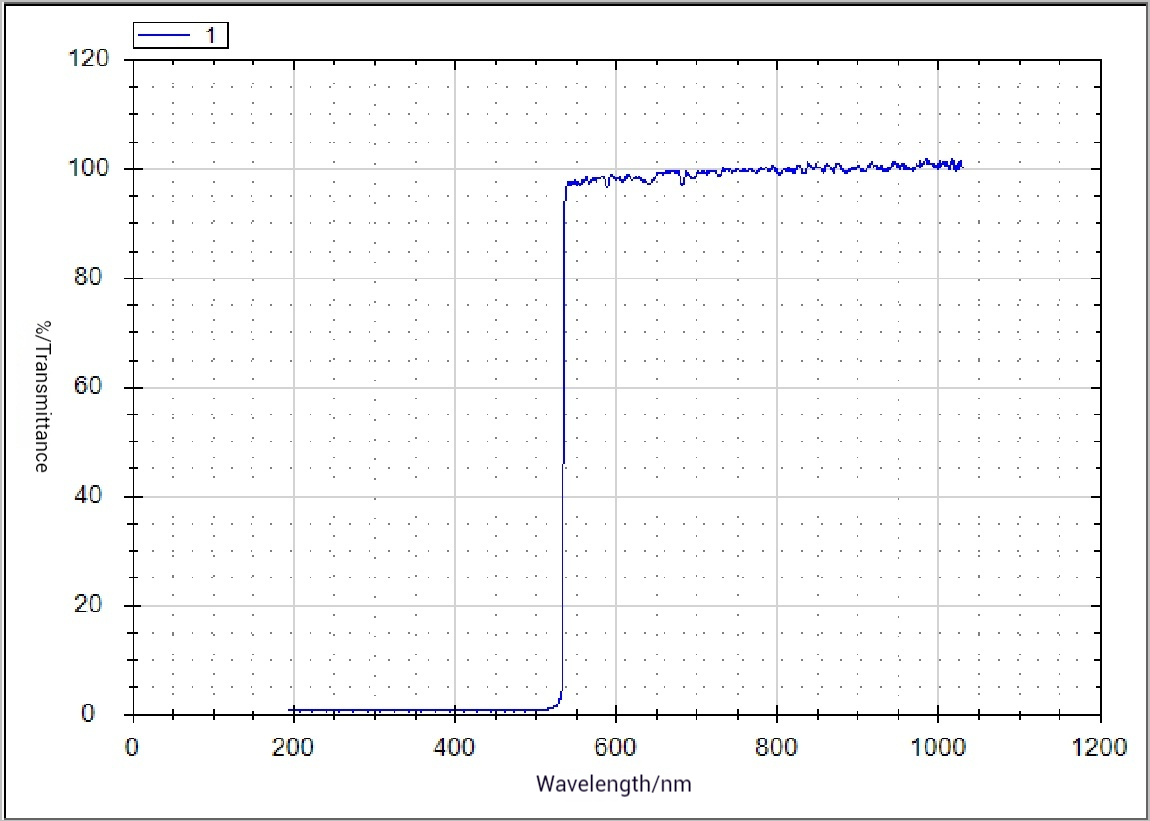
Transmittance testing, a key method in optical analysis, is based on the principles of light propagation and interaction with materials. When a light beam passes through a sample, it can be absorbed, scattered, or transmitted. The transmittance T is a crucial metric that quantifies a material's ability to transmit light, calculated using the formula: T=It/Ii
where:
- It is the intensity of light transmitted through the sample.
- Ii is the intensity of the incident light.
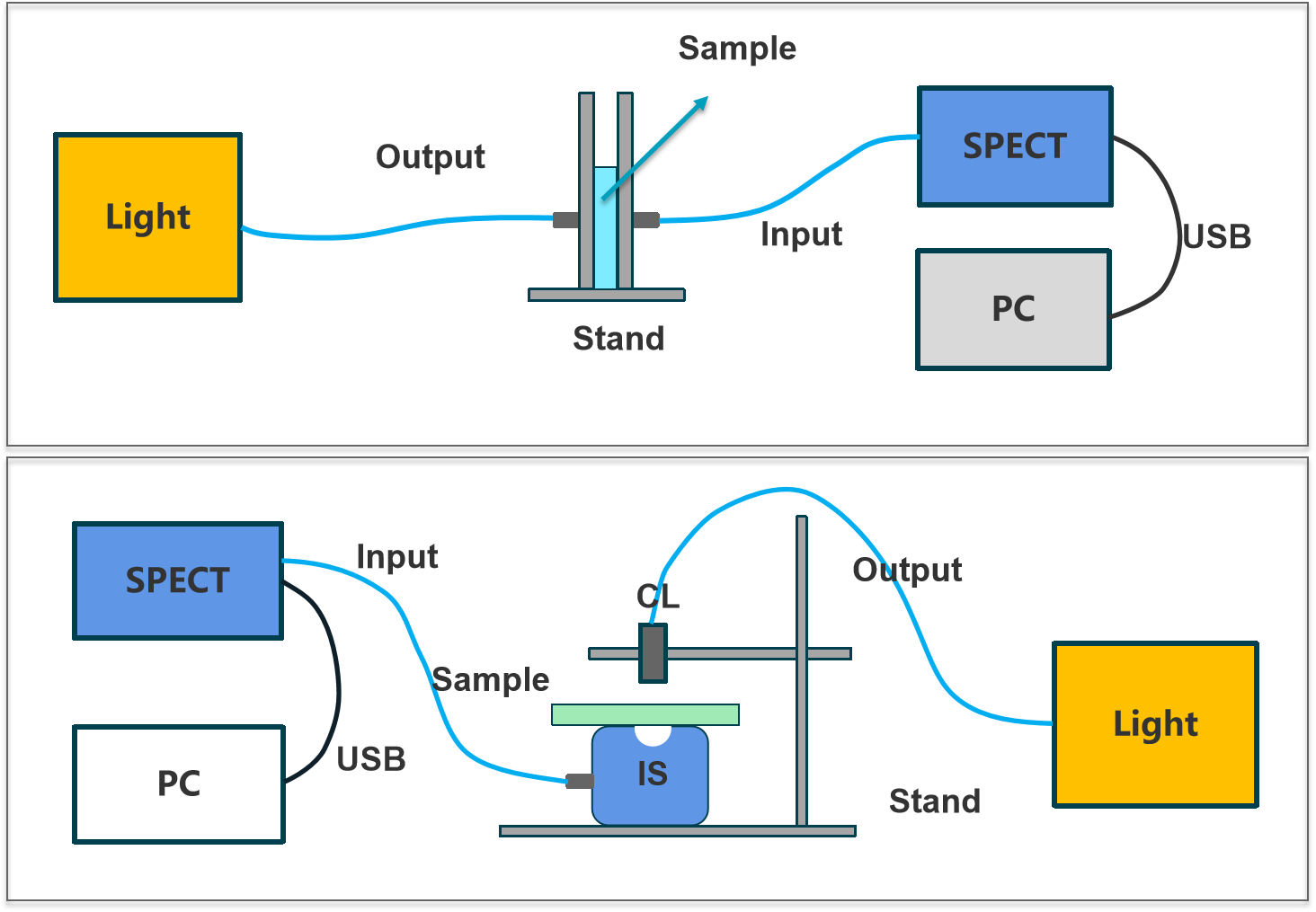
Fiber optic spectrometers leverage optical fibers to efficiently transmit light from a source to the sample, using high-sensitivity photodetectors to capture the transmitted signal. This capability allows for comprehensive measurement of transmittance across various wavelengths, revealing important optical properties of materials.
|
Transmission Measurement System Configuration List |
||
|
UV-Vis Range |
NIR Range |
|
|
Spectrometer |
ATP2000P |
ATP8000 |
|
Light Source |
ATG1020H |
ATG1020H |
|
Transmission Integrating Sphere |
74-TCHP |
74-TCHP |
|
Optical Fiber |
UV Fiber FJ00095 x2 |
IR Fiber FJ00084 x2 |
|
Attenuator |
(Optional, requires an additional fiber) |
|
Transmittance testing with fiber optic spectrometers has diverse applications across several industries:
- Materials Science:
- Evaluating the performance of optical materials such as transparent plastics, coatings, and filters.
- Assessing absorption and scattering properties to optimize the design of optical devices.
- Biomedical Applications:
- Analyzing the optical characteristics of biological tissues, including blood and organs, to aid in disease diagnosis.
- Facilitating optical imaging techniques and therapies, such as monitoring light delivery in photodynamic therapy (PDT).
- Environmental Monitoring:
- Assessing the optical properties of pollutants in water, air, and soil, which is vital for environmental quality monitoring.
- Investigating the impact of suspended particles on light propagation, contributing to water quality analysis.
- Agriculture:
- Studying the light transmittance characteristics of plant leaves to evaluate photosynthetic efficiency and overall plant health.
- Monitoring soil moisture levels and crop growth to inform precision agriculture practices.
Fiber optic spectrometers offer several compelling advantages for transmittance testing:
- High Sensitivity:
- Capable of detecting subtle changes in light intensity, making them suitable for analyzing extremely thin samples or small particles.
- Provides high accuracy, ensuring reliable data for decision-making.
- Wide Wavelength Range:
- Facilitates measurements across a broad spectrum, from ultraviolet to near-infrared, accommodating various materials' optical characteristics.
- Versatile for multiple light sources and diverse applications.
- Non-Destructive Testing:
- The testing process does not damage samples, making it ideal for precious or sensitive materials.
- Maintains sample integrity for subsequent analysis or applications.
- Portability:
- Designed for portability, allowing for on-site testing in various environments, which enhances operational flexibility.
- Convenient for researchers to conduct experiments under different conditions.
- Real-Time Monitoring:
- Provides real-time data, suitable for monitoring dynamic processes such as chemical reactions or drug release.
- Enables quick adjustments in experimental setups, improving efficiency.
Transmittance testing using fiber optic spectrometers is a powerful analytical technique that delivers essential optical performance data across multiple industries. Its high sensitivity, broad application range, and portability make it a valuable asset in modern scientific research and industrial applications. By gaining insights into the optical characteristics of materials, researchers can optimize material selection and propel the development of innovative solutions, enhancing technological advancements across various sectors.
Reflectance Measurement
Related Article