Application Case | Application of GY1000 in tea moisture content
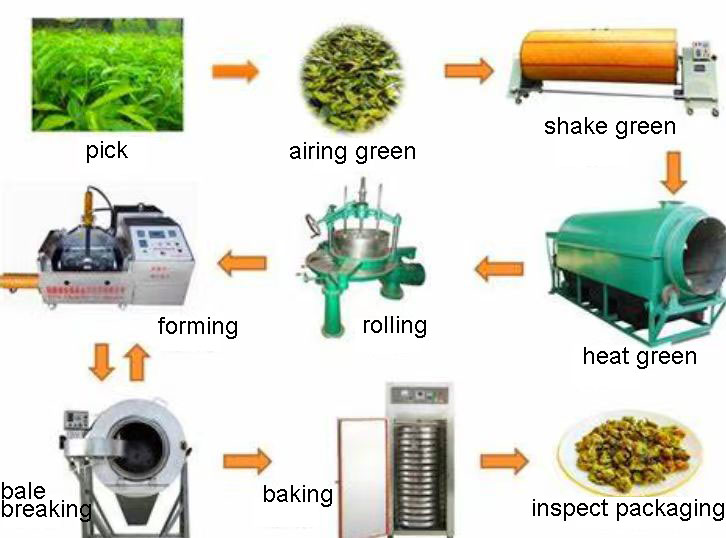
Tea originated in China and has a history of more than 4,000 years. Tea has been widely used for sacrifices, medicine and drinking in Chinese history. During the Tang Dynasty, tea had become an important drink. Tea was introduced to Europe during the Ming Dynasty. With the development of navigation technology, tea trade gradually expanded to the world. Today, tea has become one of the most popular beverages in the world and is widely used in tea art, tea ceremonies, tea tasting and tea research. Tea moisture content testing is an important part of tea quality testing. The water content of tea has a direct impact on its quality, taste, aroma, color, etc. Too high or too low moisture content will affect the quality of tea, so testing is needed to determine whether the moisture content of tea is within the appropriate range. Too high a moisture content will cause the tea leaves to become moldy, affecting the quality and taste of the tea leaves. Too low a moisture content will cause the tea leaves to dry out, affecting the aroma and color of the tea leaves. The technological process of tea production can generally be divided into four steps: picking, fixing, rolling and drying. There may be some subtle differences in the processing of different varieties of tea. Conventional tea moisture content using the drying method has the disadvantage of taking a long time and being cumbersome to measure. It is a fast and simple method to measure the moisture content based on the principle that water absorbs in the near-red band.
As a leader in domestic spectroscopy companies, Optosky is committed to solving the application pain points of the industry. The GY1000 online infrared moisture meter launched has achieved good results in the measurement of moisture content in grain, distiller's grains, tobacco and other industries, providing a fast and convenient method for moisture measurement. The principle is that water shows strong absorption characteristics for some specific wavelengths of infrared light. When the material is irradiated with infrared light of these specific wavelengths, the water contained in the material will absorb part of the infrared light energy. The more water it contains, the more it will absorb. Therefore, the reduction in reflected light can be measured to calculate the moisture content of the material. Tea plays a very wide role in life. It is not only an important part of our daily diet, but also an important health drink and beauty product. Now we have tested a customer's tea sample and obtained good results.
Features
(1) Non-contact, non-destructive, real-time and dynamic online testing system;
(2) Replaceable ultra-long-life tungsten halogen light source with higher luminous efficiency;
(3) PBS infrared detector to improve temperature stability;
(4) 4-wavelength 8-beam technology ensures more accurate and stable results;
(5) High-speed brushless motor ensures more accurate signal sampling results;
(6) The high-definition touch screen displays real-time measurement data and can store measurement data within 30 days;
(7) Split design, one controller can connect 4 probes;
(8) Sturdy industrial design, dustproof and waterproof, adaptable to various industrial sites.
Tea moisture content application
Figure 3 Sample pictures (the first picture above shows the raw tea leaves picked, with a moisture content of about 70%-80%, and the second picture shows processed tea leaves that are commercially available, with a moisture content of less than 10%.).
Figure 4 Instrument software displays results.
The tea samples were dried, and the characteristic value of voltage change X in the drying process was recorded, and the corresponding weight was calculated after the complete drying. The moisture content of the samples was measured again by fitting the curve.
Figure 5 Tea sample 1 moisture content and characteristic value curve.
Figure 5 Tea sample 2 moisture content and characteristic value curve.
Table 1-1 Measurement results
|
Sample serial number |
Moisture content of drying method |
Moisture content of instrument measure |
|
Sample 1 |
80.3% |
79.26% |
|
Sample 2 |
5.15% |
5.11% |
After the above analysis, the tea sample conforms to the theoretical trend that the characteristic value gradually increases as the moisture content decreases during the modeling process. In the segmented fitting process, the linear relationship between the fitting degrees of the segmented curves is good, which is in line with actual theory and application. Compared with the drying method, the measurement error is smaller.
Table 1-2 Instrument parameters
|
GY1000 |
||
|
1 |
Measuring Range |
0 ~70% H2O |
|
2 |
Light Source |
Life≥5000H |
|
3 |
Measuring wavelength |
4 wavelengths, 8 beams |
|
4 |
Detector |
Cooled infrared detector( PbS) |
|
5 |
Measurement accuracy |
<0.3% (Absolute average) |
|
6 |
Repeatability |
<0.1% |
|
7 |
Test speed |
25ms |
|
8 |
Measure distances |
250±100mm |
|
9 |
Detection area |
Diameter 50mm |
|
10 |
Motor speed |
2400RPM/M |
|
11 |
Reference size |
218mm×362mm×235mm |
|
12 |
Reference weight |
About 15Kg |
|
13 |
Touch screen |
10-inch capacitive touch screen |
|
14 |
Operating system |
Android 7.1 |
|
15 |
Combination method |
One monitor supports up to 4 probes |
Summarize
GY1000 uses the principle that water absorbs in the near-infrared region and can be used to measure the moisture content of tea. Compared with traditional manual methods, it has the characteristics of fast measurement speed and convenient testing, and can measure the moisture content of tea in the range of 5%-80%. It can be applied to the entire moisture content measurement process line of tea processing and production.
NIR Product Features And Comparison Of Competing Product
Application case | Application of GY1000 moisture analyzer in wine making industry
Related Article