
Application recommendation | Application of online Raman system in process analysis
In 2004, the U.S. Food and Drug Administration (FDA) issued industrial guidance on process analytical technology (PAT), which analyzes and controls the production and processing process by measuring the critical quality and performance characteristics of processed materials to ultimately ensure product quality, clarified the role and status of PAT. PAT's process analyzers include offline analysis, online analysis and on-site analysis. Conventional mass spectrometers, biochemical analyzers and other methods are usually offline measurements and are impossible to monitor the concentration changes of substances, intermediate products, and final products in biological and chemical reactions in real time (some samples cannot be cooled (to avoid solidification) or exposed to air (to avoid oxidation)). This brings restrictions to our reaction process, reaction principle, material addition control and product quality control of substances. Currently, PAT analysis methods include gas chromatography, mass spectrometry, nuclear magnetic resonance, infrared, near-infrared, ultraviolet-visible light, Raman and X-ray fluorescence. Among spectroscopic instruments, Raman spectroscopy has significant advantages in measurement speed and substance identification, so online Raman has great potential in process analysis technology.
Raman spectroscopy is an inelastic scattering spectrum. During the inelastic scattering process of light, photons are scattered by molecules and lose part of their energy, causing their frequency to change. The difference in frequency between the scattered light and the incident light does not change with the frequency of the incident light, only related to the vibration and rotation energy levels of sample molecules, and then analyzed to obtain information on molecular vibration and rotation, and applied to the study of molecular structure.
Each molecule of a substance has a corresponding Raman spectrum. Raman spectrum can reflect not only the vibration information of molecular groups, but also the structural information of isomers. Since Raman spectrum has the characteristic of directly reflecting the structure and content information of the sample to be tested, we can take advantage of this feature to obtain the corresponding composition content or properties of the sample to be tested by establishing a mathematical model between the Raman spectrum and the composition of the sample to be tested. In order to achieve continuous monitoring of the process, the concentration of the reaction process, intermediate products and other parameters can be monitored.
The ATR7000 series online Raman system is an online analysis system for mixture component content independently developed by Optosky based on nearly ten years of research accumulation. It can provide fast, accurate and stable testing method for the composition and properties of various homogeneous liquid mixtures. By establishing corresponding quantitative analysis models, the system can be widely used in various types of continuous or intermittent production processes to achieve online real-time detection of product composition and content, providing key measurement information for advanced control and real-time optimization.
ATR7000
ATR7010
The instrument integrates lasers, spectroscopic instruments, probes and other systems to monitor biochemical reactions and industrial product control processes in real time. It can improve product quality and speed up R&D and production efficiency.
In process monitoring and in-situ detection, it is usually necessary to detect the type and concentration of substances. Therefore, software such as Raman quantitative modeling is developed according to the application scenario.
For different application scenarios, we provide different software solutions, including network ports and other data transmission methods, to facilitate users to monitor in-situ reaction processes, online drug monitoring, etc.
ATR7000 software
ATR7010 software
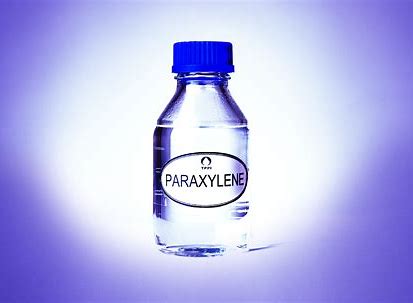
Application: Online Raman monitoring of paraxylene (PX) separation purity
Paraxylene (PX) is an important chemical raw material, and terephthalic acid prepared from it can be used in the chemical and pharmaceutical industries. It is also an important intermediate for the production of polyester fiber. Currently, PX is mainly produced by separating mixed xylene. Among various separation processes, the simulated moving bed adsorption separation process has become the mainstream process for separating mixed xylene due to its advantages such as high production efficiency and good separation effect, and has been widely used.
Each benzene series compound has its specific Raman characteristic peak, and the separation purity of paraxylene is analyzed based on its Raman characteristic peak.
Raman characteristic peaks of benzene series
Model spectrum established between p-xylene concentration and Raman intensity:
The established model was used to detect the purity of xylene separation in different tower layers. The monitoring results showed that paraxylene with higher purity can be obtained above the 15th tower plate.
Application: Online Raman system to detect biochemical indicators
Testing of glucose solutions
When testing glucose solution, the relative error is -10.30% when testing 15g/L, the relative error is 4.63% when testing 40g/L, and the relative error is within 2% when testing 60g/L.
Testing of glycerol aqueous solution
When testing 4.5g/L glycerin aqueous solution, the relative error is 8.89%, when testing 9.4g/L glycerin aqueous solution, the relative error is 3.45%, and when testing 16.6g/L glycerin aqueous solution, the relative error is -3.87%.
Detection of lactic acid aqueous solution
When testing 9.92g/L lactic acid aqueous solution, the relative error is 11.53%. When testing 16.11g/L lactic acid aqueous solution, the relative error is 7.02%. When testing 21.43g/L lactic acid aqueous solution, the relative error is 3.10%.
Application: Online Raman monitoring in drugs
Polymorphism is a common and important phenomenon in drugs, which directly affects the bioavailability, efficacy, toxic and side effects, preparation technology and stability of drugs. The control of crystal form is an important criterion for measuring the quality and effectiveness of drugs.
Currently, the methods commonly used to study crystal forms include: X-ray diffraction, infrared spectroscopy and hot stage microscopy methods, etc.; these methods have their own limitations: X-ray diffraction usually requires a large sample amount, which is not conducive to the analysis of each component in the mixture. The operation is complicated and the whole machine is expensive. Infrared spectroscopy methods require sample preparation, especially during grinding processes that may lead to crystalline conversion, and the spectral resolution is not high.
Compared with these methods, Raman spectroscopy technology has the following advantages: it requires a relatively small amount of samples, is non-destructive, non-contact, does not require sample preparation, can perform micro-area analysis of 1~2 μm, and has high accuracy and spectral resolution. Suitable for rapid analysis of drugs.
Through monitoring, it can be seen that there are different differences in the polymorphic form of norfloxacin, and there are also differences between the amorphous and crystalline forms of griseofulvin and fenofibrate. Based on the Raman characteristic spectrum, it can exert its significant advantages in drug research and development, production and testing.
Spectral instruments are important means in process analysis technology, especially Raman spectroscopy and online Raman spectroscopy analysis technology. Due to their unique advantages, they will be increasingly widely used in process analysis.
Application Of Spectral Technology In Seed
Methanol gasoline detection using Raman spectrometer
Related Article