Flame atomic absorption spectrometer detects lead in gasoline
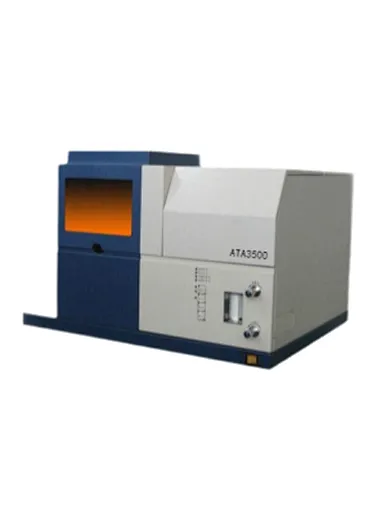
Flame atomic absorption spectrometer provided by optosky is designed to be efficient, user-friendly and reliable. The instruments deliver the high performance analysts demand while also being suitable for routine laboratories where reliability and simplicity of operation are critical.
Working Conditions (Fixed)
The conditions listed will provide optimal performance for dilute aqueous solutions. If chemical interference is known to be present, it may be necessary to use a hotter nitrous oxide acetylene flame to eliminate the interference and obtain optimal conditions for precision and accuracy. For some elements, flame stoichiometry can greatly affect the analytical signal. Therefore, the effect of flame conditions (or stoichiometry) on the signal needs to be examined. An oxidizing flame is a flame with a low acetylene content, while a reducing flame is a flame with a relatively high acetylene content. Due to the excess carbon, the reducing flame becomes glowing.
Working Conditions (Variable)
The upper limit of the working range concentration will give an absorbance of approximately 0.8 to 1.0. The lower limit of the working range is approximately 10 times the specified detection limit. This range can be changed by burner rotation to avoid dilution. The alternative wavelengths shown have been selected to provide a variety of operating ranges. The slit width represents the spectral bandwidth in nanometers.
Experiment
Gasoline
Pb (Lead)
Reference
This method is adapted from:1. Masayuki Kashiki, Seigo Yamazoe and Sohozo Oshima, Anal. Chim. Acta., 53, 95–100 (1971).
Sample Preparation
Dilute 1.00 mL of gasoline to 50 mL with a solution containing 5 mg iodine per 50 mL methyl isobutyl ketone.
Standard Preparation
Dilute a tetra methyl lead standard with the iodine-methyl isobutyl ketone solution to give standards containing 0.02, 0.04, 0.06 g/gallon Pb. These standards correspond to 1.0, 2.0, 3.0 g/gallon Pb in the undiluted gasoline.
Recommended Instrument Parameters
Atomic Absorption
Working Conditions (Fixed)
Lamp current 5 mA
Fuel acetylene
Support air
Flame stoichiometry oxidizing
Working Conditions (Variable)
|
Wavelength (nm) |
Slit width (nm) |
Optimum working range (μg/mL) |
|
217.0 |
1.0 |
0.1-30 |
|
283.3 |
0.5 |
0.5-50 |
|
261.4 |
0.5 |
5-800 |
|
202.2 |
0.5 |
7-1000 |
|
205.3 |
0.5 |
50-8000 |
Flame Emission
Wavelength 405.8 nm
Slit width 0.1 nm
Fuel acetylene
Support nitrous oxide
Interferences
No cationic interferences have been reported for the air-acetylene flame, however a number of anionic interferences have been reported. Phosphate, carbonate, iodide, fluoride and acetate suppress lead absorbance significantly at concentrations ten times greater than lead. These interferences can be largely overcome by addition of EDTA solution so that the sample solutions are 0.1 molar with respect to EDTA.
At the 217.0 nm wavelength, non-atomic species in the flame absorb strongly. Where the sample has a high concentration of dissolved solids it is necessary to correct for non-atomic absorption.
Recommended solution | Face the "chaos in tanker transportation" and use technology to protect "safety on the tip of the tongue"
Portable XRF spectrometer
Related Article