
Fluorescence Spectroscopy Enhances Food Safety Test

Introduction
In today's world of heightened food safety awareness, fluorescence molecular technology is emerging as a crucial tool in safeguarding our health due to its exceptional detection capabilities. With ongoing technological advancements, fluorescence molecular technology is not only making waves in medicine and biological research but is also showing immense potential in the food safety testing industry.
Fluorescence molecular technology enables the precise detection of fluorescent substances in food samples, allowing for rapid and accurate identification of potential contaminants and harmful substances. This technology's application makes food quality testing more efficient and reliable, providing consumers with enhanced food safety assurance.
Next, we'll delve into the latest applications of fluorescence molecular technology in food safety testing, revealing its critical role in ensuring food safety. Stay tuned as we showcase how this cutting-edge technology supports the health and safety of every meal!
New Applications of Fluorescence Molecules
It's well-known that the deliciousness of food relies not only on the chef's skill but also on the safety and freshness of the ingredients. Food evaluation encompasses sensory, physical, chemical, and microbiological aspects, including parameters like texture, taste, color, microbial content, and nutrient breakdown. However, the execution of these tests can be cumbersome and complex.
So, is there a detection method that is both convenient and accurate for assessing food status? Today, we'll explore a new achievement in the food safety field—using fluorescence molecules as food sensors to swiftly identify food safety.
2. Innovative Approaches to Food Safety Testing
You might wonder what fluorescence spectroscopy has to do with food safety. In fact, the quality and safety of food can be affected by indicators such as pH value, polarity, temperature, pressure, or viscosity. For instance, studies have shown that the pH value measured 24 hours after an animal's slaughter is directly related to the meat's texture, making it crucial for meat producers to monitor pH changes.
Therefore, developing a method that can quickly and easily measure food's physicochemical parameters is vital. Fluorescence has widespread applications in biochemistry and pharmaceuticals; for example, in biology, scientists can attach fluorescent chemical groups to biomolecules and then use fluorescence to detect them sensitively.
Researchers are now considering whether this fluorescence can also be used in food safety testing and maintenance.
3. Food Sensors
Richard Ludescher, a food science professor at Rutgers University, specializes in fluorescence spectroscopy. In his research, he discovered that the fluorescence properties of molecules in a solution are influenced by characteristics such as pH value, polarity, temperature, pressure, or viscosity. This phenomenon suggests that fluorescence molecules can act as sensors for these solution characteristics.
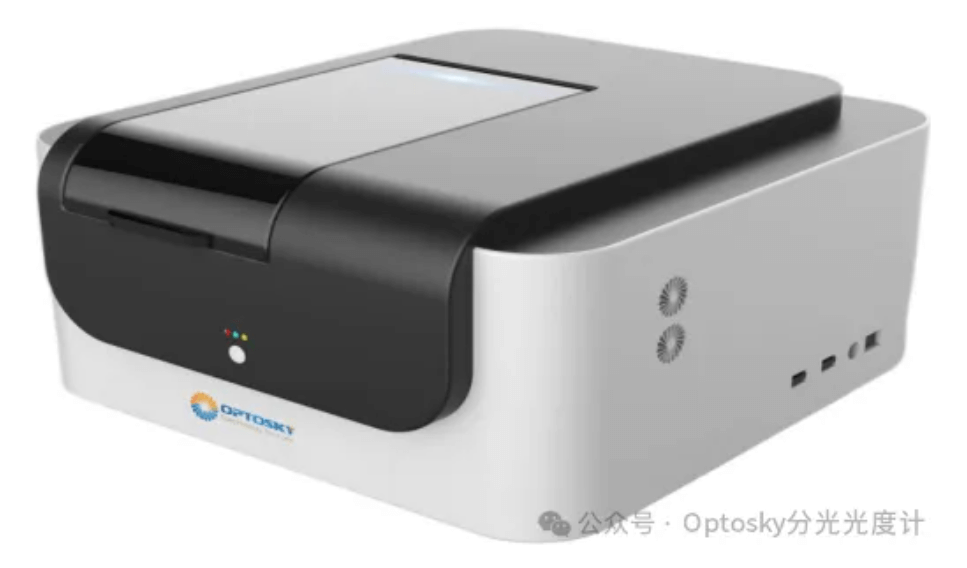
Now, let’s introduce the fluorescence spectrometer ATF4500, a powerful tool in exploring the potential of fluorescence molecules.

Richard Ludescher from Rutgers University
Fluorescence Spectrometers: The Explorers of Fluorescence Molecules
Instant Response: Reagent-Free Full-Spectrum Multi-Parameter Water Quality Monitor
Product Recommendation|Smart Urban Gas Solutions
Related Article