
Application Of Ny6000 In Rapeseed Oil Fatty Acid Modeling
2024-11-15

Vegetable oil is a natural fat extracted from plant seeds, pulp or other parts. The main components of vegetable oil are fatty acids, which are essential for maintaining normal physiological functions of the human body. The oil extraction process of edible oil is mainly divided into two types: pressing and leaching. The pressing process is a physical method that separates the oil directly from the oil by applying pressure to the oil through mechanical equipment. This method does not involve any chemical additives, so it can retain the natural nutrients and flavor in the oil, but its oil yield is relatively low. The leaching process uses an organic solvent (usually No. 6 light gasoline, a food-grade organic solvent) to dissolve the oil in the oil, and then evaporates the solvent by heating, leaving the oil. The leaching method is characterized by a high oil yield, but it may have residual organic solvents and some nutrients such as vitamins may be lost.
The fatty acid composition in vegetable oil is the key to evaluating its nutritional value. Saturated fatty acids refer to those without carbon-carbon double bonds. Unsaturated fatty acids are divided into monounsaturated fatty acids (containing one carbon-carbon double bond, such as oleic acid, C18:1) and polyunsaturated fatty acids (two or more carbon-carbon double bonds, linoleic acid, C18:2). National and local standards such as "National Food Safety Standard for Vegetable Oil" (GB2716-2018), "Rapeseed Oil" (GB/T1536-2021), and "Hunan Rapeseed Oil" (T/HNAGS 014-2020) specify the characteristic indicators and quality indicators of edible oils. The Raman principle is the inelastic scattering phenomenon in which the frequency of light waves changes due to scattering when light interacts with matter. When light passes through a medium, most of the light propagates in the original direction, and a small part of the light is scattered and the frequency changes. This change is closely related to the vibration and rotation energy levels of the molecules of the substance. Raman spectroscopy can be used to detect oleic acid, linoleic acid, etc. in vegetable oils.
As a leading domestic spectroscopy company, OPTOSKY is committed to the research and development of Raman spectroscopy and launched the NY6000 edible oil comprehensive detection system, which can detect fatty acids in mineral oil.
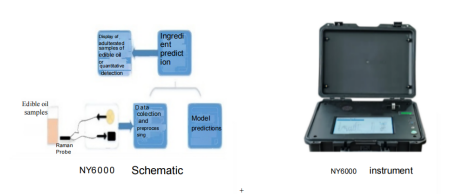
Product Features
One machine with multiple functions: It can perform quantitative and qualitative tests on the safety and quality indicators of edible oil.
Safe and environmentally friendly: No need to conduct complex chemical experimental analysis, avoiding operators from contacting highly corrosive, highly toxic, flammable and explosive high-risk chemicals, improving safety;
High sensitivity: The use of high-sensitivity cooling CCD can realize the detection of low-doped edible oil doping;
Strong applicability: The instrument design takes into account both volume and performance, meeting the index detection of edible oils such as tea oil, soybean oil, and olive oil;
One-click analysis: Equipped with powerful and user-friendly spectral analysis software, one-click operation means that both experts and first-time users of Raman spectrometers can quickly and accurately collect edible oil data and analyze edible oil indicators.
Application examples
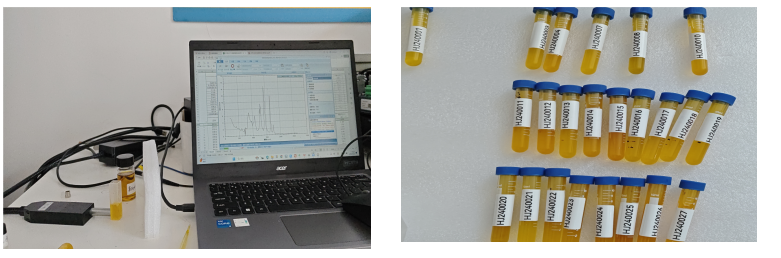
Sample collection
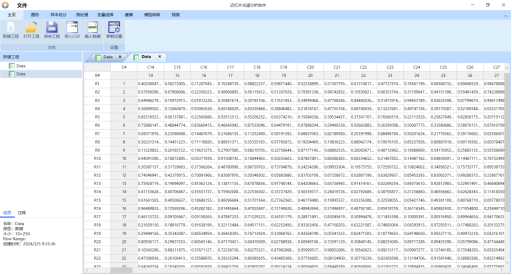
Modeling software
The modeling was performed using Optosky modeling software.
Modeling Effect
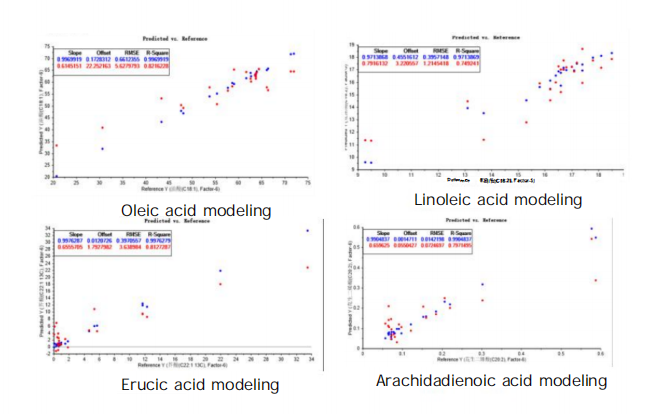
By modeling oleic acid, linoleic acid, etc. in rapeseed oil, we can see that the modeling effects are good.
Instrument parameters
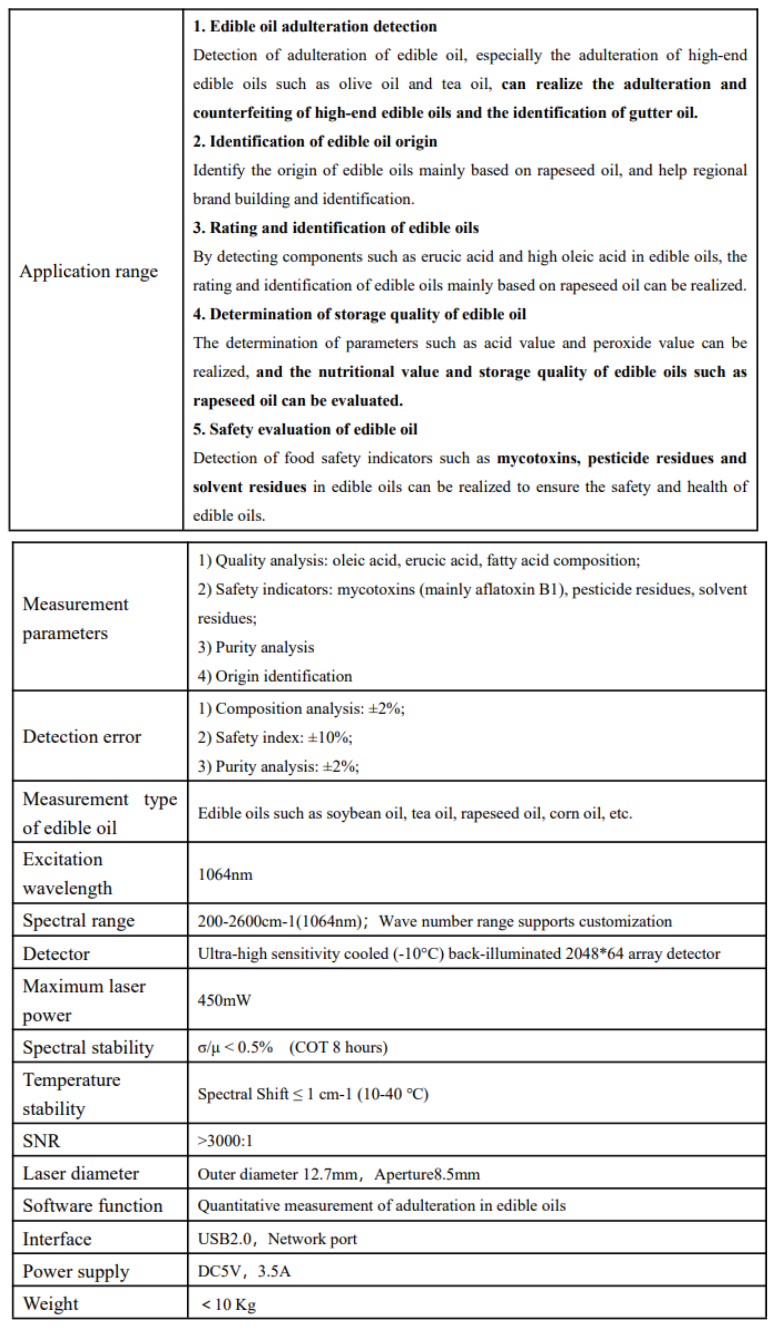
Summarize
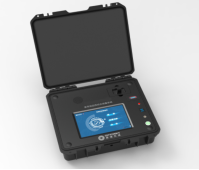
NY6000 is a comprehensive edible oil quality detection system based on Raman spectroscopy technology. It can truly be a multi-functional machine, and can detect indicators such as edible oil adulteration, origin, and edible oil fatty acid composition (such as erucic acid, high oleic acid, etc.). The instrument uses a highly sensitive refrigerated CCD, which can detect the adulteration of low-doped edible oil products. It is equipped with powerful and user-friendly spectral analysis software and one-button operation, which means that both experts and first-time users of Raman spectrometers can quickly and accurately collect edible oil data and analyze edible oil indicators. If you are interested in the above solutions or have other measurement application scenarios, or want to know more about the solution design details, please call 4008-508-928 for consultation.
NEW PRODUCT |GF380 HYPERSPECTRAL FOURIER GAS LEAKAGE REMOTE SENSING IMAGER
NEW PRODUCT| ATE2130-YLS ONLINE CHLOROPHYLL SENSOR
Related Article

Measure Dry Rubber Content (DRC) and Total Solids Content (TSC) in latex in just 1 minute. Optosky FTIR ATP8900Plus delivers lab-grade precision to the field.
Optosky Natural Rubber DRC/TSC Determination NIR Solution
Grade coffee beans and powder in seconds with the Optosky Handheld NIR Analyzer. Rapidly test moisture, density, caffeine, and roast profiles anywhere.
Optosky Coffee Quality NIR Grading Solution
Optimize your palm oil production with Optosky FT-NIR Spectrometer. Simultaneously detect FFA, moisture, and IV in just 30s with zero sample pre-treatment.
Optosky Palm Oil Quality Rapid Testing Solution
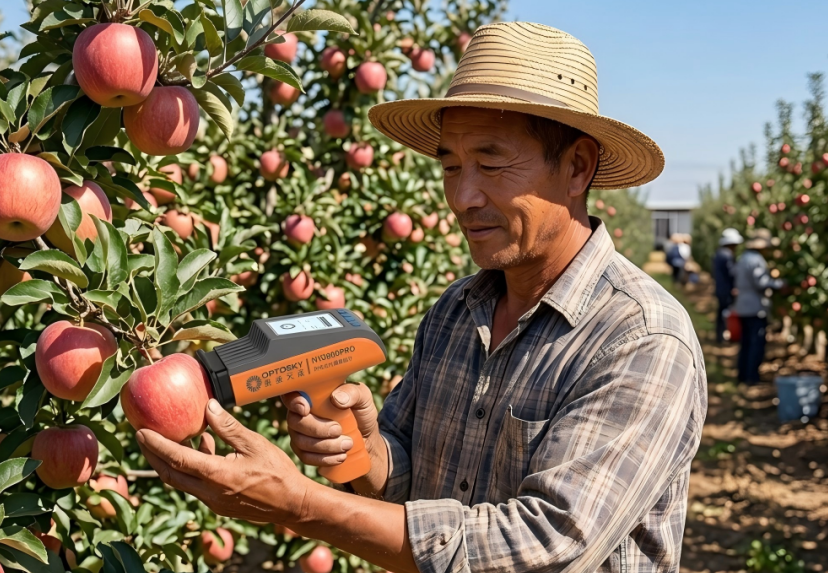
Optosky’s NY2000Pro handheld refractometer enables nondestructive, on-site fruit sugar testing, allowing farmers to measure Brix without picking fruit, with high accuracy and easy operation.Powered by near
infrared spectroscopy, it supports precision agriculture, quality control, and harvest decisions, helping farmers boost yield, improve fruit quality, and increase income.
NY2000Pro Handheld Refractometer: The Sugar Measurement Expert in Farmers' Pockets