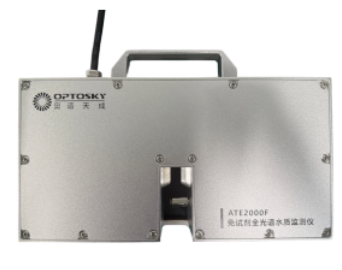
Portable XRF spectrometer
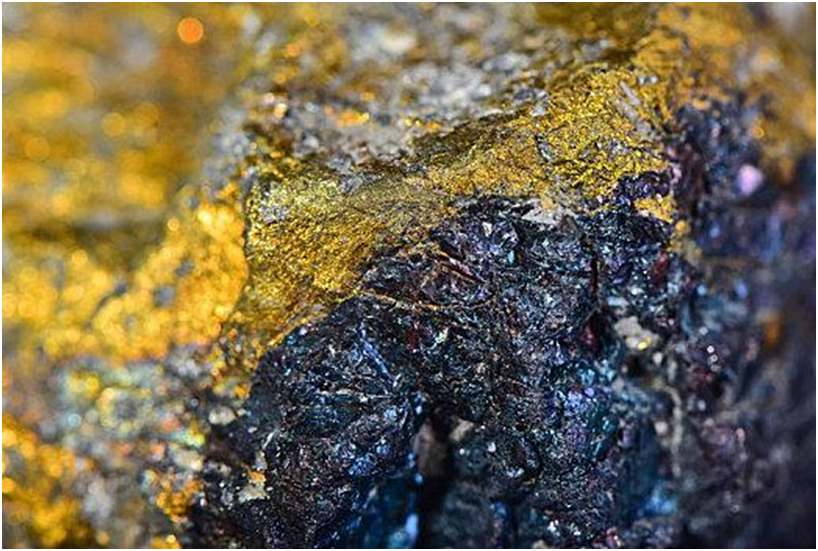
The demand for copper in the fields of photovoltaics, wind power and new energy vehicles is increasing significantly. According to the International Energy Agency's forecast, by 2030, the world will need about 380,000 tons of copper for electric vehicles, and about 4 million tons of copper for solar panel manufacturing. Although there is a short-term excess of copper supply, considering the scarcity of new projects, there will be a supply-demand gap in the medium to long term.
Global copper resource reserves are relatively concentrated. According to USGS data, global copper reserves will be 890 million tons in 2022. Among them, Chile, Australia, and Peru have the largest reserves, accounting for 21%, 11%, and 9% respectively, and CR3 reaches 41%. From the perspective of supply, Chile, Peru, and the Democratic Republic of the Congo are the most important sources of supply of copper mines in the world. In 2022, their copper mine output will reach 5.2 million, 2.2 million, and 2.2 million tons respectively, accounting for 24%, 10%, and 10% of the global copper mine supply respectively. 10%. It is worth noting that Chile is facing the problems of aging mines and declining grades. Annual production peaked at 5.83 million tons in 2018, and then declined year by year; Peru produced 2.46 million tons of copper in 2019, which was subsequently disrupted by factors such as the epidemic and the local political situation. The amount has been reduced and is also declining year by year, with an output of 2.2 million tons in 2022. The representative African country Congo (DRC) has a significant increase in copper supply and has gradually grown into one of the most important supplier countries. The annual output has increased from 600,000 tons in 2012 to 2.2 million tons in 2022, which is equivalent to Peru, an old copper-producing country.
Africa is rich in copper and cobalt reserves and is gradually becoming a new source in the global supply chain. The Energy Capital & Power website lists five potential copper mine projects in Africa, which are expected to inject vitality into the global copper supply. Two of them belong to Chinese-funded companies.
Kamoa-Kakula copper mine in the Democratic Republic of the Congo:
Peak value may reach 800,000 tons/year
The Kamoa-Kakula copper mine is undoubtedly the "star" mine that has been put into production in recent years. It will start commercial production in July 2021. According to Zijin Mining’s official website, the Kamoa-Kakula Copper Mine has produced 301,000 tons of copper in the first three quarters of 2023, and the comprehensive steady-state production capacity of the project has been increased to 9.2 million tons/year, and exceeded the steady-state production capacity in the second quarter and the third quarter. The copper concentrate produced was 103,800 tons and 103,900 tons respectively. Based on the production capacity in the second and third quarters, the Kamoa-Kakula Copper Mine will produce approximately 405,000 tons of copper in 2023. Currently, 56% of the Kamoa-Kakula Copper Mine Phase III concentrator project has been completed, and a new 5 million tons/year concentrator is scheduled to be put into operation in the fourth quarter of 2024. It is expected that the peak output of the Kamoa-Kakula copper mine will be 800,000 tons per year, which will make the project the second largest copper mining complex in the world.
Tenke Fungurume copper and cobalt mine in the Democratic Republic of the Congo:
The peak value may reach 450,000 tons within the year
The Tenke Fungurume copper and cobalt mine (TFM) is owned by China Molybdenum. It is one of the largest and highest-grade copper and cobalt mines in production in the world. The mining area covers an area of over 1,500 square kilometers and has approximately 24.29 million tons of copper resources. The cobalt resources are approximately 2.22 million tons, with huge resource potential. In 2022, TFM's copper metal output will be 254,300 tons, and cobalt metal output will be 20,300 tons. In October 2023, the TFM East District mixed ore production line successfully completed the trial run with materials. The project plans to build a total of 3 production lines, namely a 3.5 million tons/year mixed ore production line, a 3.3 million tons/year oxide ore production line and a 5.6 million tons/year oxidized ore production line. Once the TFM mixed mine project is fully constructed and reaches production within the year, it is expected that the average annual new copper output will be approximately 200,000 tons, and the new average annual cobalt output will be approximately 17,000 tons. TFM's copper output may reach a peak of 450,000 tons and cobalt metal output of 37,300 tons during the year, making it the top ten copper mines and the largest cobalt mine in the world.
Okiep copper mine in South Africa:
It is expected to reach 386,000 tons/year
The Okiep copper mine is located in South Africa's Northern Cape Province, an area that was the core of South Africa's historic copper mining region, which ended in 2003. In 2021, Australia's Orion Minerals completed a scoping study confirming the economics of developing a foundation-stage mining operation. Current mineral resources are estimated at 11.5 million tons, grading 1.4% copper and containing 159,000 tons of copper. The mine life in the basic stage of proof of concept is 12 years, with an annual output of 386,000 tons of copper concentrate. Orion is currently conducting feasibility studies and exploration plans to further expand resource stocks.
Kamoto Copper and Cobalt Mine in Congo (DRC):
Planned to reach 300,000 tons/year
The Kamoto copper and cobalt mine is located in Katanga Province in the Democratic Republic of the Congo and is operated by Kamoto Copper Company (KCC), a 75% subsidiary of Glencore. KCC is Glencore’s most important company in Africa and currently the world’s largest cobalt producer. Other shareholders in KCC include Gécamines (20%) and Simco (5%). Currently, KCC owns two open-pit mines (KOV and Mashamba East) as well as one underground mine (Kamoto concentrator) and Luili refinery. KCC aims to produce 300,000 tons of copper and 30,000 tons of cobalt annually.
Sentinel Mine, Zambia:
It is expected to reach 280,000 tons/year
The fifth largest potential mine is Canadian mining company First Quantum Minerals' Sentinel open-pit copper mine in Zambia, Africa. Its measured and indicated resources are 828.2 million tons with a copper grade of 0.45%, and its reserves are 721.7 million tons with a copper grade of 0.46%. It is said to be the country's largest infrastructure investment since the Kariba Dam was built in 1959. The mine's copper output in 2022 will be 242,451 tons, and is expected to be 260,000-280,000 tons in 2023.
According to S&P Global statistics, a total of 228 copper deposits were discovered in the world from 1990 to 2021, of which only 12 were discovered in the past 10 years, with only 60.5 million tons of resources, accounting for only 5%; newly discovered projects from 2017 to 2021 increased copper resources amounted to only 5.6 million tons. After intensive production from 2023 to 2025, there are currently relatively few projects on the market that may be ramped up after 2025. The copper mine feasibility study + construction cycle is usually more than 7 years, which means that the increase in copper mines from 2026 to 2030 less. Moreover, most of the existing reserve projects are small projects, and most of them are still in their early stages, with most of them expected to be put into production around 2030. As the world's largest copper consumer, it is of great significance for China to ensure the supply security of copper resources. Africa is bound to become an important supply base and security guarantee for China's copper resources!
Optosky is the most affordable handheld XRF analyzer manufacturer for fast, accurate, and reliable XRF spectrometer, With the rugged and compact size, on-site, rapid, non-destructive and accurate detection of ore composition.
Flame atomic absorption spectrometer detects lead in gasoline
Flame atomic absorption spectroscopy for water monitoring
Related Article