
Raman Spectroscopy: Enabling the Detection of Rapeseed Oil
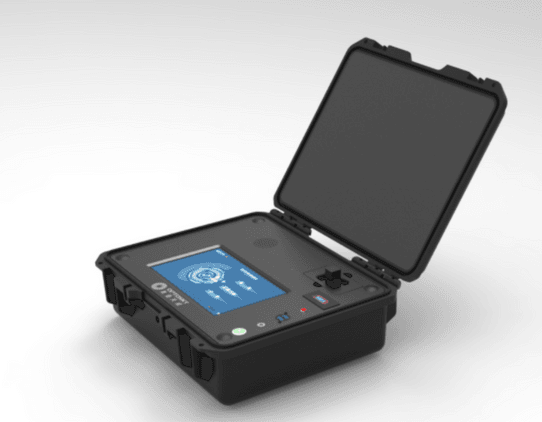
With the increasing consumer demand for food safety and quality, the purity and safety of authenticity in the edible oil market have become the focus of attention. Among a variety of edible oils, canola oil is highly favored for its unique nutritional value and health benefits. However, there is no lack of unscrupulous merchants in the market who adulterate it by mixing it with other fats and oils such as soybean oil, which brings harm to consumers' rights and interests.
In order to quickly and accurately measure the adulteration in rapeseed oil and the composition of rapeseed oil, researchers have been seeking efficient and accurate detection methods. Raman spectroscopy, as a non-destructive, rapid and sample-preparation-free detection technique, shows great potential in the field of edible oil adulteration detection. Through Raman spectroscopy, the vibrational information of molecules in edible oil can be obtained, and then its chemical composition and structure can be analyzed.
When soybean oil is adulterated in canola oil and the oleic acid or No. 6 solvent residue in canola oil is measured, the molecular vibration characteristics of these substances will differ from those of canola oil. Using Raman spectroscopy, these differences can be captured and the spectra can be analyzed by data analysis software to achieve qualitative and quantitative analysis of the adulterated substances. Raman spectroscopy, as a non-destructive, rapid and sample-preparation-free detection method, shows great potential in the field of edible oil adulteration detection. By capturing the vibration information of the molecules in edible oil, Raman spectroscopy can deeply analyze their chemical composition and structure, and realize the qualitative and quantitative analysis of adulterated substances. Whether it is a trace amount of soybean oil adulteration, or oleic acid, No. 6 solvent and other harmful residues, Raman spectroscopy can accurately identify them, ensuring the purity and safety of canola oil.
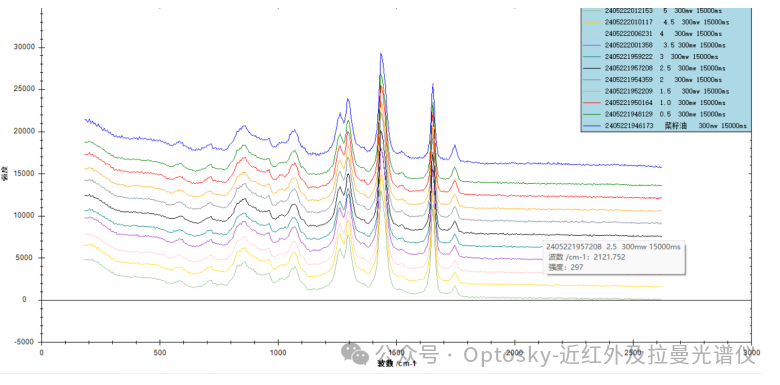

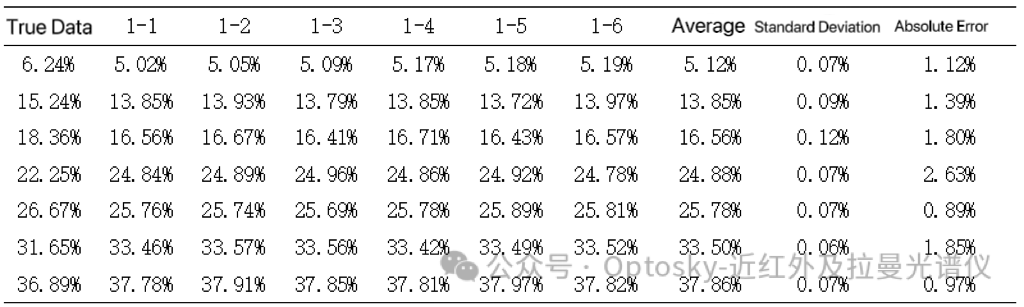
Rapeseed oil adulteration measurement data
Configuration of rapeseed oil adulteration of soybean oil adulteration samples were tested, the stability of the instrument test is good, the absolute error of the test is within 2.5%. It can be seen that Raman can measure soybean oil adulteration in rapeseed oil.
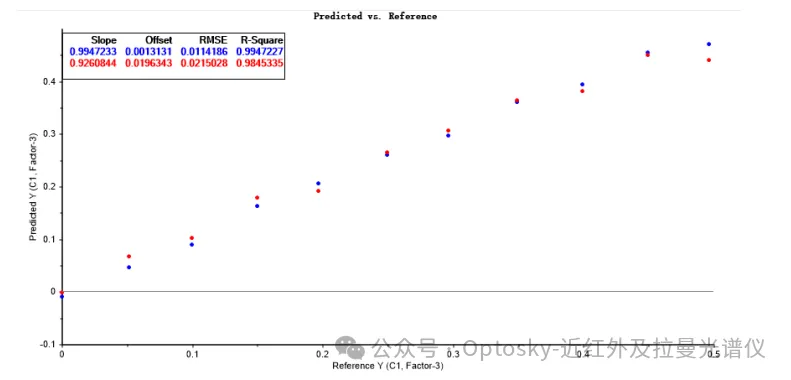
As shown above, the correlation coefficient of the calibration set is 0.99. The correlation coefficient of the validation set is 0.98, the root mean square (RMS) is 0.02, and the PRD value is 7.85 (which is usually greater than the value of 1.4, which is of strong quantitative significance), so it can be seen that the modeling of the oleic acid in canola oil by using the top of the Raman spectroscopy has good linear correlation with a small root mean square error.
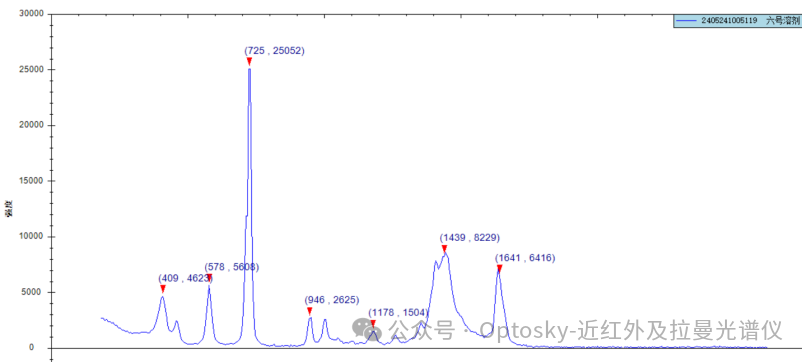
The spectrum of the standard solution of solvent VI (10 mg/ml) was measured as shown above, and by the characteristic peaks, it was possible to identify the solvent VI at that concentration.
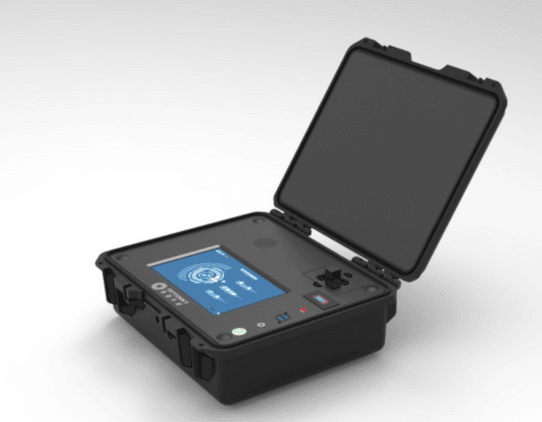
The application of Raman spectroscopy technology not only provides a powerful means to regulate the edible oil market, but also builds a solid line of defense for consumers' health. The use of Ausnutria's NY6000 Edible Oil Comprehensive Analyzer enables fast and accurate testing, helping us to detect and combat adulteration and counterfeiting in a timely manner, and safeguarding the legitimate rights and interests of consumers. At the same time, it will also prompt edible oil producers to strengthen self-discipline, improve product quality and promote the healthy development of the whole industry.
|
Laser wavelength |
1064nm |
|
Spectral range |
200-2600cm-1(1064nm);Wave number range supports customization |
|
Detector |
Ultra-high sensitivity cooled (-10°C) back-illuminated 2048*64 array detector |
|
Maximum laser power |
450mW |
|
Spectral stability |
σ/μ < 0.5% (COT 8 hours) |
|
Temperature stability |
Spectral Shift ≤ 1 cm-1 (10-40 ℃) |
|
SNR |
>3000:1 |
|
Laser diameter |
Outer diameter 12.7mm,Aperture8.5mm |
|
Software function |
Quantitative measurement of adulteration in edible oils |
|
Interface |
USB2.0,Network port |
|
Power supply |
DC5V,3.5A |
|
Weight |
<10 Kg |
Conclusion
The NY6000 can identify soybean oil adulteration in canola oil, and the error of qualitative measurement is within 2.5%, which can realize the high-end edible oil adulteration and counterfeiting. The instrument can qualitatively identify oleic acid (C18:1) with an error of 3% or less, which can be helpful in rating and identifying rapeseed oil, and creating high-end quality edible oil brands such as high oleic acid rapeseed oil. The instrument can recognize solubility VI (10mg/ml), NY6000 as a non-destructive, fast and no sample pretreatment instrument, in the field of edible oil adulteration detection shows great potential.
Product Recommendation|Smart Urban Gas Solutions
Water Quality Mobile Inspection Program
Related Article