
Application | Spectrometer Solutions in Zinc Hydrometallurgy
2026-01-07
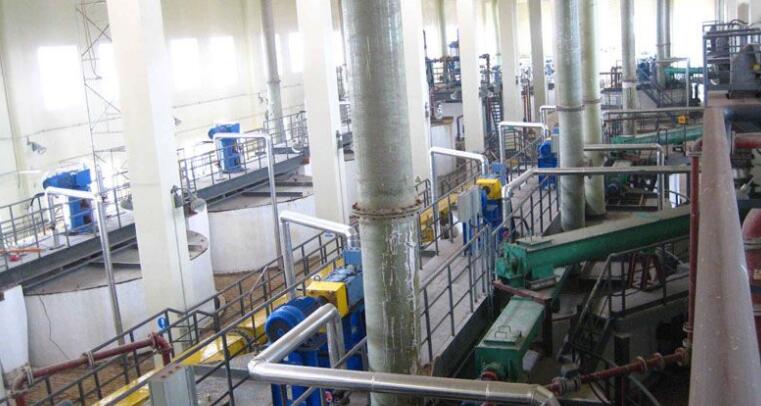
In the zinc smelting industry, hydrometallurgical processes are mainstream due to their environmental and efficiency benefits. However, a persistent "invisible challenge" has plagued producers: accurately detecting cobalt ion concentration. This metric critically impacts zinc purity and electrolysis efficiency, yet traditional methods are either cumbersome, time-consuming, or lack precision. Optosky spectrometers offer a novel solution to this industry hurdle.
01 The Hydrometallurgy Bottleneck: Cobalt Removal
Fig 1. Schematic of Zinc Hydrometallurgy Process
The core process is well-defined: roasting zinc concentrate → sulfuric acid leaching (zinc ions enter solution) → purification to remove impurities (copper, cadmium, cobalt, etc.) → electrolysis to obtain metallic zinc. Here, "cobalt removal" is paramount. Cobalt ions reduce electrolysis efficiency and can compromise final product purity. However, detecting trace cobalt within an extremely high-concentration zinc solution containing multiple impurities is exceptionally difficult with conventional techniques.
02 Drawbacks of Traditional Methods
Fig 2. Traditional Process Schematic
Historically, cobalt detection methods had significant flaws:
-
Electrochemical/Chromatography Methods: Equipment is expensive, sample preparation is complex, and results are easily interfered with by the high-zinc matrix, making them unsuitable for on-site plant use.
-
Traditional Spectrophotometry: Relies on manual colorimetric reactions involving multiple steps (reagent preparation, pH adjustment, visual comparison). A single test can take 30 minutes, is prone to operator error, and ultimately slows production.
The plant floor urgently needed a real-time, precise, and automated detection solution. Optosky spectrometers met this need and were successfully implemented by researchers.
03 Principle: How the Spectrometer "Identifies" Cobalt Ions
The core logic leverages the "optical fingerprint" of substances—each absorbs or emits light in a unique pattern. The fully automated process involves three steps:
Figure 3. Schematic of Spectrometer Measurement Principle
-
Optical Signal Collection: Low-loss optical fibers transmit light signals from the zinc solution to the instrument with high stability, resisting interference from plant dust and vibration.
-
Spectral Dispersion: A diffraction grating separates the mixed light into individual wavelengths. Cobalt ions produce characteristic absorption within the 500-800 nm band.
-
Data Output: The detector converts optical signals into electrical signals, rapidly calculates cobalt ion concentration, and directly generates spectra and data—eliminating manual calculations.
In essence, the instrument "reads" the optical fingerprint of cobalt ions, enabling fast and precise detection.
04 Broad Applications of OES Technology
Fig. 4 Basic Detection Optical Path Schematic
The detection system core is Optosky's "Gold Standard Combination" — the highly stable ATG1020 broadband light source paired with the ATP2000 series spectrometer. Its advantages are clear:
-
Hardware Superiority: High Stability & Integration. The ATP2000 series covers a 200-1100 nm wavelength range, accurately capturing cobalt's absorption features. Its compact, robust design allows direct integration into plant systems, saving space.
-
Precision Advantage: High Repeatability. Experimental validation: Testing 20 different zinc-cobalt solutions yielded absorbance with an average standard deviation of only 0.0041-0.009. Excellent repeatability was achieved for both low and high-concentration samples, far surpassing traditional method precision.
-
Speed Advantage: Doubled Efficiency. While traditional methods take 30 minutes, this system delivers results within 10 seconds and supports online, real-time monitoring. Installed beside a conveyor, it can trigger automatic alerts for cobalt levels, eliminating the need for manual sampling.
Fig. 5 Spectra of 20 Zinc-Cobalt Solutions with Different Concentrations.
(a) Original Spectra (b) Spectra After Subtracting Background (Cobalt-free Zinc Solution)
05 Tangible Value: Cost Reduction & Efficiency Gains
Fig. 6 Application Example – System Structure & Schematic
For zinc hydrometallurgy plants, this solution delivers concrete benefits:
-
Eliminates repetitive manual operations, reducing labor costs.
-
Enables real-time adjustment of purification processes, minimizing zinc solution waste. Electrolysis efficiency can potentially increase by 5%-10%.
-
Ensures more stable zinc product purity, avoiding rework due to impurity issues.
06 Conclusion
Implementing Optosky spectrometers allows zinc smelters to perform efficient cobalt ion assaying, transforming this step from a production bottleneck into a robust quality control checkpoint. If your operation faces similar cobalt detection challenges, exploring Optosky spectrometer products is a worthwhile step forward.
For more information, please contact:
Email: [email protected]
Web: www.optosky.net
References
Automatic detection system with efficient and accurate sample preparation for cobalt ion concentration in zinc hydrometallurgy,Microchemical Journal,Volume 199, April 2024, 109991,https://doi.org/10.1016/j.microc.2024.109991
Application Case | ATP5020P: Empowering Optical Research of 2D Materials and Facilitating Breakthroughs in Multifunctional PdSe Optoelectronic Devices
Application Case | ATP3030 Spectrometer: Enabling Non-Destructive Comprehensive Quality Detection of Grapes
Related Article

The ATP7810 is a wide-band, high-resolution infrared grating spectrometer covering up to 0.9–5 μm. Featuring a motorized rotating grating, multiple detector options (InGaAs/MCT), and flexible interfaces (SMA905 or free space, USB/UART control), it delivers high SNR and stability for absorption/reflection/transmission spectroscopy, laser wavelength testing, and fiber optic sensing.
New Product Recommendation | ATP7810 Ultra-Wide Range Infrared Spectrometer Series

This study uses the ATP5200P UV-Vis spectrometer to investigate xanthate adsorption on chalcopyrite surfaces. By analyzing absorbance at 300 nm under controlled pH and temperature, the method optimizes flotation conditions for copper recovery, enabling real-time, sensitive detection of adsorption mechanisms in non-ferrous mineral processing.
Using the ATP5200P Spectrometer to Unravel Xanthate Adsorption and Separation Mechanisms
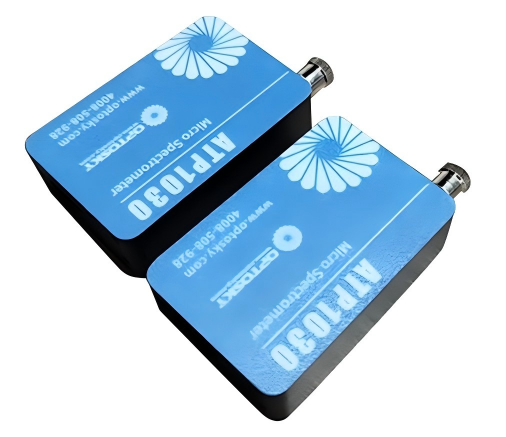
ATP1030 is an ultra‑compact, high‑resolution spectrometer covering 190–1100 nm. With a 1024‑pixel CMOS detector, adjustable integration time down to 1 ms, and USB‑powered design, it delivers reliable performance for applications like online water analysis, color measurement, handheld instruments, and Raman spectroscopy.
Product Recommendation | ATP1030 mini spectrometer Spectrometer

Vis-NIR transmission spectroscopy enables non-destructive identification of infertile duck eggs before incubation, achieving >95% accuracy. By detecting spectral fingerprints (e.g., 836 nm peak for fertile eggs), this method reduces energy waste and improves hatch rates, offering a low-cost, high-throughput solution for modern poultry farming.
Application case | How Spectral Technology is Transforming Duck Egg Farming