
Application Case | ATP2400: Unveiling the Gasification Mechanism of PTFE in Thermal Plasma
2026-01-07
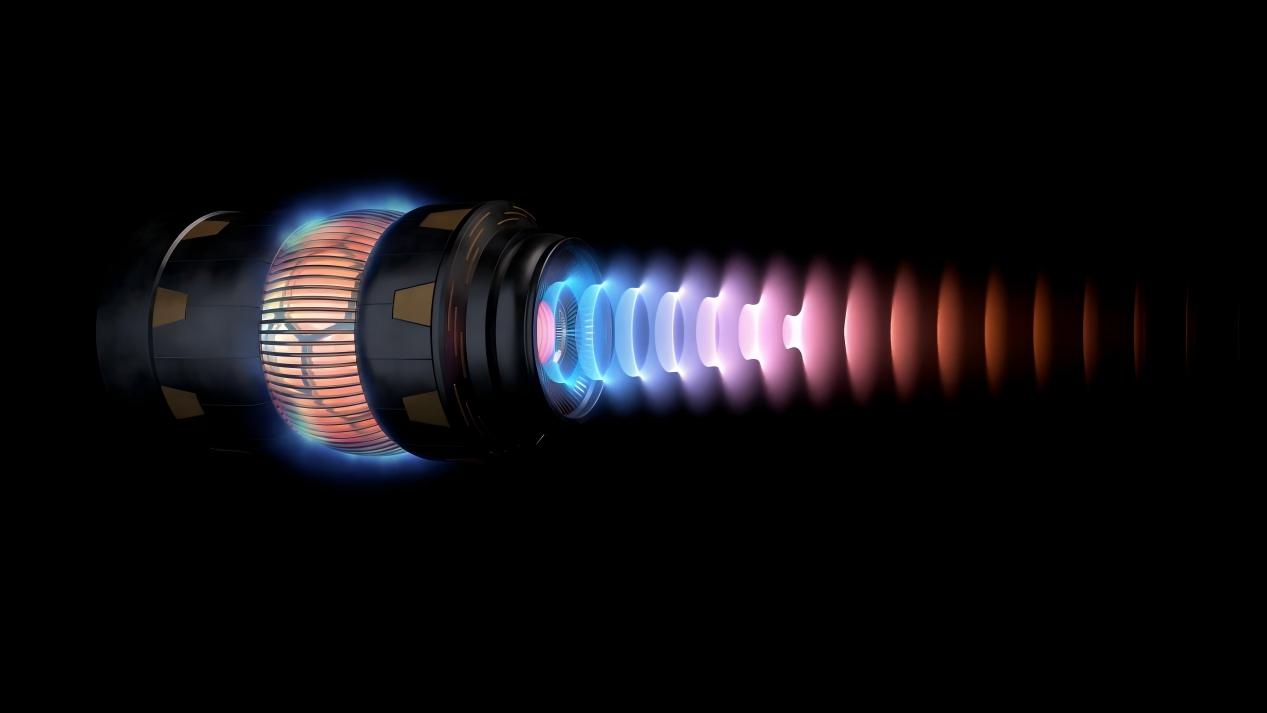
In recent years, with the growing volume of fluoropolymer waste, the environmentally sound treatment of highly chemically stable materials like polytetrafluoroethylene (PTFE) has become a pressing concern. Finding ways to efficiently process PTFE while avoiding the generation of toxic fluorides is a significant challenge in environmental technology.
01 Research Context: PTFE Disposal and the Plasma Challenge
PTFE's inherent chemical stability makes it resistant to decomposition by conventional methods. Thermal plasma technology offers ultra-high temperatures and highly reactive species for this purpose, but directly observing its reaction processes is difficult. Precisely measuring the temperature and composition within the plasma reaction zone is a prerequisite for optimizing the process and validating computational models.
02 Key Technology: The Role of OES in Plasma Diagnostics
Optical Emission Spectroscopy (OES) is a non-invasive diagnostic technique. By analyzing the characteristic spectra emitted by excited substances, it can determine plasma temperature, composition, and the concentration of reactive species.
A recent study published in Nature Communications systematically revealed the degradation mechanism of PTFE during thermal plasma gasification by combining multi-scale simulation with experimental validation. The research not only theoretically proposed two degradation pathways for PTFE under oxygen and steam atmospheres but also experimentally achieved a high gaseous fluorine recovery rate of 80.12%, offering a new approach for efficient PTFE resource recovery. In this cutting-edge research, OES technology played an indispensable role.
ATP2400 spectrometer was used to collect emission spectra from the plasma jet. By comparing experimental spectra with standard spectral libraries, researchers accurately determined the core plasma temperature (4500K–4750K) at different power levels, providing critical input parameters for subsequent reaction simulations.
03 ATP2400: A Spectral Solution for Demanding Environments
ATP2400 offers high resolution, high sensitivity, and strong anti-interference capability. It is suitable for high-temperature, high-radiation plasma environments, enabling the stable acquisition of reliable spectral data to support end-to-end research from experimentation to simulation.
04 Broad Applications of OES Technology
OES technology is not only vital for advanced research but also plays a key role across multiple industrial sectors:
-
Semiconductor Manufacturing: Monitoring plasma processes (etching, deposition).
-
Energy & Combustion: Monitoring combustion temperature and pollutants.
-
Material Processing: Diagnostics for processes like laser welding and arc additive manufacturing.
-
Environmental Monitoring: Online analysis of industrial exhaust gas components.
05 Conclusion
Optosky is committed to providing reliable spectral measurement tools for both scientific research and industry. The application of the ATP2400 in PTFE gasification mechanism research demonstrates its robust detection capabilities in complex environments. We look forward to collaborating with more industry partners to advance the application of spectral technology in environmental protection, energy, manufacturing, and beyond.
For more information, please contact:
Email: [email protected]
Web: www.optosky.net
References
Chu, C., Ma, L.L., Alawi, H. et al. Mechanistic exploration of polytetrafluoroethylene thermal plasma gasification through multiscale simulation coupled with experimental validation. Nat Commun 15, 1654 (2024). https://doi.org/10.1038/s41467-024-45077-6
Application Case | ATP3030 Spectrometer: Enabling Non-Destructive Comprehensive Quality Detection of Grapes
Application Case | Precision Control of ALD Process: ATP5020P Supports the Industrialization of Perovskite Quantum Dots
Related Article

The ATP7810 is a wide-band, high-resolution infrared grating spectrometer covering up to 0.9–5 μm. Featuring a motorized rotating grating, multiple detector options (InGaAs/MCT), and flexible interfaces (SMA905 or free space, USB/UART control), it delivers high SNR and stability for absorption/reflection/transmission spectroscopy, laser wavelength testing, and fiber optic sensing.
New Product Recommendation | ATP7810 Ultra-Wide Range Infrared Spectrometer Series

This study uses the ATP5200P UV-Vis spectrometer to investigate xanthate adsorption on chalcopyrite surfaces. By analyzing absorbance at 300 nm under controlled pH and temperature, the method optimizes flotation conditions for copper recovery, enabling real-time, sensitive detection of adsorption mechanisms in non-ferrous mineral processing.
Using the ATP5200P Spectrometer to Unravel Xanthate Adsorption and Separation Mechanisms
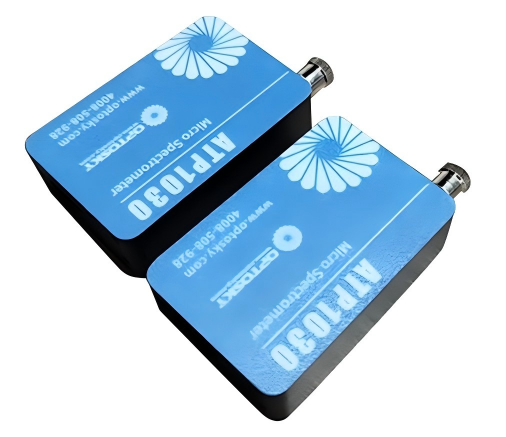
ATP1030 is an ultra‑compact, high‑resolution spectrometer covering 190–1100 nm. With a 1024‑pixel CMOS detector, adjustable integration time down to 1 ms, and USB‑powered design, it delivers reliable performance for applications like online water analysis, color measurement, handheld instruments, and Raman spectroscopy.
Product Recommendation | ATP1030 mini spectrometer Spectrometer

Vis-NIR transmission spectroscopy enables non-destructive identification of infertile duck eggs before incubation, achieving >95% accuracy. By detecting spectral fingerprints (e.g., 836 nm peak for fertile eggs), this method reduces energy waste and improves hatch rates, offering a low-cost, high-throughput solution for modern poultry farming.
Application case | How Spectral Technology is Transforming Duck Egg Farming