
Application Case | ATP3030 Spectrometer: Enabling Non-Destructive Comprehensive Quality Detection of Grapes
2026-01-07
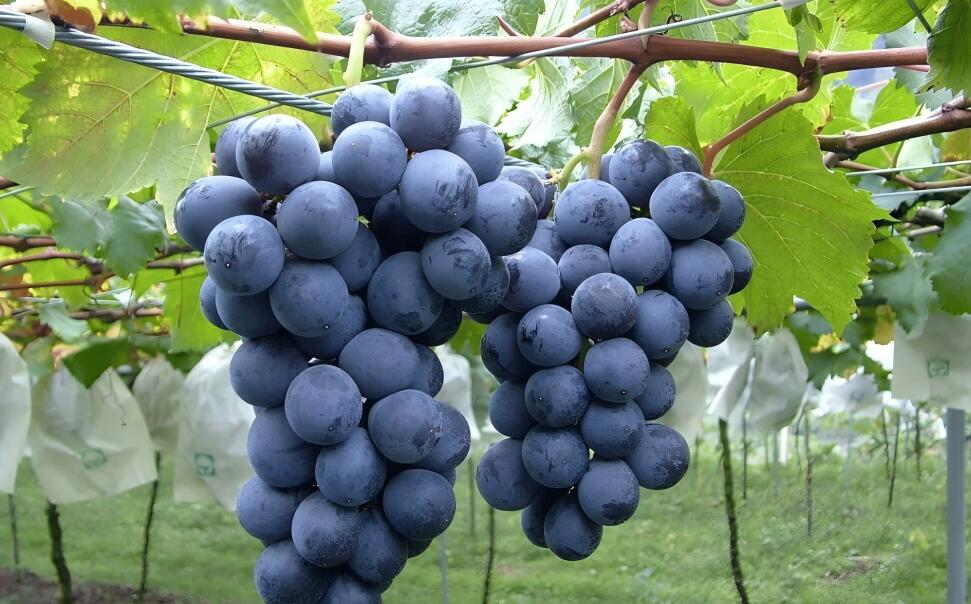
How to quickly and accurately determine the internal quality of grapes has been a long-standing challenge for growers and winemakers. Traditional methods, often reliant on single indicators, are cumbersome, and assessing overall quality is particularly difficult. With the rapid advancement of spectroscopic technology, visible-near-infrared (Vis-NIR) spectroscopy has found application in agriculture. In a recent development, researchers have combined Vis-NIR spectroscopy with an Aggregate Quality Index (AQI), utilizing the Optosky ATP3030 spectrometer to achieve non-destructive and rapid assessment of grape quality.
01 Technological Breakthrough: From Single Metrics to Comprehensive Assessment
Grape quality is determined by multiple parameters, including sugar content (Brix), acidity, color, and phenolic compounds. Traditional methods typically measure only one indicator at a time, failing to comprehensively reflect the fruit's overall condition.
This research employed factor analysis to integrate several key quality parameters into a single Aggregate Quality Index (AQI), enabling holistic quantification of grape maturity. The study further demonstrated that Vis-NIR spectroscopy can efficiently and non-destructively predict the AQI value of grapes.
02 ATP3030 Spectrometer
As the core detection instrument in this research, the ATP3030 spectrometer was responsible for acquiring high-quality spectral data from grape samples.
Reliable Performance: The device covers a 200-1100 nm wavelength range, accurately capturing spectral features related to the internal components of grapes.
Clear Application Scenario: The study utilized a diffuse reflection measurement mode, suitable for the non-destructive testing of whole grapes and effectively accommodating natural morphological variations in the fruit.
03 Experimental Setup
Spectral Collection
Diffuse reflection spectra were collected using the setup shown in Figure 2. A dark background spectrum and a standard white reference spectrum were saved prior to each data acquisition session. Grapes were placed on the standard white reference for spectral collection. For each sample, 10 measurements were taken from each of two sides (sun-exposed and shaded). Euclidean distance analysis was applied to the spectral data from each sample, and the data point closest to all others was selected as the representative spectrum for that sample.
During spectral acquisition, various environmental factors can introduce noise, potentially affecting modeling accuracy and prediction precision. Therefore, preprocessing the spectra is crucial before model development.
Physicochemical Analysis:
After spectral and CIELab color measurements, individual samples were frozen at -40°C. Traditional laboratory methods were then used for quantitative measurement of pH, total acidity, soluble solid content (SSC/Brix), reducing sugar content, total anthocyanin content, total phenolic content, and total tannin content.
Model Development
Based on these measured indicators and the spectral data, factor analysis was employed to identify latent and dominant factors in both Cabernet Sauvignon (CS) and Merlot (MK) grapes to assess their aggregate quality.
Analysis & Conclusion
Experimental data showed that the prediction model built on spectral data collected by the ATP3030 achieved a prediction accuracy of R²p = 0.972 for the AQI of Cabernet Sauvignon grapes. This validates the instrument's practicality and reliability for the quantitative analysis of fruit quality.
04 Practical Application Value
Vis-NIR spectroscopy, combined with the ATP3030 spectrometer, can play a significant role in multiple stages:
-
Guiding Harvest: Growers can perform rapid testing to understand the overall maturity in their vineyard, precisely determining the optimal harvest time.
-
Quality Grading: Wineries can efficiently sort incoming grapes, ensuring raw material meets the requirements for specific wine styles.
-
Agricultural Research: Provides a tool for high-volume, non-destructive quality analysis in research areas like cultivar selection and cultivation techniques.
05 Conclusion
Transforming complex quality attributes into a rapidly measurable composite index is becoming a new trend in agricultural testing. The Optosky ATP3030 spectrometer, with its stable performance, provides a solid technological foundation for quality assessment of grapes and a wider range of agricultural products, supporting the move towards more precise and intelligent agricultural production.
For more information, please contact:
Email: [email protected]
Web: www.optosky.net
References
Xuejian Zhou, Jihong Yang, Yuan Su, Ke He, Yulin Fang, Xiangyu Sun, Yanlun Ju, Wenzheng Liu, Aggregation and assessment of grape qualityparameters with visible-near-infrared spectroscopy: Introducing a novel quantitative index, Postharvest Biology and Technology, Volume 218, 2024, 113131, ISSN 0925-5214, https://doi.org/10.1016/j.postharvbio.2024.113131.
Application | Spectrometer Solutions in Zinc Hydrometallurgy
Application Case | ATP2400: Unveiling the Gasification Mechanism of PTFE in Thermal Plasma
Related Article

The ATP7810 is a wide-band, high-resolution infrared grating spectrometer covering up to 0.9–5 μm. Featuring a motorized rotating grating, multiple detector options (InGaAs/MCT), and flexible interfaces (SMA905 or free space, USB/UART control), it delivers high SNR and stability for absorption/reflection/transmission spectroscopy, laser wavelength testing, and fiber optic sensing.
New Product Recommendation | ATP7810 Ultra-Wide Range Infrared Spectrometer Series

This study uses the ATP5200P UV-Vis spectrometer to investigate xanthate adsorption on chalcopyrite surfaces. By analyzing absorbance at 300 nm under controlled pH and temperature, the method optimizes flotation conditions for copper recovery, enabling real-time, sensitive detection of adsorption mechanisms in non-ferrous mineral processing.
Using the ATP5200P Spectrometer to Unravel Xanthate Adsorption and Separation Mechanisms
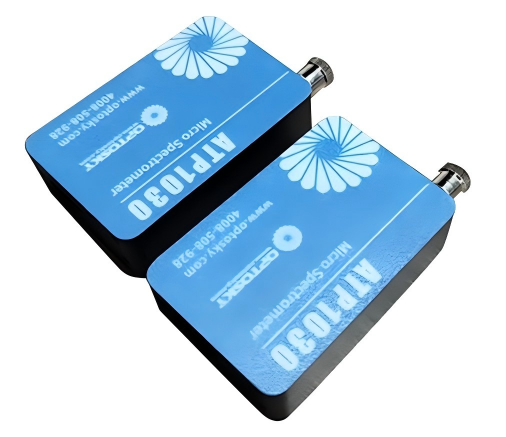
ATP1030 is an ultra‑compact, high‑resolution spectrometer covering 190–1100 nm. With a 1024‑pixel CMOS detector, adjustable integration time down to 1 ms, and USB‑powered design, it delivers reliable performance for applications like online water analysis, color measurement, handheld instruments, and Raman spectroscopy.
Product Recommendation | ATP1030 mini spectrometer Spectrometer

Vis-NIR transmission spectroscopy enables non-destructive identification of infertile duck eggs before incubation, achieving >95% accuracy. By detecting spectral fingerprints (e.g., 836 nm peak for fertile eggs), this method reduces energy waste and improves hatch rates, offering a low-cost, high-throughput solution for modern poultry farming.
Application case | How Spectral Technology is Transforming Duck Egg Farming