
Application Case | ATP8600: Enabling Intelligent Online Quality Inspection for Kiwifruit
2026-03-12
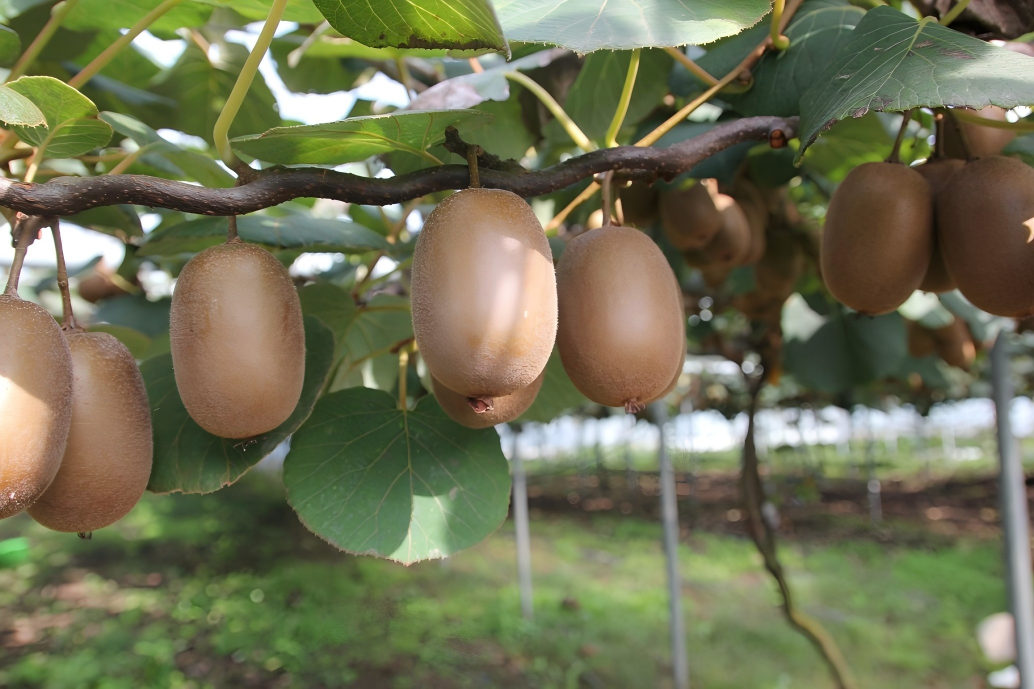
For generations, manual visual sorting has dominated kiwifruit grading. Farmers and workers rely on years of accumulated experience, judging quality by observing fruit size, color, and shape. However, this approach is inherently subjective and falls short when it comes to accurately quantifying internal quality indicators—such as sugar content (Brix) and firmness—that truly determine fruit quality.
01 Breaking Through Industry Bottlenecks: Spectral Technology Ends "Experience-Based" Sorting
The kiwifruit industry has long struggled with the limitations of traditional inspection methods:
-
Manual sorting relies on subjective judgment, making it difficult to quantify core indicators like sugar content and maturity, with miss rates exceeding 15%.
-
Mechanical sorting risks damaging the fruit and struggles to match the efficiency demands of large-scale production.
Addressing these persistent challenges, modern inspection leverages spectral technology to deliver a "non-destructive testing + data quantification" solution, propelling kiwifruit quality control into the era of intelligent automation.
02 Three Key Advantages: Comprehensive Quality Control
-
Broad Spectral Range: The ATP8600 covers the critical 900–1700 nm wavelength range. Using advanced chemometric modeling, it achieves a sugar content prediction accuracy with an Rp value of 0.93 and an error margin of ≤0.77°Brix, ensuring unbiased quantification of core quality indicators.
-
High Efficiency, Zero Damage: Its non-contact measurement mode requires only 0.9 seconds per fruit, seamlessly integrating with online sorting lines operating at speeds of up to 50 fruits per second. It eliminates the risk of product damage, preserving the fruit's market value.
-
Adaptable to Any Environment: Engineered for stable operation across a wide temperature range and featuring robust anti-interference design, it performs reliably in complex environments—from cold storage facilities to open-air processing lines—without requiring additional on-site adjustments.
03 Safeguarding Quality from Field to Shelf
-
Harvest Stage: Provides maturity data in just 10 seconds, guiding harvesting decisions and increasing the yield of premium-grade fruit by up to 25%.
-
Sorting Line: Simultaneously detects sugar content and surface defects, achieving a 99.2% accuracy rate for identifying high-end fruit—8 times more efficient than manual sorting.
-
Storage Stage: Enables real-time early warning of fruit softening during storage, reducing storage loss rates from 12% down to under 5%.
04 Conclusion
As near-infrared spectroscopy technology continues to evolve and find broader application, the fiber optic spectrometer is no longer just a simple measurement tool. With its inherent advantages of flexibility, high precision, and exceptional reliability, it is poised to become deeply integrated throughout the entire kiwifruit value chain—from cultivation to sorting and inspection—serving as a key driver of industrial upgrading.
Moving forward, Optosky is committed to accelerating the integration of AI with multi-spectral technology, unlocking new detection dimensions such as pesticide residue analysis and mineral content assessment. Through cutting-edge spectral innovation, we will continue to empower the fruit industry to enhance quality and efficiency, jointly painting a new vision for smart agriculture.
For more information, please contact:
Email: [email protected]
Web: www.optosky.net
Application Case | IR2300 Near-Infrared Grain Analyzer Enhances Grain Station Receiving and Storage Efficiency
Fundamentals | Spectrometer Accessories: A Guide to Optical Fiber Selection
Related Article

The ATP7810 is a wide-band, high-resolution infrared grating spectrometer covering up to 0.9–5 μm. Featuring a motorized rotating grating, multiple detector options (InGaAs/MCT), and flexible interfaces (SMA905 or free space, USB/UART control), it delivers high SNR and stability for absorption/reflection/transmission spectroscopy, laser wavelength testing, and fiber optic sensing.
New Product Recommendation | ATP7810 Ultra-Wide Range Infrared Spectrometer Series

This study uses the ATP5200P UV-Vis spectrometer to investigate xanthate adsorption on chalcopyrite surfaces. By analyzing absorbance at 300 nm under controlled pH and temperature, the method optimizes flotation conditions for copper recovery, enabling real-time, sensitive detection of adsorption mechanisms in non-ferrous mineral processing.
Using the ATP5200P Spectrometer to Unravel Xanthate Adsorption and Separation Mechanisms
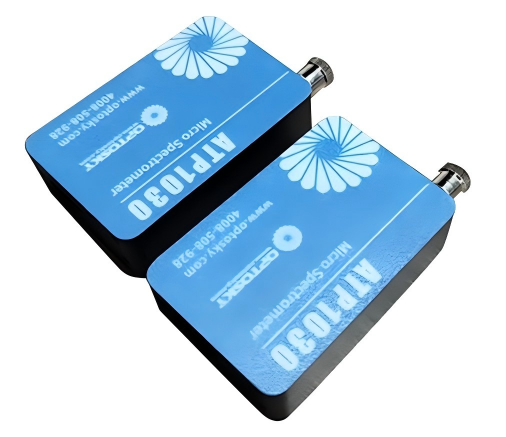
ATP1030 is an ultra‑compact, high‑resolution spectrometer covering 190–1100 nm. With a 1024‑pixel CMOS detector, adjustable integration time down to 1 ms, and USB‑powered design, it delivers reliable performance for applications like online water analysis, color measurement, handheld instruments, and Raman spectroscopy.
Product Recommendation | ATP1030 mini spectrometer Spectrometer

Vis-NIR transmission spectroscopy enables non-destructive identification of infertile duck eggs before incubation, achieving >95% accuracy. By detecting spectral fingerprints (e.g., 836 nm peak for fertile eggs), this method reduces energy waste and improves hatch rates, offering a low-cost, high-throughput solution for modern poultry farming.
Application case | How Spectral Technology is Transforming Duck Egg Farming