
Citrus chilling injury detection Online fruit quality inspection Non-destructive fruit testing
2025-11-04
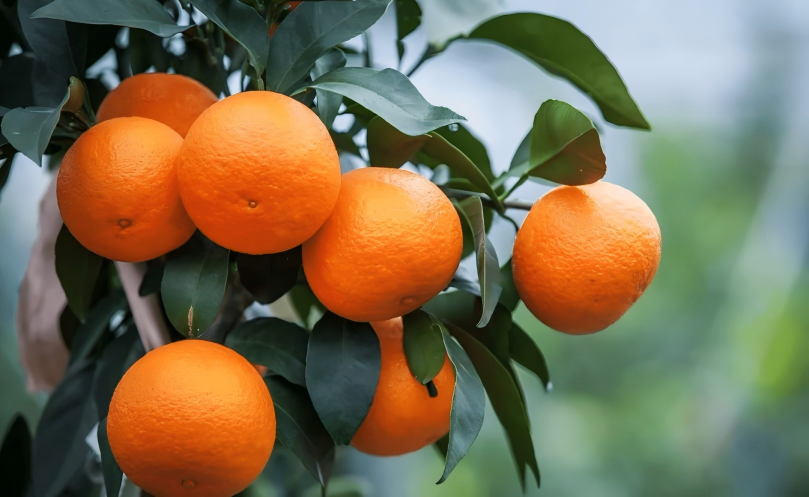
Citrus fruits are susceptible to chilling injury during post-harvest storage and transportation. At the early stage, such damage shows no obvious external signs, yet it severely affects taste and market value. Optosky ATP2000P spectrometer, combined with an online transmission spectroscopy system, Diameter Correction Method (DCM), and deep learning algorithms, enables high-precision, online, and non-destructive detection of early chilling injury in citrus, offering reliable technical support for intelligent fruit sorting.
01 Application Background
Industry Challenges in Chilling Injury Detection
Citrus is a major global economic crop but is prone to chilling injury under low-temperature conditions. In the early stage, internal ice crystal formation causes cell dehydration and nutrient loss, while leaving no visible external traces. Traditional manual inspection or flotation methods are inefficient, destructive, and inadequate for modern sorting requirements.
02 ATP2000P Online Detection System
Fig. 1. Schematic of online transmission spectra measurement system
System Components
-
Light Source: 100W halogen lamp with focusing lens
-
Spectrometer: ATP2000P spectrometer (wavelength range: 644–1100 nm)
-
Transmission Mode: Online transmission for high stability
-
Auxiliary Equipment: Encoder trigger, shielding cover to prevent interference, automatic data saving
Diameter Correction Method (DCM)
Fruit size variation significantly affects transmission spectral intensity. Using the ATP2000P online transmission system, the innovative Diameter Correction Method (DCM) identifies the wavelength most correlated with fruit diameter (825 nm) and standardizes the absorption spectra accordingly. This effectively eliminates the influence of size, outperforming traditional preprocessing methods such as MSC and SNV.
Intelligent Modeling & Deep Learning
-
Traditional Models: Algorithms including PLSDA and SVM, combined with effective wavelength selection via CARS and SPA, to establish lightweight, high-accuracy models.
-
1D-CNN Deep Learning Model: A three-layer convolutional structure extracts deep spectral features. Data augmentation techniques enhance model generalization. The final model achieved recall rates of 95.15% for injured fruits and 88.54% for healthy fruits in the prediction set, with an overall accuracy of 91.96%.
03 Application Results & Advantages
Fig.2. Apparent characteristics of frezedamaged orange (a) and sound unfrozen orange (b),.(For interpretation of the references to colour in this figure legend, the reader is referred to the web version of this article.)
Fig.3. Absorbance spectra of all the samples acquired by the online mea-surement system.
|
Item
|
Description
|
|
Detection Target
|
Early chilling injury in citrus (Orah variety)
|
|
Detection Method
|
Online transmission spectroscopy, non-destructive
|
|
Core Algorithms
|
DCM + PLSDA/SVM/1D-CNN
|
|
Optimal Model
|
DCM-1D-CNN
|
|
Accuracy
|
91.96% (prediction set)
|
|
Key features
|
Resistant to size interference, suitable for high-speed online sorting
|
04 Conclusion
ATP2000P optical fiber spectrometer, integrated with diameter correction and deep learning technologies, enables online non-destructive detection of early chilling injury in citrus fruits. This system is not only suitable for citrus but can also be extended to internal quality inspection of fruits such as apples and pears, providing a comprehensive and efficient solution for intelligent post-harvest handling of fruits and vegetables.
Reference
-
Shijie Tian, Shuai Wang, Huirong Xu, Early detection of freezing damage in oranges by online Vis/NIR transmission coupled with diameter correction method and deep 1D-CNN, Computers and Electronics in Agriculture, Volume 193, 2022, 106638, ISSN 0168-1699, https://doi.org/10.1016/j.compag.2021.106638.
Application Case | ATP2000H Spectrometer: High-Precision Prediction of Apple Firmness
Spectrometer semiconductor Plasma process monitoring OES Endpoint detection etching
Related Article

The ATP7810 is a wide-band, high-resolution infrared grating spectrometer covering up to 0.9–5 μm. Featuring a motorized rotating grating, multiple detector options (InGaAs/MCT), and flexible interfaces (SMA905 or free space, USB/UART control), it delivers high SNR and stability for absorption/reflection/transmission spectroscopy, laser wavelength testing, and fiber optic sensing.
New Product Recommendation | ATP7810 Ultra-Wide Range Infrared Spectrometer Series

This study uses the ATP5200P UV-Vis spectrometer to investigate xanthate adsorption on chalcopyrite surfaces. By analyzing absorbance at 300 nm under controlled pH and temperature, the method optimizes flotation conditions for copper recovery, enabling real-time, sensitive detection of adsorption mechanisms in non-ferrous mineral processing.
Using the ATP5200P Spectrometer to Unravel Xanthate Adsorption and Separation Mechanisms
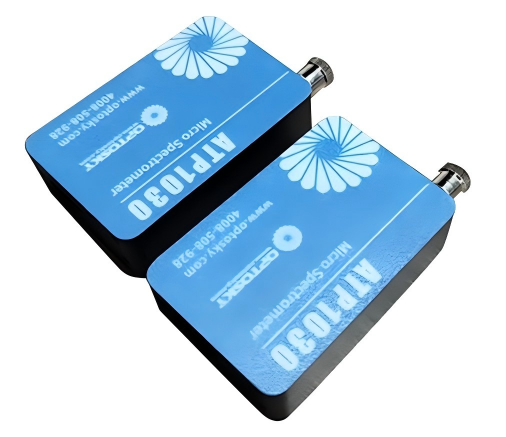
ATP1030 is an ultra‑compact, high‑resolution spectrometer covering 190–1100 nm. With a 1024‑pixel CMOS detector, adjustable integration time down to 1 ms, and USB‑powered design, it delivers reliable performance for applications like online water analysis, color measurement, handheld instruments, and Raman spectroscopy.
Product Recommendation | ATP1030 mini spectrometer Spectrometer

Vis-NIR transmission spectroscopy enables non-destructive identification of infertile duck eggs before incubation, achieving >95% accuracy. By detecting spectral fingerprints (e.g., 836 nm peak for fertile eggs), this method reduces energy waste and improves hatch rates, offering a low-cost, high-throughput solution for modern poultry farming.
Application case | How Spectral Technology is Transforming Duck Egg Farming