
Carbon Quantum Dots: Advances and Applications
2024-10-12
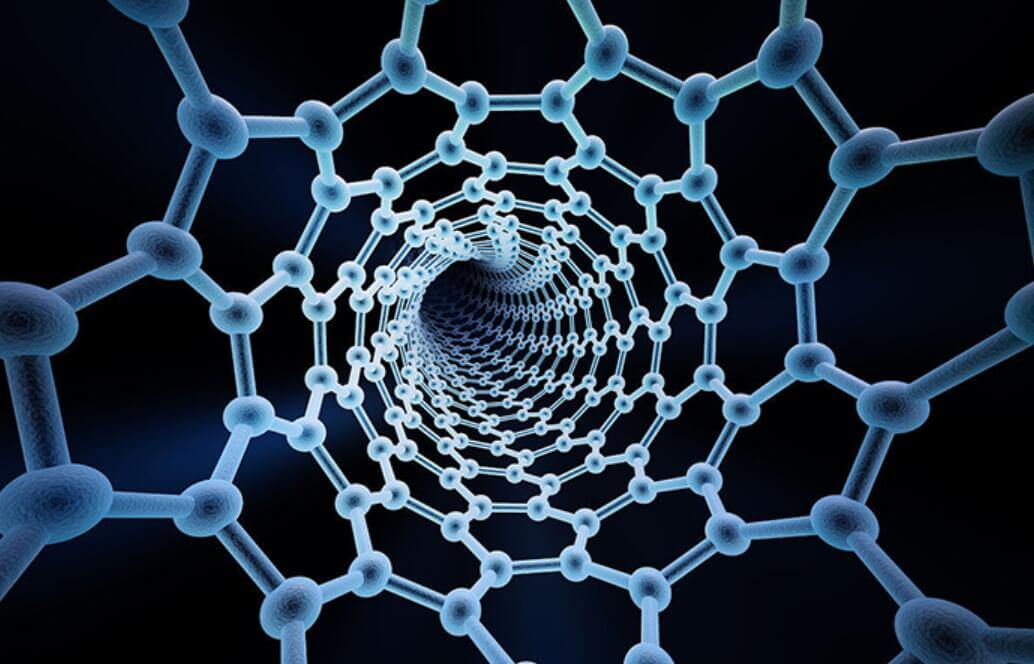
Discovering the Future of Nanotechnology with Carbon Quantum Dots (CQDs)
As nanotechnology evolves, carbon quantum dots (CQDs) have emerged as a revolutionary material with diverse applications across biomedical, environmental, and energy sectors. Recent advancements highlight CQDs' unique properties and their transformative role in cutting-edge research and industry.
Carbon Quantum Dots & Their Unique Properties
CQDs have captivated the scientific community due to their tunable fluorescence, biocompatibility, and eco-friendly synthesis. Unlike traditional semiconductor quantum dots, which may pose toxicity risks, CQDs offer a safer, non-toxic alternative. This makes them particularly suitable for bioimaging, drug delivery, and sustainable energy solutions. Their nanoscale size and reactive surface allow for extensive customization, enabling precise control over optical properties, which is critical for optimizing performance in various applications.
CQDs have captivated the scientific community due to their tunable fluorescence, biocompatibility, and eco-friendly synthesis. Unlike traditional semiconductor quantum dots, which may pose toxicity risks, CQDs offer a safer, non-toxic alternative. This makes them particularly suitable for bioimaging, drug delivery, and sustainable energy solutions. Their nanoscale size and reactive surface allow for extensive customization, enabling precise control over optical properties, which is critical for optimizing performance in various applications.
The Role of Spectroscopy in Understanding CQDs
Unlocking the full potential of CQDs requires a deep understanding of their optical and chemical characteristics, and this is where spectroscopy plays a pivotal role. Spectroscopic techniques provide detailed insights into the emission profiles, structural composition, and chemical behavior of CQDs. By using advanced spectrometers, such as those from Optosky, researchers can achieve the precision necessary for breakthroughs in CQD research and support the scaling of these innovations for commercial use. Spectral analysis is essential for monitoring the synthesis process, tuning emission wavelengths, and ensuring consistency in product quality.
Unlocking the full potential of CQDs requires a deep understanding of their optical and chemical characteristics, and this is where spectroscopy plays a pivotal role. Spectroscopic techniques provide detailed insights into the emission profiles, structural composition, and chemical behavior of CQDs. By using advanced spectrometers, such as those from Optosky, researchers can achieve the precision necessary for breakthroughs in CQD research and support the scaling of these innovations for commercial use. Spectral analysis is essential for monitoring the synthesis process, tuning emission wavelengths, and ensuring consistency in product quality.
Applications in Energy, Healthcare, and Beyond
The versatility of CQDs is fueling innovations across multiple industries. In the energy sector, CQDs are being integrated into next-generation solar cells and LEDs, providing more efficient and sustainable alternatives to existing technologies. In healthcare, their biocompatibility is paving the way for advanced medical imaging techniques and drug delivery systems, where non-toxic, fluorescent markers are crucial. CQDs are also gaining attention for environmental monitoring, offering sensitive detection methods for pollutants and contaminants.
The versatility of CQDs is fueling innovations across multiple industries. In the energy sector, CQDs are being integrated into next-generation solar cells and LEDs, providing more efficient and sustainable alternatives to existing technologies. In healthcare, their biocompatibility is paving the way for advanced medical imaging techniques and drug delivery systems, where non-toxic, fluorescent markers are crucial. CQDs are also gaining attention for environmental monitoring, offering sensitive detection methods for pollutants and contaminants.
Conclusion
Carbon quantum dots are at the forefront of nanotechnology, with the potential to transform industries ranging from energy to healthcare. Spectroscopy remains a critical tool for optimizing their properties, guiding the synthesis process, and enabling large-scale applications. As research advances, CQDs continue to open new possibilities, driving innovation and offering solutions for some of the world's most pressing challenges.
Carbon quantum dots are at the forefront of nanotechnology, with the potential to transform industries ranging from energy to healthcare. Spectroscopy remains a critical tool for optimizing their properties, guiding the synthesis process, and enabling large-scale applications. As research advances, CQDs continue to open new possibilities, driving innovation and offering solutions for some of the world's most pressing challenges.
Product Introduction | ATP1000 Series Spectrometer
Spectroscopy: A Crucial Tool for Quality Control in Various Industries
Related Article

The ATP7810 is a wide-band, high-resolution infrared grating spectrometer covering up to 0.9–5 μm. Featuring a motorized rotating grating, multiple detector options (InGaAs/MCT), and flexible interfaces (SMA905 or free space, USB/UART control), it delivers high SNR and stability for absorption/reflection/transmission spectroscopy, laser wavelength testing, and fiber optic sensing.
New Product Recommendation | ATP7810 Ultra-Wide Range Infrared Spectrometer Series

This study uses the ATP5200P UV-Vis spectrometer to investigate xanthate adsorption on chalcopyrite surfaces. By analyzing absorbance at 300 nm under controlled pH and temperature, the method optimizes flotation conditions for copper recovery, enabling real-time, sensitive detection of adsorption mechanisms in non-ferrous mineral processing.
Using the ATP5200P Spectrometer to Unravel Xanthate Adsorption and Separation Mechanisms
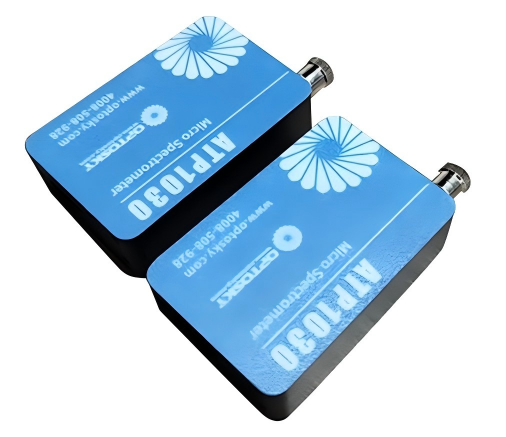
ATP1030 is an ultra‑compact, high‑resolution spectrometer covering 190–1100 nm. With a 1024‑pixel CMOS detector, adjustable integration time down to 1 ms, and USB‑powered design, it delivers reliable performance for applications like online water analysis, color measurement, handheld instruments, and Raman spectroscopy.
Product Recommendation | ATP1030 mini spectrometer Spectrometer

Vis-NIR transmission spectroscopy enables non-destructive identification of infertile duck eggs before incubation, achieving >95% accuracy. By detecting spectral fingerprints (e.g., 836 nm peak for fertile eggs), this method reduces energy waste and improves hatch rates, offering a low-cost, high-throughput solution for modern poultry farming.
Application case | How Spectral Technology is Transforming Duck Egg Farming