
Why Use DOAS to Monitor the Atmosphere Online
author: Susan
2021-09-07

Differential optical absorption spectroscopy technology, referred to as DOAS technology, utilizes when light is transmitted in the atmosphere, various gas molecules in the atmosphere have different differential absorption characteristics in different wavelength bands to invert the concentration of these trace gases in the atmosphere.
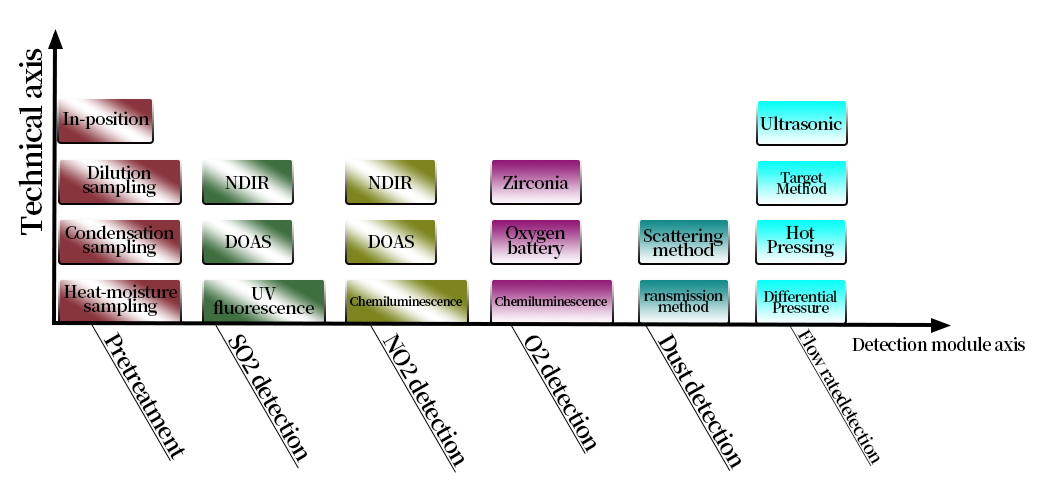 Advantages of DOAS technology:
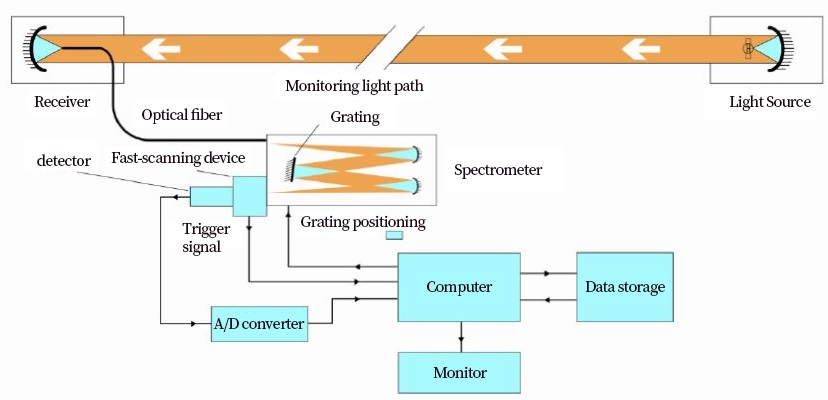
- The monitoring range is wide, and the measured gas concentration is the average value of the gas concentration along the light path from several hundred meters to several kilometers, which can eliminate the interference of some pollution emission sources on the measurement, so the measurement results are more representative.
- Non-contact measurement can avoid the influence of some error sources, such as the chemical change of the test object, the adsorption loss of the sampler wall, etc. This feature makes it particularly suitable for measuring the mass concentration of some more active gas molecules and ions.
- The measurement cycle is short, the response is fast, and the instrument can scan the ultraviolet to visible spectrum, so that one instrument can be used to detect the mass concentration of a variety of different gases in real time.
- The use of optical instruments is relatively stable, with little maintenance and low operating costs.In addition, the differential absorption spectroscopy technology can analyze the remaining spectral components in the spectral inversion algorithm, and has great potential in revealing the undiscovered components in the air.
How to Monitor Water Quality Once Japan's Nuclear Waste Water Enters the Sea
How to Identify Gem Authenticity by Spectroscopy
Related Article

The ATP7810 is a wide-band, high-resolution infrared grating spectrometer covering up to 0.9–5 μm. Featuring a motorized rotating grating, multiple detector options (InGaAs/MCT), and flexible interfaces (SMA905 or free space, USB/UART control), it delivers high SNR and stability for absorption/reflection/transmission spectroscopy, laser wavelength testing, and fiber optic sensing.
New Product Recommendation | ATP7810 Ultra-Wide Range Infrared Spectrometer Series

This study uses the ATP5200P UV-Vis spectrometer to investigate xanthate adsorption on chalcopyrite surfaces. By analyzing absorbance at 300 nm under controlled pH and temperature, the method optimizes flotation conditions for copper recovery, enabling real-time, sensitive detection of adsorption mechanisms in non-ferrous mineral processing.
Using the ATP5200P Spectrometer to Unravel Xanthate Adsorption and Separation Mechanisms
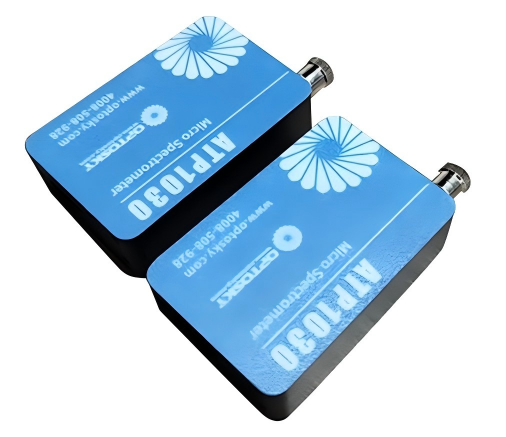
ATP1030 is an ultra‑compact, high‑resolution spectrometer covering 190–1100 nm. With a 1024‑pixel CMOS detector, adjustable integration time down to 1 ms, and USB‑powered design, it delivers reliable performance for applications like online water analysis, color measurement, handheld instruments, and Raman spectroscopy.
Product Recommendation | ATP1030 mini spectrometer Spectrometer

Vis-NIR transmission spectroscopy enables non-destructive identification of infertile duck eggs before incubation, achieving >95% accuracy. By detecting spectral fingerprints (e.g., 836 nm peak for fertile eggs), this method reduces energy waste and improves hatch rates, offering a low-cost, high-throughput solution for modern poultry farming.
Application case | How Spectral Technology is Transforming Duck Egg Farming