
Fundamentals | Spectrometer Accessories: A Guide to Optical Fiber Selection
2026-03-11
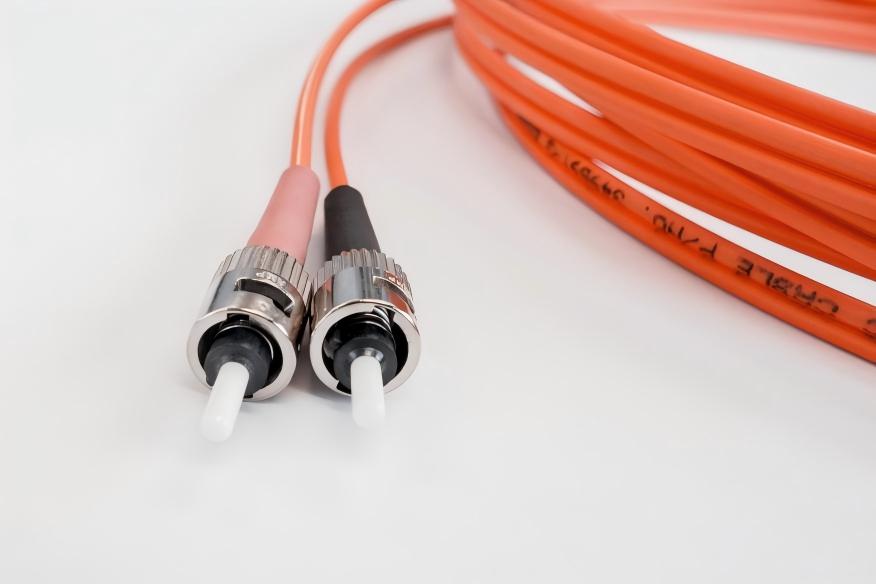
Optical fibers serve as the "signal transmission link" for spectrometers. Choosing the right fiber can double detection efficiency and deliver more accurate data, while the wrong choice can compromise measurement precision.
01 The Core Principle: Selecting Fibers for Spectrometers—Single-Mode vs. Multi-Mode Doesn't Matter
Unlike fibers used for telecommunications, the key criteria for selecting fibers for spectrometers are core diameter and wavelength compatibility. The distinction between single-mode and multi-mode is almost irrelevant here (except for very specific applications). Remembering this will help you avoid 80% of common selection mistakes.
Simply put: Core diameter determines light throughput, and wavelength range determines application suitability. Combining these two factors is essential for making the right choice.
02 Common Fiber Classifications (by Core Diameter)
Core diameter is the primary selection criterion. Different diameters suit vastly different scenarios. Below are the most commonly used types for spectrometers.
200μm Fiber (The Universal Choice)
-
Key Advantages: Offers the best balance across the UV-Vis-NIR range. It provides an optimal trade-off between signal-to-noise ratio (SNR) and resolution, making it suitable for the vast majority of standard applications.
-
Typical Applications: General absorbance and transmission measurements; routine fluorescence and Raman spectroscopy; laser monitoring; high-precision spectral analysis.
-
Limitations: Light throughput is lower compared to larger core fibers, resulting in weaker signals in low-light conditions.
400μm Fiber (Dedicated for Low-Light Applications)
-
Key Advantages: Significantly higher light throughput than 200μm fibers, allowing it to capture weaker optical signals. It enables faster acquisition and offers excellent cost-effectiveness.
-
Typical Applications: Low-light detection (e.g., low-concentration fluorescence, Raman); biological sample analysis; general scattered light measurements.
-
Limitations: Resolution is slightly lower than 200μm fibers, making it less suitable for applications demanding extremely high resolution.
3. 600μm Fiber (For Long-Distance or Highly Scattering Samples)
-
Key Advantages: Maximizes light throughput, ideal for extremely low light levels or highly scattering samples. Also suitable for transmitting signals over longer distances (with minimal signal loss over short distances).
-
Typical Applications: Remote detection; highly scattering samples (e.g., turbid liquids, powders); ultra-low light scenarios (e.g., weak fluorescence, far-field detection).
-
Limitations: Offers only moderate resolution; can be overkill for routine measurements and has slightly poorer flexibility.
4. 9μm Fiber (Specialized Applications Only)
-
Key Advantages: Provides single-mode purity, suitable for high-precision coherent detection.
-
Typical Applications: Exclusively for coherent detection, laser power monitoring, and specialized high-end sensing. (Rarely used by general users).
-
Note: Using this fiber with a standard spectrometer will result in extremely weak signals and likely detection failure. Avoid unless you have a specific, professional requirement.
03 Common Fiber Classifications (by Wavelength Range)
1. Silica Optical Fiber (The Standard, All-Rounder)
Spectral Range: 190–1100 nm (standard), 190–1700 nm (NIR version)
Typical Applications: Suitable for most routine measurements (visible, NIR, general UV). Offers the best cost-effectiveness and is the default choice for spectrometers.
2. UV-Enhanced Silica Fiber (Preferred for UV Detection
Spectral Range: 190–1100 nm (with enhanced resistance to UV-induced solarization, supporting prolonged UV exposure).
Typical Applications: UV absorption measurements; UV-excited fluorescence detection. (Standard silica fibers suffer significant signal attenuation in the deep UV range).
3. IR Fiber (Specialized for Infrared Applications)
Spectral Range: Extends into the infrared region (e.g., NIR 400-2500 nm or mid-IR).
Typical Applications: IR spectroscopy (e.g., IR absorption, mid-IR sensing). Often paired with high-end spectrometers and comes at a higher cost.
04 Key Consideration: Matching Fibers with Light Sources
1. Broadband Sources (Deuterium-Halogen Lamps, White Light Continuum)
Characteristics: Broad spectrum, highly divergent beam. Coupling efficiency is critical and requires higher light throughput
Recommended Fiber: 400μm, 600μm (larger cores facilitate easier coupling and more stable signals). 200μm can also be used but requires precise alignment.
2. Laser Sources (Single Wavelength, Narrow Band)
Characteristics: Excellent directionality, small spot size, high demands on resolution.
Recommended Fiber: 200μm (offers the best balance between resolution and signal strength and is the most common choice). 400μm can be used for Raman/Fluorescence to boost signal. Prioritize 200μm for high-precision work.
3. Weak Signals (Fluorescence, Raman, Biological Samples)
Core Requirement: Maximize capture of weak signals for efficient acquisition.
Recommended Fiber: 400μm, 600μm (larger core diameter = higher light throughput = stronger signal = faster acquisition, preventing detection failure due to low signal levels).
4. High Resolution (Precise Spectral Analysis)
Core Requirement: Minimize signal dispersion to maximize resolution.
Recommended Fiber: 200μm (smaller core diameter generally yields higher resolution, allowing for better distinction between closely spaced spectral peaks).
For more information, please contact:
Email: [email protected]
Web: www.optosky.net
Application Case | ATP8600: Enabling Intelligent Online Quality Inspection for Kiwifruit
Oil Spill Detection at Sea: Solar-Blind UV Reflection Spectroscopy and Spectrometer Applications
Related Article

The ATP7810 is a wide-band, high-resolution infrared grating spectrometer covering up to 0.9–5 μm. Featuring a motorized rotating grating, multiple detector options (InGaAs/MCT), and flexible interfaces (SMA905 or free space, USB/UART control), it delivers high SNR and stability for absorption/reflection/transmission spectroscopy, laser wavelength testing, and fiber optic sensing.
New Product Recommendation | ATP7810 Ultra-Wide Range Infrared Spectrometer Series

This study uses the ATP5200P UV-Vis spectrometer to investigate xanthate adsorption on chalcopyrite surfaces. By analyzing absorbance at 300 nm under controlled pH and temperature, the method optimizes flotation conditions for copper recovery, enabling real-time, sensitive detection of adsorption mechanisms in non-ferrous mineral processing.
Using the ATP5200P Spectrometer to Unravel Xanthate Adsorption and Separation Mechanisms
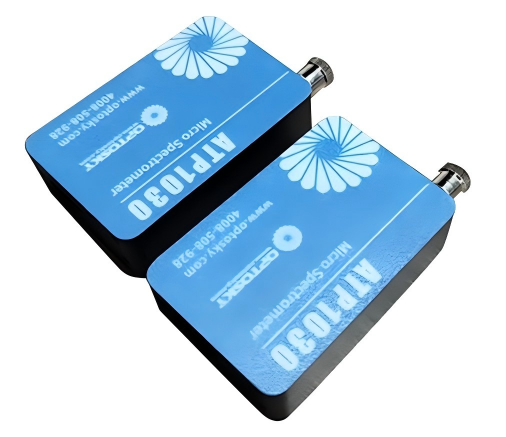
ATP1030 is an ultra‑compact, high‑resolution spectrometer covering 190–1100 nm. With a 1024‑pixel CMOS detector, adjustable integration time down to 1 ms, and USB‑powered design, it delivers reliable performance for applications like online water analysis, color measurement, handheld instruments, and Raman spectroscopy.
Product Recommendation | ATP1030 mini spectrometer Spectrometer

Vis-NIR transmission spectroscopy enables non-destructive identification of infertile duck eggs before incubation, achieving >95% accuracy. By detecting spectral fingerprints (e.g., 836 nm peak for fertile eggs), this method reduces energy waste and improves hatch rates, offering a low-cost, high-throughput solution for modern poultry farming.
Application case | How Spectral Technology is Transforming Duck Egg Farming