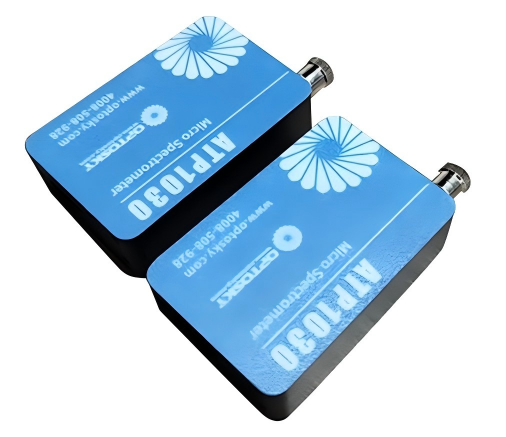
How does a grating spectrometer work?
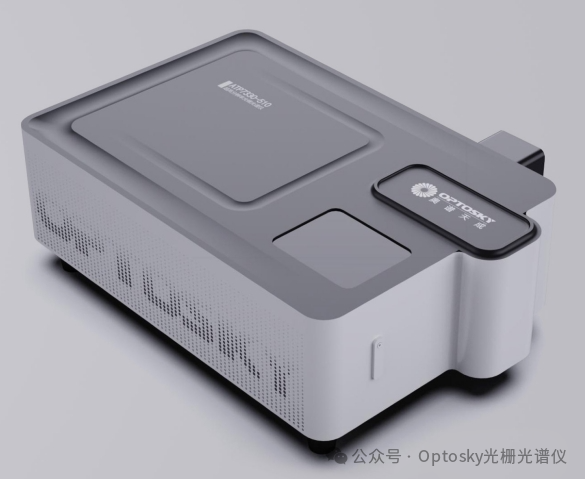
The Grating Spectrometer is a commonly used spectroscopic instrument designed for analyzing the wavelength, frequency, and intensity of light signals. It employs the diffraction effect of a grating to disperse the light signal into beams of different wavelengths. These beams are then detected and recorded by a detector, producing a spectral image. Grating spectrometers are characterized by high resolution, a wide wavelength range, and tunability, making them widely applicable in optical research, chemical analysis, and material characterization. This article will provide a detailed introduction to the grating spectrometer.
The grating spectrometer operates on the principle of diffraction, utilizing a grating as its core optical component. A grating consists of a series of precisely spaced parallel grooves or ridges, which act to disperse incoming light. When a light beam strikes the grating, the interaction between the light and the grating’s structure causes the light to diffract. This diffraction results in the separation of the light into its constituent wavelengths, with each wavelength being directed at a specific angle according to its wavelength. This angle of diffraction allows for the precise measurement and analysis of the light spectrum.
2. Technical Specifications of the Grating Spectrometer
The performance of a grating spectrometer is determined by several technical parameters. Below are some of the most common specifications:
Resolution: Resolution refers to the spectrometer's ability to distinguish between two closely spaced wavelengths. It is a key factor in determining the instrument's sensitivity and measurement accuracy.
Wavelength Range: The wavelength range indicates the spectrum over which the grating spectrometer can operate. Different applications require different wavelength ranges, such as visible light, ultraviolet, or infrared.
Optical Channels: Optical channels consist of the entrance and exit ports, which guide the light beam into and out of the spectrometer. The design and quality of these channels directly impact the spectrometer's light loss and signal strength.
Signal-to-Noise Ratio (SNR): SNR measures the ratio of the signal strength to the background noise. A higher SNR improves the accuracy and reliability of spectral measurements.
Sampling Rate: The sampling rate indicates how quickly the spectrometer can sample and record the light signal. A higher sampling rate enables faster data acquisition and processing.
Temperature Stability: Temperature stability refers to the spectrometer's performance under varying temperatures. Good temperature stability ensures the accuracy and repeatability of the measurements.
3. Functions of the Grating Spectrometer
Spectral Analysis: The grating spectrometer plays a crucial role in spectral analysis by dispersing light into its constituent wavelengths and using a detector to capture and record the intensity of light at each wavelength. This process generates a spectral image, making the grating spectrometer an essential tool for optical analysis and spectroscopic research.
Material Identification: The grating spectrometer can identify and analyze the composition of substances by measuring the specific wavelengths that a material absorbs or emits. This capability is widely applied in fields such as chemistry, biomedical science, and environmental monitoring.
Optical Measurements: The grating spectrometer is capable of accurately measuring the wavelength, frequency, and intensity of light signals. It can be used to assess the spectral characteristics of light sources, monitor fiber optic transmission losses, measure laser power, and other optical parameters.
Fiber Optic Spectrometer Transmittance Measurement Scheme
VIS-NIR Spectrometer in Transmittance Applications
Related Article