
Monitors vs. Stations: Full-Spectrum Water Quality
2026-01-07
Foreword
In the field of online water quality monitoring, reagent-free full-spectrum water quality monitors and full-spectrum multi-parameter water quality monitoring stations are two common and efficient products. However, due to their similar names and related functions, many users easily confuse them when making a selection. Today, we will thoroughly explain their differences and applicable scenarios to help you quickly make the right choice.
1. Product positioning: "Core Module" and "Complete System"
The ATE2000 reagent-free full-spectrum water quality monitor is an independent spectral sensor and a core sensing unit of the monitoring system.
The ATE5300 full-spectrum multi-parameter water quality monitoring station is an integrated monitoring station with the ATE2000 as its core, integrating power supply, transmission, auxiliary sensor and other modules.
Simile:
The ATE2000 is like a car engine; it is powerful but cannot operate independently.
The ATE5300 is like a complete vehicle, with the engine (ATE2000) and other necessary components already assembled and ready to use after power-on testing.
2. ATE2000: A flexible core sensor that requires specific components for use.
Product Positioning
Core function: Directly monitor specific parameters in water bodies through spectral analysis technology;
Monitoring capabilities: Focused on spectrally identifiable factors, such as total phosphorus (TP), total nitrogen (TN), and COD;
Dependencies: It must be mounted on a carrier (such as a station or buoy) and requires external power supply and data transmission support.
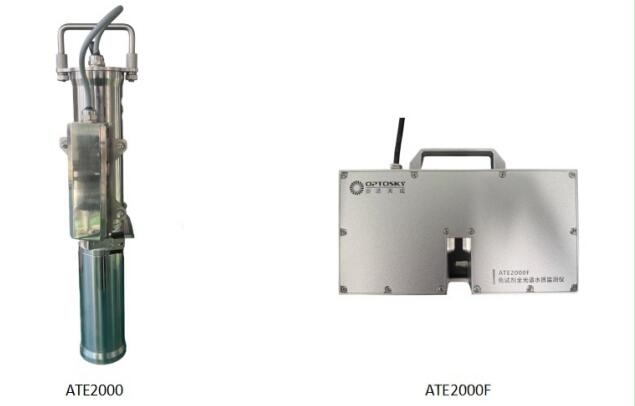
Two forms of ATE2000
How to use
ATE2000 needs to be "mounted" on a carrier or system to work. Common integration methods include:
1. Integrated into buoys: used for continuous monitoring of water surfaces such as lakes, reservoirs, and rivers.
2. Mounted on unmanned vessels: Enables mobile monitoring and acquisition of regional water quality distribution.
3. Installed at monitoring poles: Suitable for fixed locations such as riverbanks and sluice gates.
4. Embedded in existing water stations: As a spectral monitoring module, it can supplement or upgrade the existing monitoring capabilities.
Applicable Scenarios
1. Existing monitoring platforms (such as buoys, poles, and unmanned vessels) need to be augmented with spectral water quality parameters.
2. The project requires highly customized integration, with independent matching of power supply and communication solutions.
3. The monitoring parameters are mainly total phosphorus, total nitrogen, and COD, and there is no need for other conventional five parameters.
3. ATE5300: A One-Stop Monitoring Solution
Product Positioning
System components: ATE2000 + electrode sensor + power supply module + transmission module + control unit + protective housing
Expandability: In addition to spectral parameters, it can also integrate multiple probes such as pH, turbidity, chlorophyll a, and cyanobacteria.
Independent operation: Possesses complete data acquisition, transmission, and power supply capabilities, and can be deployed independently.
ATE5300 overall and integration requirements
Features
Out of the box and ready to use: It can be put into operation directly after installation and debugging, without the need for self-connection.
Abundant parameters: It not only includes spectral inversion parameters, but can also integrate sensors based on other principles such as electrode method and optical method.
Overall Delivery: Providing a complete solution from monitoring and data transmission to platform display.
Applicable Scenarios
It is necessary to establish independent and complete fixed monitoring stations.
There are many monitoring parameters, including spectral parameters as well as conventional parameters such as pH and turbidity.
The goal is to reduce integration complexity, enable rapid deployment, and provide a one-stop solution for monitoring needs.
The table below visually illustrates the key differences between the two technologies:
Typical application scenarios and selection recommendations
01 Upgrading and renovation of existing water stations
Recommendation: ATE2000 sensor screening
Reasons: Fully utilize existing station buildings, power supply, and transmission resources; only the core monitoring unit needs to be replaced, resulting in low upgrade costs; retain the advantages of the original system integration.
Typical Case: Replacing Traditional Chemical Instruments with Enhanced Spectroscopic Monitoring Capabilities
02 New water quality monitoring station
Recommended: ATE5300 monitoring station
Reasons: No civil engineering required, rapid deployment; integrated design reduces system debugging time; simple operation and maintenance, suitable for large-scale deployment.
Typical cases: Grid-based monitoring of river water quality, early warning of drinking water sources, and assessment of black and odorous water body treatment.
Clarification of common misconceptions
Myth 1: "The ATE5300 monitors more parameters, so it's always better."
Clarification: If non-spectral parameters such as pH and turbidity are not required, the ATE2000+ simple carrier solution is more economical.
Myth 2: "ATE2000 is cheaper, so it has a higher cost-performance ratio."
Clarification: The hidden costs of ATE2000 (engineering design, integration and debugging, operation and maintenance coordination) may exceed those of ATE5300.
Myth 3: "Only ATE2000 buoys can be used"
Clarification: The ATE5300 can be customized into a buoy form according to requirements, but the station building form is more common.
END
Both products share the same technology. Choose based on your project stage and resource integration capabilities; both can achieve efficient, reagent-free water quality monitoring. If you have any questions, we recommend discussing your specific project needs with our technical support team to obtain the optimal configuration.
For more information, please contact:
Email: [email protected]
Web: www.optosky.net
Applications | Fully Automated Fruit Appearance Inspection Combining Machine Vision and AI Algorithms
ATE2000: The "All-Rounder" Of Water Quality Monitoring
Related Article
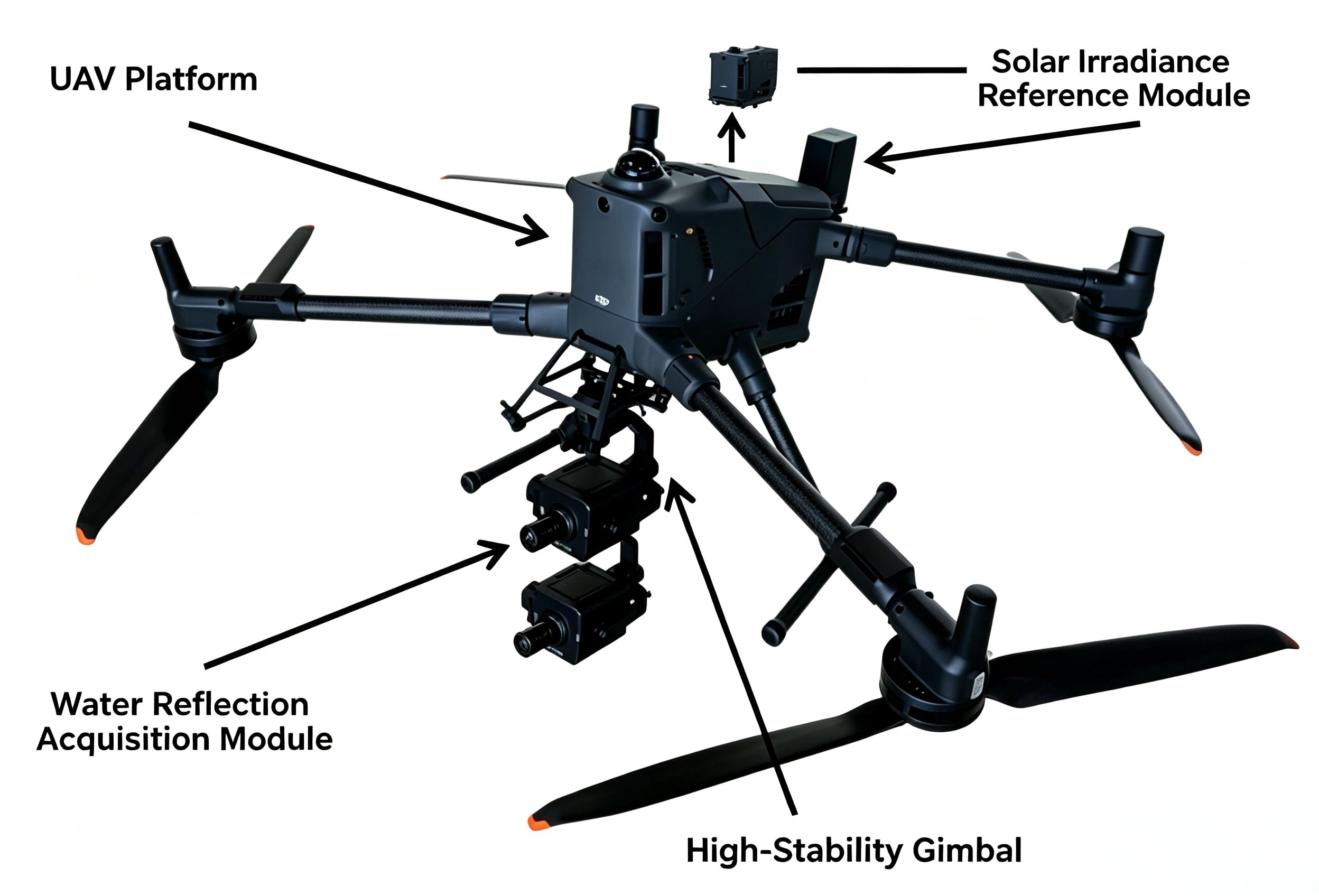
Discover the ATE9020 drone‑mounted real‑time hyperspectral telemetry system – instant in‑flight inversion of chlorophyll, COD, total N/P, turbidity, and ammonia, with live heatmaps and video evidence for emergency water monitoring.
New Launch ATE9020 In Flight Water Inversion

A clean Raman spectrum? It starts with the right filter. Without a good filter, even the best laser can't save your data. High OD, steep edge, proper wavelength matching — that's how you block Rayleigh and reveal real Raman signals. Don't let stray light ruin your peaks.
A Good Raman Spectrum Starts with a Good Filter
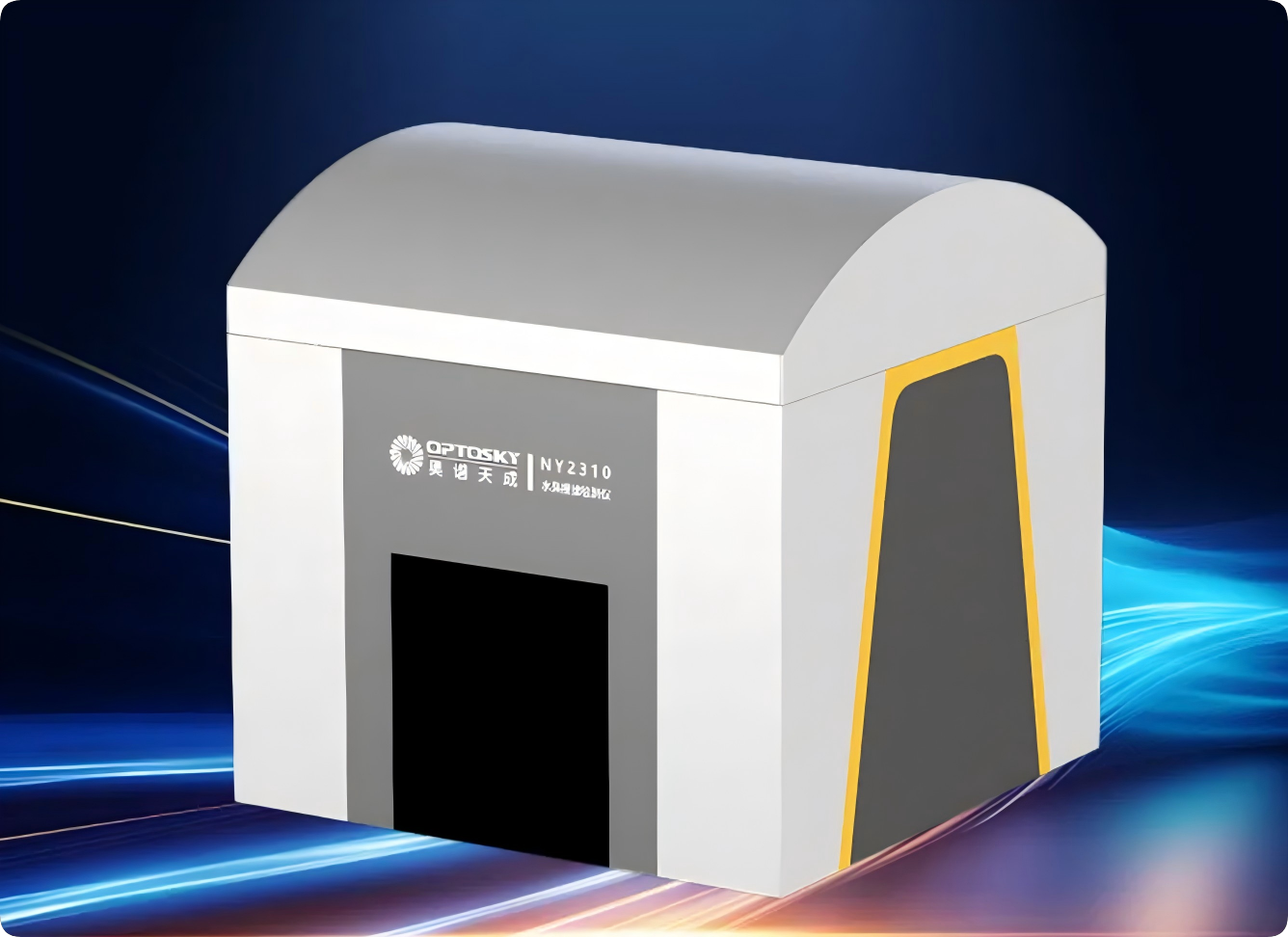
The NY2310 Online Fruit Appearance Defect Detector integrates machine vision and AI to enable fully automated, high-precision fruit inspection. It identifies color, shape, size, and surface defects in real time, with speeds up to 10 fruits per second and over 95% sorting accuracy. Designed for easy integration, it enhances efficiency and consistency in sorting citrus, apples, pears, peaches, and other fruits.
Applications | Fully Automated Fruit Appearance Inspection Combining Machine Vision and AI Algorithms
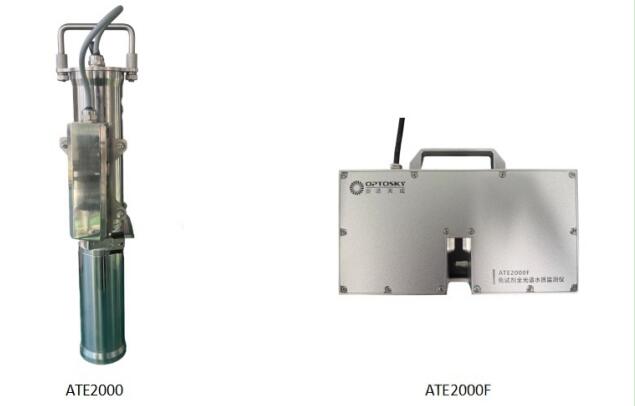
Optosky’s ATE2000 series, a versatile reagent-free full-spectrum water quality monitor, leverages ultraviolet-visible full-spectrum technology to enable reagent-free, full-spectrum, multi-parameter, in-situ monitoring and real-time detection of over 10 parameters such as COD and ammonia nitrogen.
ATE2000: The "All-Rounder" Of Water Quality Monitoring