
A Good Raman Spectrum Starts with a Good Filter
2026-05-08
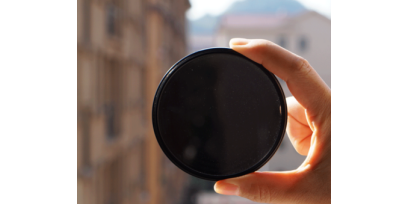
In a Raman spectroscopy system, the laser serves as the core excitation source. Its monochromatic, high‑brightness beam illuminates the sample and generates the weak Raman scattered light that carries molecular structure information. The filter, on the other hand, is the critical optical selection component. It efficiently rejects the Rayleigh scattered light and stray light — which are orders of magnitude stronger than the Raman signal — while allowing only the true Raman signal to pass through. Working together, the laser and filter ensure stable, sensitive signal excitation and dramatically improve the spectral signal‑to‑noise ratio (SNR). Together, they form the fundamental core for achieving clear, precise Raman detection.
1. What is a Filter?
In a Raman spectrometer, the filter acts like a strict "signal gatekeeper". Without it, you can hardly measure a usable spectrum. Its structure may be simple, but its role is critical. Let's explain its principle, function, key specifications, and importance — all at once.
The Raman signal itself is extremely weak, while the Rayleigh scattered light generated by the laser is millions of times stronger and would directly overwhelm the effective signal. The core task of the filter is to block that intense Rayleigh light and let only the Raman scattered light pass through, ensuring a clean spectrum with high SNR so you can clearly see the sample's true molecular characteristic peaks.
From a layout perspective, a Raman system typically uses an excitation filter, a rejection filter (notch or edge filter), and longpass/bandpass filters:
- The excitation side purifies the laser and reduces stray light entering the sample.
- The detection side blocks Rayleigh scattering and isolates the effective Raman signal.
Key parameters to evaluate a Raman filter:
- Optical density (OD) – higher OD means stronger stray light rejection.
- Transmission – higher transmission means less signal loss.
- Edge steepness – determines how low a wavenumber you can measure.
Also wavelength matching, temperature stability, and lifetime — all directly affect spectral quality and instrument durability.
2. Classification of Filters
By Function (the most important distinction in Raman systems)
(1)Excitation filter
Purpose: Purifies the laser, reduces background stray light, improves excitation purity.
Common types: Bandpass filter, narrowband filter.
Purpose: Purifies the laser, reduces background stray light, improves excitation purity.
Common types: Bandpass filter, narrowband filter.
(2)Rayleigh rejection filter
Purpose: Blocks the extremely strong Rayleigh scattered light and isolates the Raman signal.
Characteristics: High OD, steep edge.
Status: The most core and indispensable filter in a Raman instrument.
Purpose: Blocks the extremely strong Rayleigh scattered light and isolates the Raman signal.
Characteristics: High OD, steep edge.
Status: The most core and indispensable filter in a Raman instrument.
(3)Longpass / Shortpass filter
Purpose: Separates light of specific wavelength ranges.
Common use: Distinguishing fluorescence from Raman signals on the detection side.
Purpose: Separates light of specific wavelength ranges.
Common use: Distinguishing fluorescence from Raman signals on the detection side.
(4)Bandpass filter
Purpose: Allows only a specific wavelength band to pass.
Common use: Selecting a particular Raman band on the detection path.
Purpose: Allows only a specific wavelength band to pass.
Common use: Selecting a particular Raman band on the detection path.
By Technology Principle
(1)Absorption filters – Use dyes or glass to absorb specific wavelengths.
Pros: Cheap, wavelength selectable.
Cons: Insufficient OD, rarely used in Raman.
Pros: Cheap, wavelength selectable.
Cons: Insufficient OD, rarely used in Raman.
(2)Interference filters (common in Raman) – Use multi
layer thin
film interference.
Pros: High OD, high transmission, good steepness.
Representatives: Rayleigh rejection filters, longpass interference filters.
Pros: High OD, high transmission, good steepness.
Representatives: Rayleigh rejection filters, longpass interference filters.
(3)Bragg grating filters (advanced applications) – E.g., ultra
narrow linewidth filtering.
Features: Extremely high wavelength precision, but expensive.
Features: Extremely high wavelength precision, but expensive.
3.How to Choose the Right Filter
Selecting a Raman filter boils down to: match the laser, reject stray light, fit the wavenumber range, and ensure high SNR.
First, choose the center wavelength according to your laser wavelength, so the filter accurately blocks Rayleigh scattered light.
Then check optical density – higher OD gives better stray light rejection. For weak
signal samples, choose a high
OD filter.
If you need to measure ultra low wavenumbers, pick a filter with a steeper edge.
For maximum signal strength, prioritize high transmission models.
Also consider operating temperature, mounting size, and compatibility with your instrument's optical path to avoid band shift or excessive loss.
In short:
Match the laser → choose by wavelength.
Consider the sample → set the rejection level.
Look at wavenumber → pay attention to edge steepness.
Check the whole system → ensure compatibility.
Match the laser → choose by wavelength.
Consider the sample → set the rejection level.
Look at wavenumber → pay attention to edge steepness.
Check the whole system → ensure compatibility.
Choose the right filter, and your Raman spectrum will be clean, clear, and have a greatly improved signal to noise ratio.
For more information, please contact:
Email: [email protected]
Web: www.optosky.net
New Launch ATE9020 In Flight Water Inversion
Applications | Fully Automated Fruit Appearance Inspection Combining Machine Vision and AI Algorithms
Related Article
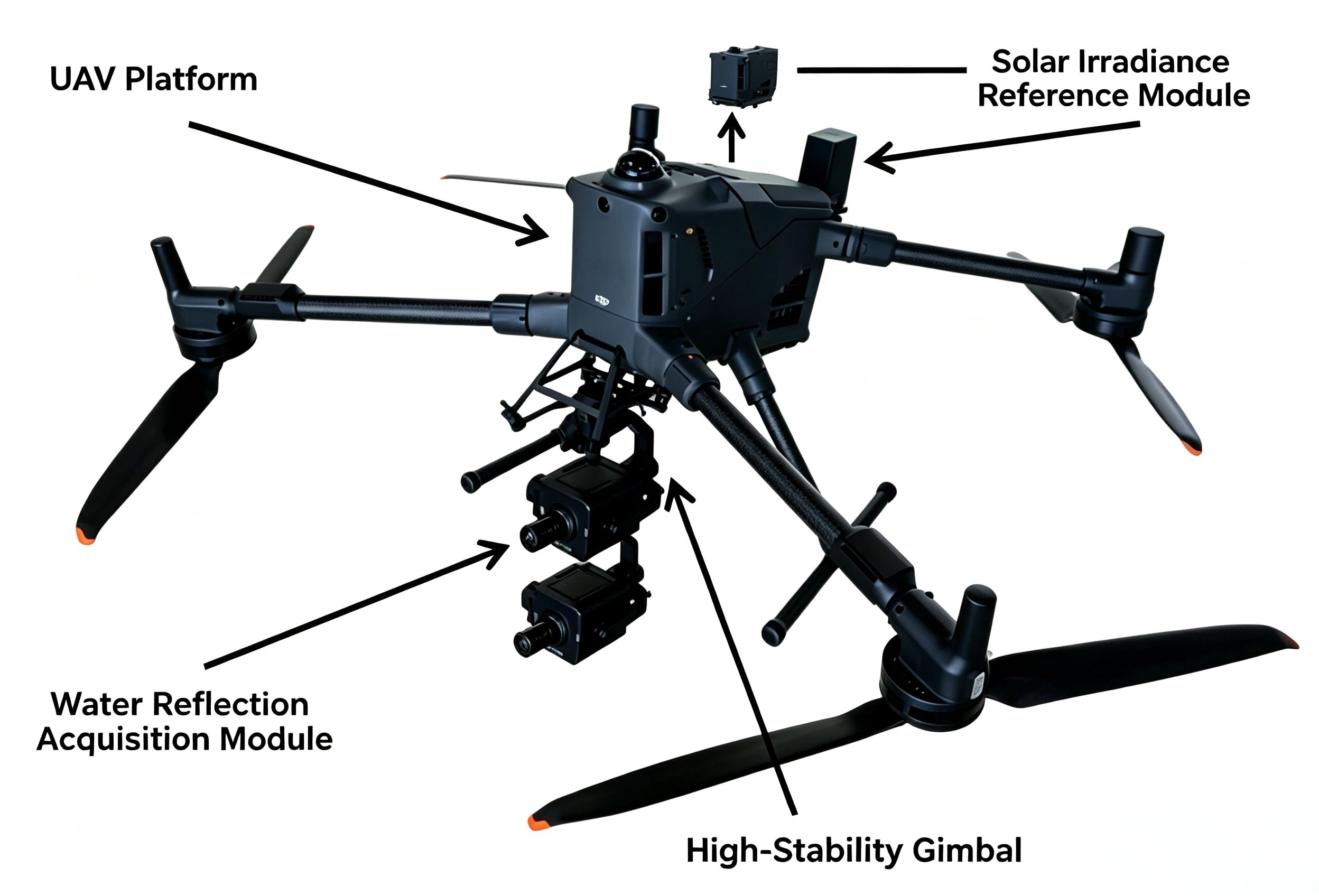
Discover the ATE9020 drone‑mounted real‑time hyperspectral telemetry system – instant in‑flight inversion of chlorophyll, COD, total N/P, turbidity, and ammonia, with live heatmaps and video evidence for emergency water monitoring.
New Launch ATE9020 In Flight Water Inversion
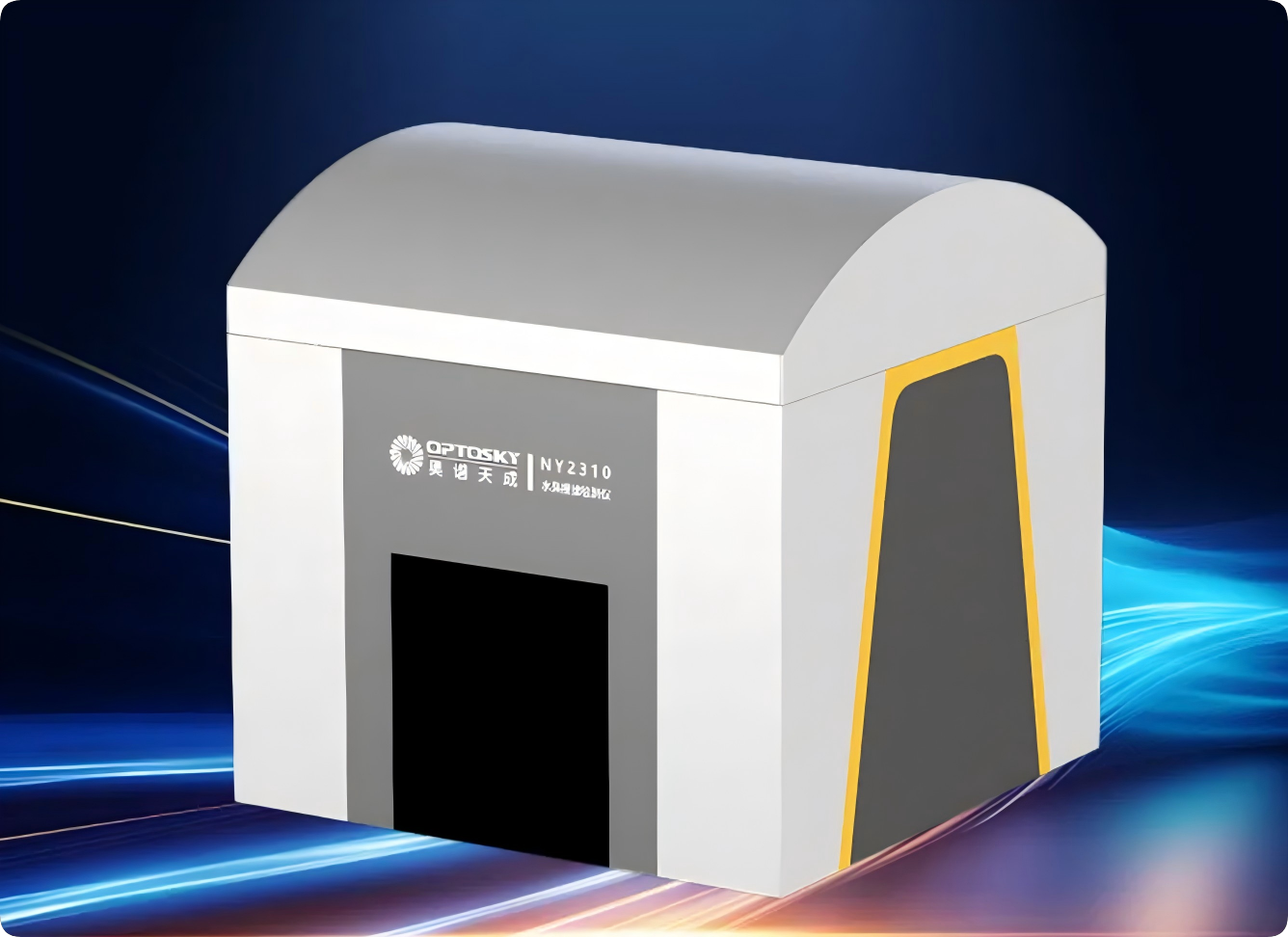
The NY2310 Online Fruit Appearance Defect Detector integrates machine vision and AI to enable fully automated, high-precision fruit inspection. It identifies color, shape, size, and surface defects in real time, with speeds up to 10 fruits per second and over 95% sorting accuracy. Designed for easy integration, it enhances efficiency and consistency in sorting citrus, apples, pears, peaches, and other fruits.
Applications | Fully Automated Fruit Appearance Inspection Combining Machine Vision and AI Algorithms
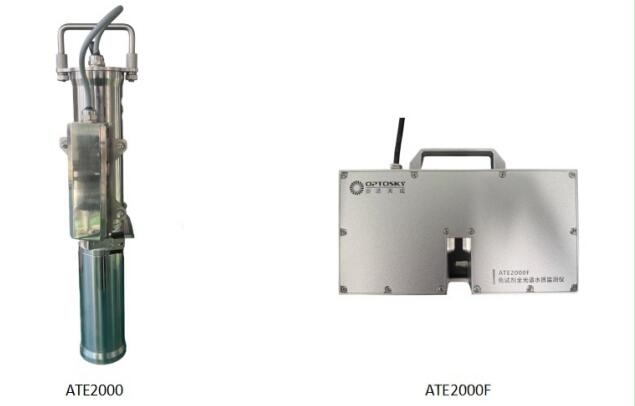
Optosky’s ATE2000 is a flexible core spectral sensor (focusing on TP, TN, COD) that requires integration with carriers like buoys or existing stations, ideal for upgrading current monitoring platforms cost-effectively. The ATE5300 is an all-in-one, ready-to-use monitoring station integrating the ATE2000 with extra sensors (e.g., pH, turbidity), suited for new independent deployments needing multiple parameters and rapid setup.
Monitors vs. Stations: Full-Spectrum Water Quality
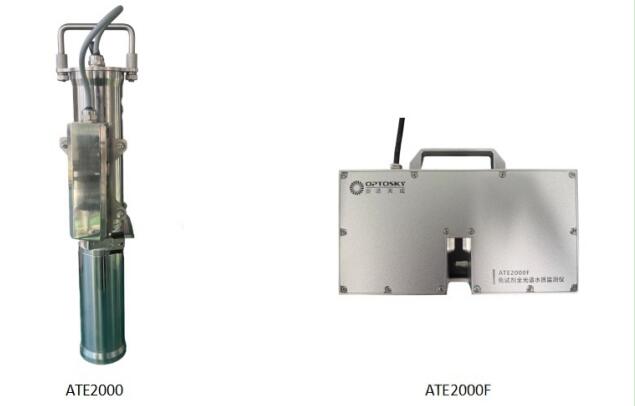
Optosky’s ATE2000 series, a versatile reagent-free full-spectrum water quality monitor, leverages ultraviolet-visible full-spectrum technology to enable reagent-free, full-spectrum, multi-parameter, in-situ monitoring and real-time detection of over 10 parameters such as COD and ammonia nitrogen.
ATE2000: The "All-Rounder" Of Water Quality Monitoring