
Oil Spill Detection at Sea: Solar-Blind UV Reflection Spectroscopy and Spectrometer Applications
2026-02-28

When crude oil spills into the ocean, forming a slick, it can cause widespread hypoxia, seabird mortality, and trigger cascading ecological disasters like algal blooms. Traditional detection methods, such as thermal infrared remote sensing, are interfered with by sea temperature, while laser fluorometry is limited to nighttime operation. The discovery of the solar-blind ultraviolet (UV) band (200–300 nm) and the application of spectrometers have opened a new technological path for oil spill monitoring.
01 Solar-Blind UV Detection: Principle Analysis
Optical Properties of the Solar-Blind UV Band
Due to the strong absorption of this wavelength range by atmospheric ozone, solar background radiation near the Earth's surface in the solar-blind UV band (200–300 nm) is extremely weak, creating a natural "optical dark zone." This characteristic allows solar-blind UV reflection spectroscopy to effectively reduce ambient light interference and enhance oil signal discrimination. Experiments show that the reflectance contrast ratio between oil slicks and seawater in the 254 nm solar-blind UV band is 1.4–2.5 times, significantly higher than the 1.1–2.3 times ratio observed in the long-wave UV band (365 nm).
The 'Fingerprint Dialogue' Between Light and Oil Slicks
Treating an oil slick on the sea surface as a three-layer air-oil-water structure, when illuminated by 254 nm solar-blind UV light, reflected light from the air-oil and oil-water interfaces interferes, forming a unique "spectral fingerprint." Experiments reveal that refined oil products like 95# gasoline and diesel have a reflectance 1.4–2.5 times higher than seawater in the solar-blind UV band. Furthermore, reflectance exhibits periodic oscillation with increasing oil film thickness, eventually stabilizing at the reflectance of pure oil.
Measurement Principle of Thin-Film Interference
According to thin-film interference theory, the reflectance R of a single-layer film is calculated. Here, η₀ is the complex refractive index of air, and the characteristic matrix admittance Y is determined by the film's optical thickness δ = (2πN₁·cosθ₁·d)/λ, where N₁ = n + i·k.
Reflectance Variation Patterns
Periodic Oscillation: For thin oil films (<1 μm), reflectance oscillates approximately periodically with increasing thickness, where the period and peak values are determined by the oil's complex refractive index. For example, the reflectance oscillation period for 20# diesel at 254 nm is about 200 nm.
Thickness Saturation Effect: As oil film thickness increases, the oscillation amplitude decreases and stabilizes, approaching the reflectance of pure oil. Refined oils stabilize at 5–10 μm thickness, while crude oil stabilizes around 2–3 μm.
02 Spectrometer: Oil Spill Detection Experiments & Applications
Experimental System Setup & Parameters
-
Spectrometer Selection: The ATP2000 series spectrometer is recommended, with a detection range of 190–400 nm and a slit width of 50 μm, meeting high-precision detection needs in the solar-blind UV band (254 nm).
-
Optical Path Design: Employs vertical illumination of the oil film and collection of specularly reflected light. Testing utilizes deuterium-halogen broadband sources or 254 nm, 310 nm, and 365 nm LED sources, with a dark box design to isolate external light interference.
Oil Film Reflectance Spectroscopy Testing Procedure
-
Film Preparation: Add measured quantities of oil products (95# gasoline, -35# diesel, -20# diesel, light crude) to Petri dishes. Control diffusion time to create films with thicknesses ranging from 1.7 μm to 51 μm (at 1.7 μm intervals).
-
Spectral Acquisition: Collect 20 data sets for each oil film sample. Apply Savitzky-Golay algorithm smoothing to reduce light source fluctuation error (standard deviation < 10%).
-
Data Validation: Comparison between experimental data and simulations using the single-layer film characteristic matrix model shows good agreement in reflectance trends.
Extended Practical Applications
-
Online Dynamic Monitoring: Building on the experimental setup, integrating a fiber optic spectrometer with a deuterium-halogen source enables real-time oil spill monitoring in ports at flow rates up to 0.5 m/s, with single-sample detection time < 10 ms. Suitable for early warning around oil fields.
-
Airborne Remote Sensing: Leveraging UV aerial remote sensing technology, deploying fiber optic spectrometers on drones allows for rapid scanning of oil spill areas over hundreds of kilometers using solar-blind UV reflectance spectroscopy, improving coverage efficiency by over 20 times compared to traditional methods.
-
Oil Type & Thickness Inversion: Utilizing reflectance spectral characteristic differences of different oils in the solar-blind UV band (e.g., light crude oil shows ~20% higher reflectance peaks than 95# gasoline) and the quantitative relationship between oscillation period and thickness, both oil type and slick thickness (in the 0.1–10 μm range) can be inferred.
03 Analysis of Technical Advantages
|
Technical Type
|
Solar-Blind UV Reflection Spectroscopy
|
Thermal Infrared Remote Sensing
|
Laser-Induced Fluorescence
|
|
Detection Band
|
200-300 nm
|
8-14 μm
|
300-405 nm
|
|
All-Weather Capability
|
24/7 monitoring
|
Affected by sea surface temperature
|
Usable at night only
|
|
Thin Oil Film Sensitivity
|
<1 μm
|
Poor response
|
Weak signal
|
|
Equipment Cost
|
Low (approx. 60% lower than SAR)
|
Medium
|
High
|
-
Uniqueness of Solar-Blind UV Technology
-
Resistance to Background Interference: Reflectance in the solar-blind UV band is less affected by solar zenith angle. The oil-water reflectance ratio fluctuation is <15%, compared to up to 30% for long-wave UV, enabling all-weather monitoring.
-
Sensitivity to Thin Films: Capable of detecting ultra-thin oil films <1 μm, addressing a gap where microwave remote sensing performs poorly on thin slicks.
-
Experimental Data Support
Reflectance for all four tested oil types in the 254 nm solar-blind UV band was higher than seawater. Light crude oil reflectance intensity was 1.5–2.5 times that of seawater, while refined oils were 1.4–2.2 times. Reflectance showed an oscillating decline trend with increasing thickness, eventually stabilizing, consistent with single-layer film model simulations.
04 Conclusion & Technical Value
Experiments confirm that oil spill detection technology based on solar-blind UV reflection spectroscopy, coupled with high-precision reflectance data采集 (acquisition) by fiber optic spectrometers, enables integrated monitoring encompassing "presence detection, oil type classification, and thickness estimation."
Leveraging the optical advantages of the solar-blind UV band and the portability and real-time capability of fiber optic spectrometers, this technology provides a viable solution for all-weather, high-accuracy maritime oil spill monitoring. It holds significant application value for marine ecological protection and emergency response. When a beam of 254 nm UV light penetrates an oil slick, it decodes not just physical thickness but also embodies a technological commitment to protecting our blue planet.
Reference
Gong Bowen, Mao Shilei, Chen Bo. Study on Solar-blind Ultraviolet Reflection Characteristics of Simulated Offshore Oil Spill Targets[J]. Spectroscopy and Spectral Analysis, 2025,45(3): 637-644.
For more information, please contact:
Email: [email protected]
Web: www.optosky.net
Fundamentals | Spectrometer Accessories: A Guide to Optical Fiber Selection
Spectral Analysis: Unlocking the Code of Bioarchaeology
Related Article

The ATP7810 is a wide-band, high-resolution infrared grating spectrometer covering up to 0.9–5 μm. Featuring a motorized rotating grating, multiple detector options (InGaAs/MCT), and flexible interfaces (SMA905 or free space, USB/UART control), it delivers high SNR and stability for absorption/reflection/transmission spectroscopy, laser wavelength testing, and fiber optic sensing.
New Product Recommendation | ATP7810 Ultra-Wide Range Infrared Spectrometer Series

This study uses the ATP5200P UV-Vis spectrometer to investigate xanthate adsorption on chalcopyrite surfaces. By analyzing absorbance at 300 nm under controlled pH and temperature, the method optimizes flotation conditions for copper recovery, enabling real-time, sensitive detection of adsorption mechanisms in non-ferrous mineral processing.
Using the ATP5200P Spectrometer to Unravel Xanthate Adsorption and Separation Mechanisms
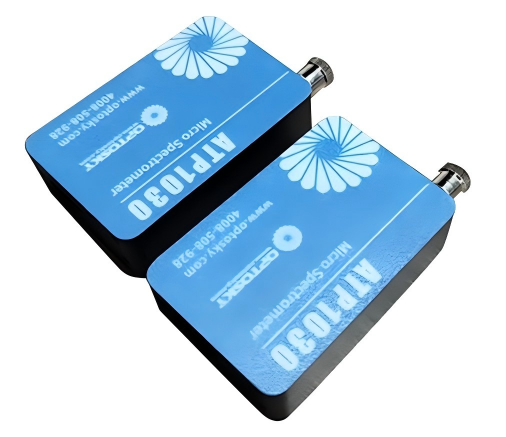
ATP1030 is an ultra‑compact, high‑resolution spectrometer covering 190–1100 nm. With a 1024‑pixel CMOS detector, adjustable integration time down to 1 ms, and USB‑powered design, it delivers reliable performance for applications like online water analysis, color measurement, handheld instruments, and Raman spectroscopy.
Product Recommendation | ATP1030 mini spectrometer Spectrometer

Vis-NIR transmission spectroscopy enables non-destructive identification of infertile duck eggs before incubation, achieving >95% accuracy. By detecting spectral fingerprints (e.g., 836 nm peak for fertile eggs), this method reduces energy waste and improves hatch rates, offering a low-cost, high-throughput solution for modern poultry farming.
Application case | How Spectral Technology is Transforming Duck Egg Farming