
Optosky-XRF spectrometer-FAQ
author: Vicky
2022-10-10

What is XRF?
XRF (X-ray fluorescence) is a non-destructive analytical tool for analyzing the elemental composition of materials.
How does XRF work?
XRF spectrometer is excited by high-energy x-rays used to analyze fingerprints of elemental composition of materials, so that XFR spectrometer for an popular technique to analyze material composition in qualitative and quantitative analysis.
What is X-ray fluorescence principle?
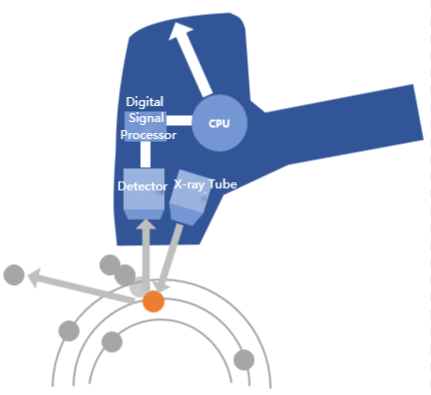
The principle of X-ray fluorescence is based on the excitation of atoms in the sample. A primary X-ray irradiated in an X-ray tube, hits an inner shell electron of the atom and ejects the energy from the atom. The open vacancy is filled by an electron from a further outer shell and fluorescence radiation is emitted. Because this fluorescence is unique to the elemental composition of the sample, XRF is an analytical technology for qualitative and quantitative analysis of the material.
composition.
How does XRF application in industries?
Handheld XRF Analyzers identify alloys, detect tramp elements, deliver geochemical data, analyze precious metals, and determine coating weight and plating thickness, to ensure material chemistry specifications are met.
How is the security of XRF?
During the analysis, the analyzer emits a directed radiation beam when the tube is energized. Reasonable effort should be made to maintain exposures to radiation as far below dose limits as is practical. This is known as the ALARA (As Low as Reasonably Achievable) principle. Three factors will help minimize your radiation exposure: time, distance, and shielding.
While the radiation emitted from a portable or handheld XRF elemental analyzer is similar to the exposure received in a normal medical or dental X-ray, care must be taken to always point a handheld XRF analyzer directly at the sample and never at a person or a body part. Here are seven safety tips:
XRF (X-ray fluorescence) is a non-destructive analytical tool for analyzing the elemental composition of materials.
How does XRF work?
XRF spectrometer is excited by high-energy x-rays used to analyze fingerprints of elemental composition of materials, so that XFR spectrometer for an popular technique to analyze material composition in qualitative and quantitative analysis.
What is X-ray fluorescence principle?
The principle of X-ray fluorescence is based on the excitation of atoms in the sample. A primary X-ray irradiated in an X-ray tube, hits an inner shell electron of the atom and ejects the energy from the atom. The open vacancy is filled by an electron from a further outer shell and fluorescence radiation is emitted. Because this fluorescence is unique to the elemental composition of the sample, XRF is an analytical technology for qualitative and quantitative analysis of the material.
composition.
How does XRF application in industries?
Handheld XRF Analyzers identify alloys, detect tramp elements, deliver geochemical data, analyze precious metals, and determine coating weight and plating thickness, to ensure material chemistry specifications are met.
- Oil and gas—for positive material identification (PMI) of piping material, which is critical where flow accelerated corrosion, or sulfidic corrosion, is a concern
- Metal fabricating—for non-destructive elemental analysis to ensure that no incorrect or out-of-specification metals or alloys enter the manufacturing process
- Automotive & aerospace—for incoming inspection and quality control of metallic and coated parts
- Scrap metal recycling—for fast and accurate sorting of scrap metals, which is essential to enhance both workflow efficiency and profitability
- Precious metal recycling—for accurately determining grade of precious metals and to prevent deleterious metals from entering the recycling process
- Mining & exploration—for quickly identifying and recovering the most economically viable resources
- Construction & environmental engineering—for screening risk assessment, hazardous site modeling, and remediation quality control
How is the security of XRF?
During the analysis, the analyzer emits a directed radiation beam when the tube is energized. Reasonable effort should be made to maintain exposures to radiation as far below dose limits as is practical. This is known as the ALARA (As Low as Reasonably Achievable) principle. Three factors will help minimize your radiation exposure: time, distance, and shielding.
While the radiation emitted from a portable or handheld XRF elemental analyzer is similar to the exposure received in a normal medical or dental X-ray, care must be taken to always point a handheld XRF analyzer directly at the sample and never at a person or a body part. Here are seven safety tips:
- Provide radiation safety training to operators
- Never aim the device at yourself or others when the primary beam (x-ray on) lights are illuminated
- Never hold samples during analysis
- Be aware of primary beam indicator lights
- Be aware of primary beam indicator lights
- Store securely – obey local storage requirements
- If you have a Safety Emergency, notify your Radiation Safety Officer (RSO) and analyzer vendor
Irradiance Spectrum Analysis Measure Solution
spectrometer FAQ
Related Article

The ATP7810 is a wide-band, high-resolution infrared grating spectrometer covering up to 0.9–5 μm. Featuring a motorized rotating grating, multiple detector options (InGaAs/MCT), and flexible interfaces (SMA905 or free space, USB/UART control), it delivers high SNR and stability for absorption/reflection/transmission spectroscopy, laser wavelength testing, and fiber optic sensing.
New Product Recommendation | ATP7810 Ultra-Wide Range Infrared Spectrometer Series

This study uses the ATP5200P UV-Vis spectrometer to investigate xanthate adsorption on chalcopyrite surfaces. By analyzing absorbance at 300 nm under controlled pH and temperature, the method optimizes flotation conditions for copper recovery, enabling real-time, sensitive detection of adsorption mechanisms in non-ferrous mineral processing.
Using the ATP5200P Spectrometer to Unravel Xanthate Adsorption and Separation Mechanisms
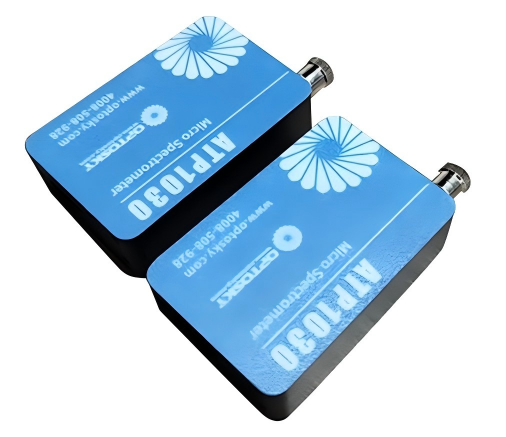
ATP1030 is an ultra‑compact, high‑resolution spectrometer covering 190–1100 nm. With a 1024‑pixel CMOS detector, adjustable integration time down to 1 ms, and USB‑powered design, it delivers reliable performance for applications like online water analysis, color measurement, handheld instruments, and Raman spectroscopy.
Product Recommendation | ATP1030 mini spectrometer Spectrometer

Vis-NIR transmission spectroscopy enables non-destructive identification of infertile duck eggs before incubation, achieving >95% accuracy. By detecting spectral fingerprints (e.g., 836 nm peak for fertile eggs), this method reduces energy waste and improves hatch rates, offering a low-cost, high-throughput solution for modern poultry farming.
Application case | How Spectral Technology is Transforming Duck Egg Farming