
Application Case | Precision Control of ALD Process: ATP5020P Supports the Industrialization of Perovskite Quantum Dots
2025-12-19
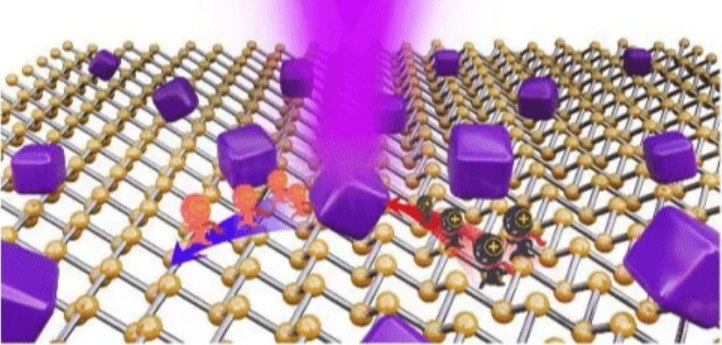
Perovskite quantum dots (CsPbBr₃), known for their high color purity and excellent luminescence efficiency, are a core material for next-generation display technologies. However, their intrinsic instability when exposed to moisture, oxygen, light, and heat severely limits commercial application.
01 Atomic Layer Deposition (ALD) Technology
Atomic Layer Deposition (ALD) enables nanoscale thin-film deposition through self-limiting surface reactions, providing a dense inorganic protective layer for perovskite quantum dots. This is an effective solution for enhancing their environmental stability. In industrial applications, ALD technology can significantly extend the operational lifespan of quantum dot color conversion layers within display devices, establishing a critical process foundation for mass production of next-gen technologies like Micro-LED and QLED.
Deposition temperature is a key parameter affecting ALD encapsulation efficacy. Excessively low temperatures lead to insufficient precursor reaction and poor film density, while overly high temperatures can damage the quantum dot lattice structure, causing irreversible performance degradation. Therefore, identifying the optimal deposition temperature window is crucial for industrializing quantum dot devices.
02 Research Case
Systematic experiments confirmed that 75°C is the optimal ALD encapsulation temperature for CsPbBr₃ quantum dots. Samples prepared under this condition maintained their initial photoelectric performance while demonstrating excellent environmental stability.
This study utilized the Optosky ATP5020P spectrometer for photoluminescence (PL) spectroscopy collection and optical performance characterization, providing key data for process optimization:
Key Technical Support from the ATP5020P Spectrometer
001 Accurate Optical Performance Quantification
ATP5020P's high sensitivity and spectral resolution enable precise measurement of the quantum dots' photoluminescence and absorption spectra, providing a reliable basis for assessing the impact of different ALD processes on their intrinsic optical properties.
002 Real-time Monitoring for Stability Testing
During accelerated aging tests (thermal cycling, blue light irradiation, high temperature/high humidity), the instrument's high signal-to-noise ratio and measurement stability ensure the accuracy of long-term test data, delivering continuous and reliable performance degradation curves to evaluate encapsulation effectiveness.
003 System Integration for In-situ Testing
Its fiber optic connectivity allows integration with temperature-controlled platforms, supporting in-situ PL spectroscopy collection under variable temperatures. This provides technical support for studying temperature-dependent carrier recombination mechanisms.
03 Industrial Validation and Application Prospects
CsPbBr₃ quantum dots encapsulated using the 75°C ALD process have been successfully applied in white LED devices. Test results show a color gamut coverage of 94.00% NTSC and 86.20% Rec.2020. Furthermore, the devices retained over 85% of their initial color gamut value after 600 hours of continuous operation, significantly outperforming unencapsulated devices.
This achievement demonstrates the industrial feasibility of ALD encapsulation technology in the quantum dot display field, providing a reliable color conversion solution for Micro-LED full-color displays. It also shows application potential in areas like wide-gamut lighting and visible light communication.
04 Conclusion
Optosky ATP5020P spectrometer, with its precise optical measurement capabilities and flexible system integration, plays a vital role in developing ALD encapsulation processes for perovskite quantum dots, providing essential technical support for process optimization and industrialization. As ALD encapsulation technology continues to advance, perovskite quantum dots are poised for broader application within the optoelectronics field.
For more information, please contact:
Email: [email protected]
Web: Optosky.net
References
Zijun Yan, Fangshun Ye, Liyue Xu, Xiao Yang, Shouqiang Lai, Shuli Wang, Yue Lin, Guolong Chen, Yijun Lu, Hao-Chung Kuo, Zhong Chen, Tingzhu Wu, Optimum temperature of atomic layer deposition of alumina on CsPbBr3 quantum-dot for optical performance and environmental stability, Journal of Luminescence, Volume 261, 2023, 119905, ISSN 0022-2313, https://doi.org/10.1016/j.jlumin.2023.119905.
Application Case | ATP2400: Unveiling the Gasification Mechanism of PTFE in Thermal Plasma
Application Case | ATP5020R Spectrometer: Gaining In-Situ Raman Insights into Pollutant Degradation Catalyzed by MBene
Related Article

The ATP7810 is a wide-band, high-resolution infrared grating spectrometer covering up to 0.9–5 μm. Featuring a motorized rotating grating, multiple detector options (InGaAs/MCT), and flexible interfaces (SMA905 or free space, USB/UART control), it delivers high SNR and stability for absorption/reflection/transmission spectroscopy, laser wavelength testing, and fiber optic sensing.
New Product Recommendation | ATP7810 Ultra-Wide Range Infrared Spectrometer Series

This study uses the ATP5200P UV-Vis spectrometer to investigate xanthate adsorption on chalcopyrite surfaces. By analyzing absorbance at 300 nm under controlled pH and temperature, the method optimizes flotation conditions for copper recovery, enabling real-time, sensitive detection of adsorption mechanisms in non-ferrous mineral processing.
Using the ATP5200P Spectrometer to Unravel Xanthate Adsorption and Separation Mechanisms
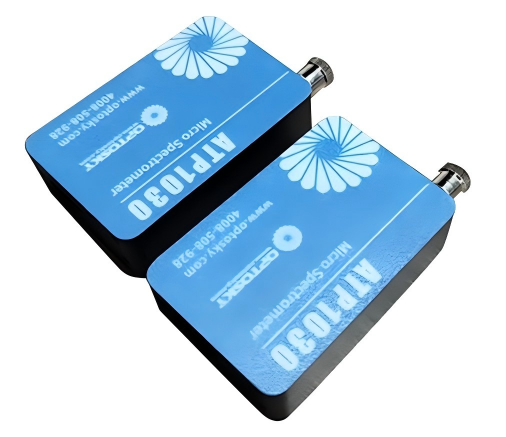
ATP1030 is an ultra‑compact, high‑resolution spectrometer covering 190–1100 nm. With a 1024‑pixel CMOS detector, adjustable integration time down to 1 ms, and USB‑powered design, it delivers reliable performance for applications like online water analysis, color measurement, handheld instruments, and Raman spectroscopy.
Product Recommendation | ATP1030 mini spectrometer Spectrometer

Vis-NIR transmission spectroscopy enables non-destructive identification of infertile duck eggs before incubation, achieving >95% accuracy. By detecting spectral fingerprints (e.g., 836 nm peak for fertile eggs), this method reduces energy waste and improves hatch rates, offering a low-cost, high-throughput solution for modern poultry farming.
Application case | How Spectral Technology is Transforming Duck Egg Farming