
Spectral Analysis: Principles of LIF Technology and Applications of Spectrometers
2025-08-29
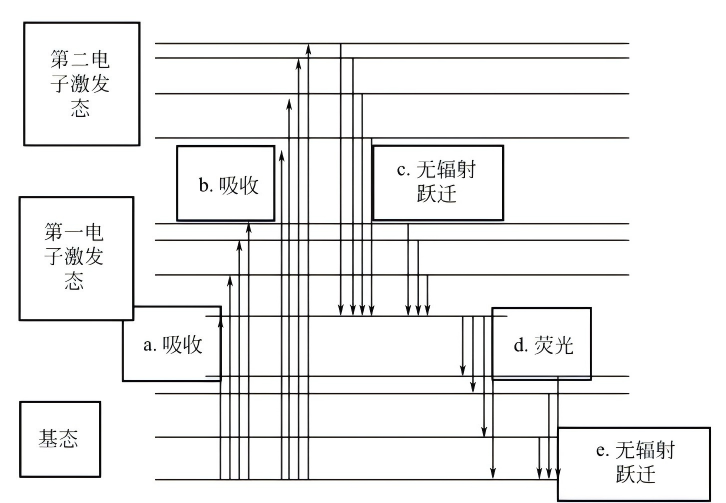
In the field of spectral analysis and detection technologies, Laser Induced Fluorescence (LIF) and spectrometers play pivotal roles. This article details the application of spectrometers in LIF, as well as LIF’s derivative applications.
1. Brief Overview of LIF Technology Principles
Similar to Laser-Induced Breakdown Spectroscopy (LIBS), LIF technology uses a laser to irradiate samples. Atoms or molecules in the sample absorb the laser’s energy and transition from the ground state to an excited state. When these excited atoms or molecules return to the ground state, they emit fluorescence—sample information is obtained by detecting this fluorescence.
The testing process of LIF technology is as follows:
-
Dissolve a fluorescent dye with a specific molecular structure in a fluid as a tracer.
-
Use a laser of a certain wavelength to irradiate the measurement area of the flow field, exciting the tracer molecules to emit fluorescent signals.
-
Receive the fluorescent signals via devices like cameras or spectrometers, and analyze them using a computer to obtain scalar transport information in the flow field.
Thanks to the laser’s strong directionality and monochromaticity, LIF technology boasts extremely high sensitivity. Studies have shown that LIF can detect fewer than 100 atoms per cubic centimeter; for most molecules, concentrations as low as 10⁶ molecules per cubic centimeter can be easily detected. Additionally, laser frequency tuning allows selection of the initial and final states of transitions, facilitating the analysis of complex molecular spectral bands.
-
Applications of Spectrometers in LIF
Spectrometers serve as core detection components in LIF technology, transmitting optical signals via optical fibers to enable high-sensitivity, real-time analysis.
High-Sensitivity Fluorescent Signal Detection
Spectrometers can capture weak fluorescent signals generated during LIF. For example, in environmental monitoring—when detecting trace pollutant molecules in the air—even at concentrations as low as parts per billion (ppb), spectrometers, with their high sensitivity, accurately detect the fluorescent signals emitted by pollutant molecules excited by lasers, providing precise data for environmental quality assessment.
Multi-Component Analysis
In complex sample systems, different substances have distinct fluorescent spectra. Spectrometers analyze the fluorescence generated by LIF and, based on unique spectral characteristics, enable simultaneous detection and differentiation of multiple substances. In biomedicine, for instance, they analyze multiple fluorescent markers in biological samples to assist doctors in accurate disease diagnosis.
Real-Time Dynamic Monitoring
During chemical reactions or biological processes, the fluorescent properties of substances change over time. Spectrometers monitor the dynamic changes of LIF signals in real time, supporting research on reaction mechanisms and biological processes. For example, in cell metabolism studies, real-time monitoring of changes in intracellular fluorescent substances helps understand cellular metabolic states and physiological activities.
-
Performance Advantages of Spectrometers
-
High Resolution and Sensitivity: CCD-based spectrometers (e.g., ATP5020P/R and ATP6500) can capture weak fluorescent spectra, meeting LIF’s high-sensitivity requirements. For multi-component analysis (similar to LIBS applications), high-resolution spectrometers (e.g., ATP3334 or ATL30007) are required to distinguish subtle spectral features.
-
Broad Spectral Coverage: Spectrometers typically support a wide wavelength range (often 400–1100 nm), making them suitable for detecting different fluorescent substances. For example, the ATP6500—covering 450–930 nm—is used for chlorophyll detection.
-
Derivative Applications of LIF
Environmental Monitoring
-
Bioaerosol Detection: LIF lidar is a primary tool for long-range bioaerosol detection. It uses ultraviolet lasers to excite fluorescence in distant bioaerosols, receives backscattered fluorescent signals, and analyzes the spectrum of these signals to determine the biological nature and type of aerosols. It enables long-term, large-scale remote online detection without sampling.
-
Water Pollution Detection: It can detect oil pollutants, pesticide residues, etc., in water. When a laser irradiates water, pollutant molecules emit specific fluorescent signals; the presence and intensity of these signals indicate the extent of water pollution.
Biomedical Field
-
Cell Imaging: Combined with fluorescent probes, LIF technology images intracellular structures and biomolecules. By labeling specific proteins or nucleic acids in cells, the distribution and intensity of fluorescent signals are observed to understand cell morphology, function, and molecular interactions.
-
Disease Diagnosis: In cancer diagnosis, LIF technology detects fluorescent markers in tissues or body fluids to aid early diagnosis. For example, changes in the content of certain fluorescent substances in blood or urine are used as indicators for cancer screening.
Industrial Testing
-
Material Surface Defect Detection: For optical materials or semiconductors, LIF technology detects micro-defects on surfaces. When a laser excites the material surface, defective areas emit fluorescent signals different from normal areas, helping engineers locate and analyze defects.
-
Oil Quality Testing: In the petrochemical industry, LIF technology analyzes the fluorescent spectrum of oil products to quickly determine their composition, quality, and presence of impurities or additives.
5. Conclusion
The combination of spectrometers and LIF technology provides an effective means for microscopic-level research and analysis of substances, with great application potential in environmental, biomedical, and industrial fields. As technology continues to advance, it is expected to bring more technological breakthroughs and application expansions.
Spectrometer semiconductor Plasma process monitoring OES Endpoint detection etching
Spectrometers: From Coal-Rock Identification to Coal Quality Analysis
Related Article

The ATP7810 is a wide-band, high-resolution infrared grating spectrometer covering up to 0.9–5 μm. Featuring a motorized rotating grating, multiple detector options (InGaAs/MCT), and flexible interfaces (SMA905 or free space, USB/UART control), it delivers high SNR and stability for absorption/reflection/transmission spectroscopy, laser wavelength testing, and fiber optic sensing.
New Product Recommendation | ATP7810 Ultra-Wide Range Infrared Spectrometer Series

This study uses the ATP5200P UV-Vis spectrometer to investigate xanthate adsorption on chalcopyrite surfaces. By analyzing absorbance at 300 nm under controlled pH and temperature, the method optimizes flotation conditions for copper recovery, enabling real-time, sensitive detection of adsorption mechanisms in non-ferrous mineral processing.
Using the ATP5200P Spectrometer to Unravel Xanthate Adsorption and Separation Mechanisms
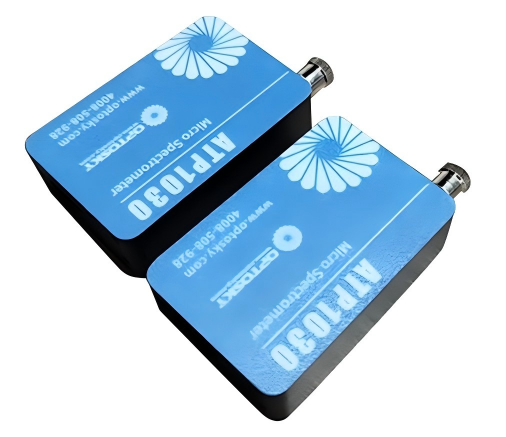
ATP1030 is an ultra‑compact, high‑resolution spectrometer covering 190–1100 nm. With a 1024‑pixel CMOS detector, adjustable integration time down to 1 ms, and USB‑powered design, it delivers reliable performance for applications like online water analysis, color measurement, handheld instruments, and Raman spectroscopy.
Product Recommendation | ATP1030 mini spectrometer Spectrometer

Vis-NIR transmission spectroscopy enables non-destructive identification of infertile duck eggs before incubation, achieving >95% accuracy. By detecting spectral fingerprints (e.g., 836 nm peak for fertile eggs), this method reduces energy waste and improves hatch rates, offering a low-cost, high-throughput solution for modern poultry farming.
Application case | How Spectral Technology is Transforming Duck Egg Farming