
Spectral Analysis: The Ecological Code to Safeguard the Oceans
2025-08-14
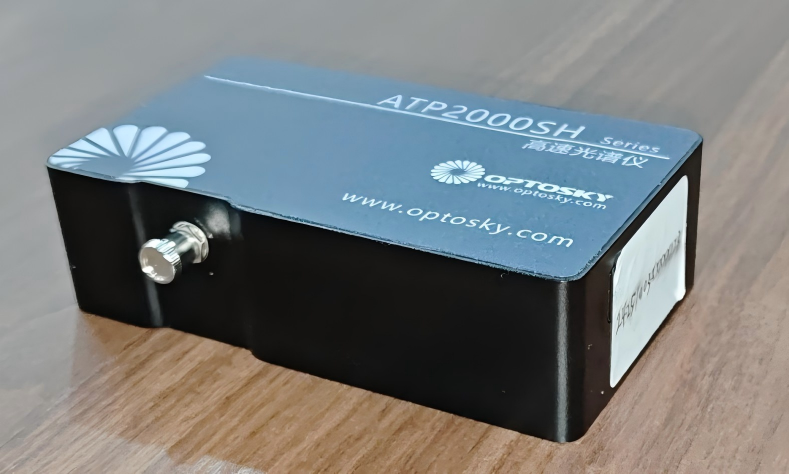
01 Spectral Technology: The "Digital Key" to Decoding Marine Ecology
In marine ecosystems, subtle shifts in plankton, delicate water quality fluctuations, and coral reef health hold critical clues shaping global ecology. Optosky’s spectrometers, with high sensitivity and rapid detection, transform spectral analysis into a "Marine Ecology CT," exposing every faint ecological signal.
02 Plankton Monitoring: The "Barometer" of Ecological Balance
As the foundation of marine ecosystems, plankton species and quantity directly impact ocean carbon cycles and climate systems. Optosky spectrometers analyze seawater spectral signatures to:
-
Species Identification: Unique "spectral fingerprints" from distinct cell structures and pigments enable rapid database matching, pinpointing community composition—key for biodiversity research.
Normalized absorption spectrum of phytoplankton pigments
-
Biomass Estimation: Using chlorophyll absorption peaks, light absorption intensity quantifies phytoplankton biomass, fueling marine primary productivity studies and carbon cycle modeling.
The absorption spectrum of chlorophyll in phytoplankton
03 Water Quality Monitoring: The "Early Warning System" for Ocean Health
Ocean water quality is the ecosystem’s lifeline. Optosky’s spectral tech builds a dual monitoring network:
Nutrient Detection: Rapidly measures nitrogen, phosphorus, etc., flagging eutrophication risks in real time—vital for red tide prevention.
Pollutant Tracking: Identifies and quantifies heavy metals, petroleum contaminants, and pesticide residues via characteristic spectral signals, guiding precise marine pollution control.
04 Coral Reef Monitoring: Guardian Light for the "Marine Rainforest"
Amid climate change and pollution, spectral technology protects coral reefs—Earth’s "marine rainforests":
-
Health Assessment: Measures coral spectral reflection and fluorescence to detect abnormal pigment levels and tissue changes, early-warning coral bleaching and stress.
Spectral curve diagrams of corals from different families
(a) cup coral family; (b) ramose coral family; (c) loquat coral family; (d) honeycomb coral family;
-
Environmental Tracking: Monitors real-time water temperature, salinity, and light around reefs, unraveling ecosystem-environment interactions to inform science-backed conservation.
Spectral Analysis: Detecting Moisture Content in Xuan Paper via Near-Infrared Spectroscopy (NIRS)
Spectral Analysis: Study on UV-VIS Absorption Spectra of Green Jadeite from Different Origins
Related Article

The ATP7810 is a wide-band, high-resolution infrared grating spectrometer covering up to 0.9–5 μm. Featuring a motorized rotating grating, multiple detector options (InGaAs/MCT), and flexible interfaces (SMA905 or free space, USB/UART control), it delivers high SNR and stability for absorption/reflection/transmission spectroscopy, laser wavelength testing, and fiber optic sensing.
New Product Recommendation | ATP7810 Ultra-Wide Range Infrared Spectrometer Series

This study uses the ATP5200P UV-Vis spectrometer to investigate xanthate adsorption on chalcopyrite surfaces. By analyzing absorbance at 300 nm under controlled pH and temperature, the method optimizes flotation conditions for copper recovery, enabling real-time, sensitive detection of adsorption mechanisms in non-ferrous mineral processing.
Using the ATP5200P Spectrometer to Unravel Xanthate Adsorption and Separation Mechanisms
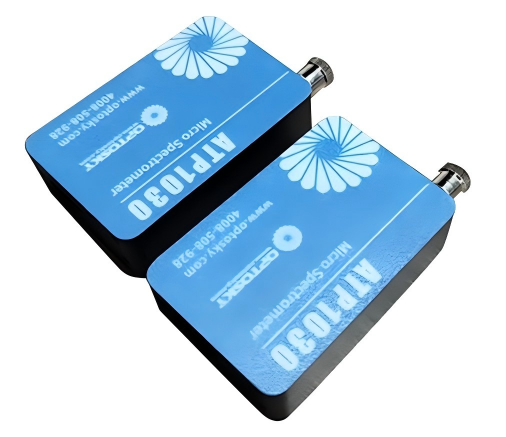
ATP1030 is an ultra‑compact, high‑resolution spectrometer covering 190–1100 nm. With a 1024‑pixel CMOS detector, adjustable integration time down to 1 ms, and USB‑powered design, it delivers reliable performance for applications like online water analysis, color measurement, handheld instruments, and Raman spectroscopy.
Product Recommendation | ATP1030 mini spectrometer Spectrometer

Vis-NIR transmission spectroscopy enables non-destructive identification of infertile duck eggs before incubation, achieving >95% accuracy. By detecting spectral fingerprints (e.g., 836 nm peak for fertile eggs), this method reduces energy waste and improves hatch rates, offering a low-cost, high-throughput solution for modern poultry farming.
Application case | How Spectral Technology is Transforming Duck Egg Farming