
Spectrometers: From Coal-Rock Identification to Coal Quality Analysis
2025-08-26
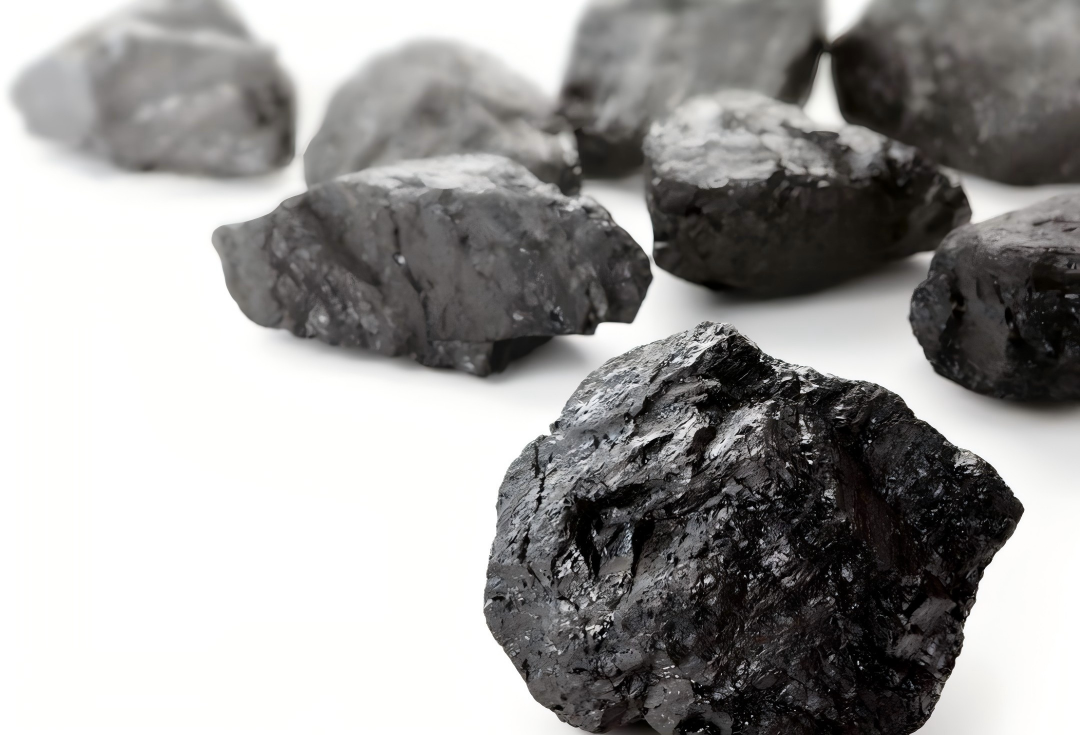
As a crucial energy source, coal’s mining efficiency and quality control rely heavily on accurate detection. Traditional methods, which depend on manual judgment and laboratory testing, are time-consuming and lagging. However, spectrometers—with their precise analysis of visible-near-infrared light—have emerged as an efficient tool in the coal detection field. Below, combined with professional research, we explain their working principles and core applications.
01. Spectral "Decoding" of Coal: Detection Principle
Differences in coal’s composition and structure produce unique spectral characteristics when irradiated by visible-near-infrared light (380~2500 nm). Spectrometers complete detection in three steps:
-
Optical Signal Acquisition: Fiber optic probes flexibly capture coal’s reflected light. Even in complex underground environments, non-contact and long-distance sampling is achievable.
-
Characteristic Analysis: High-rank coal has a flat reflectance spectrum, while low-rank coal shows absorption valleys at 1700 nm and 2300 nm. Minerals containing Fe and Al exhibit characteristic absorption at 455 nm and 514 nm.
-
Data Processing: Algorithms extract characteristic wavelengths (e.g., 1698 nm) and correlate them with coal quality parameters.
02. Application Scenarios: From Underground Mines to Laboratories
-
Coal-Rock Identification: Enabling Precise "Cutting" for Coal Shearers
In coal mining, black roof rocks (e.g., carbonaceous shale) are visually similar to coal, leading to accidental mining and gangue mixing.
-
Spectrometers focus on the 1693~1703 nm band and, combined with algorithms, can distinguish coal from rock within 1 second with a 96% accuracy rate.
-
Practical Value: Integratable into coal shearers to automatically adjust cutting depth, reducing gangue content and improving mining efficiency. For example, large coal mines using this technology have lowered gangue mixing rates, boosted coal mining efficiency, and significantly reduced subsequent washing costs.
-
Rapid Coal Quality Analysis: Real-Time Measurement of Ash and Moisture
No crushing or sample preparation is needed—key indicators are directly derived from spectral characteristics:
-
Ash Content Detection: The characteristic absorption of minerals like Fe and Al (455~1106 nm) is linearly correlated with ash content, with a prediction error of ≤5%.
-
Moisture Analysis: The sum of the depths of water absorption valleys at 1342 nm and 1905 nm has a correlation coefficient of 0.87 with inherent moisture—100 times faster than the traditional oven-drying method.
-
Coal Rank Classification: The spectral slope (rate of reflectance change in the near-infrared band) is positively correlated with volatile matter (R²=0.85), enabling quick differentiation between anthracite, bituminous coal, and lignite.
03. Technical Advantages
-
Non-contact & Non-destructive: Avoids damaging coal samples, making it ideal for testing lump coal and undisturbed coal.
-
Environmental Adaptability: Fibers are dust-resistant and vibration-resistant, suitable for complex scenarios like underground mines and coal washing plants.
-
Efficient & Low-cost: A single test takes <1 second, and no chemical reagents are required, reducing detection costs.
04. Conclusion
From coal-rock boundary detection in underground mining to quality control in coal washing and processing, spectrometers—using "light" as a medium—are transforming traditional detection from "lagging sampling" to "real-time sensing." Their core strength lies in the in-depth analysis of coal’s spectral characteristics, providing a scientific tool for the efficient and precise development of the coal industry.
05. References
-
Yang En, Wang Shibo, Ge Shirong. Study on Visible-Near-Infrared Spectral Characteristics of Typical Lump Coal[J]. Spectroscopy and Spectral Analysis, 2019, 39(6): 1717-1723. Doi:10.3964/j.issn.1000-0593(2019)06-1717-07
-
Experimental Study on Coal-Rock Perception Based on Reflectance Spectroscopy[J]. Journal of China Coal Society, 2019, 44(12): 3912-3920. Doi:10.13225/j.cnki.jccs.2019.0051
Spectral Analysis: Principles of LIF Technology and Applications of Spectrometers
Spectral Analysis: Detecting Moisture Content in Xuan Paper via Near-Infrared Spectroscopy (NIRS)
Related Article

The ATP7810 is a wide-band, high-resolution infrared grating spectrometer covering up to 0.9–5 μm. Featuring a motorized rotating grating, multiple detector options (InGaAs/MCT), and flexible interfaces (SMA905 or free space, USB/UART control), it delivers high SNR and stability for absorption/reflection/transmission spectroscopy, laser wavelength testing, and fiber optic sensing.
New Product Recommendation | ATP7810 Ultra-Wide Range Infrared Spectrometer Series

This study uses the ATP5200P UV-Vis spectrometer to investigate xanthate adsorption on chalcopyrite surfaces. By analyzing absorbance at 300 nm under controlled pH and temperature, the method optimizes flotation conditions for copper recovery, enabling real-time, sensitive detection of adsorption mechanisms in non-ferrous mineral processing.
Using the ATP5200P Spectrometer to Unravel Xanthate Adsorption and Separation Mechanisms
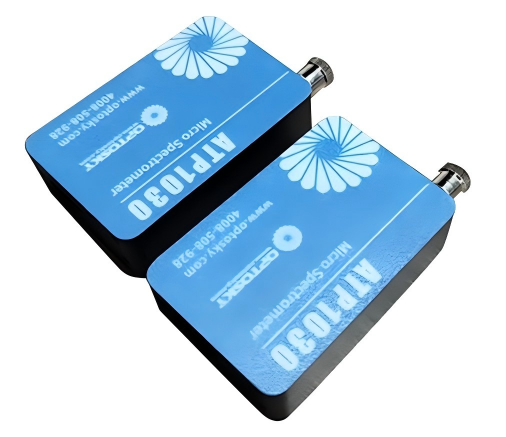
ATP1030 is an ultra‑compact, high‑resolution spectrometer covering 190–1100 nm. With a 1024‑pixel CMOS detector, adjustable integration time down to 1 ms, and USB‑powered design, it delivers reliable performance for applications like online water analysis, color measurement, handheld instruments, and Raman spectroscopy.
Product Recommendation | ATP1030 mini spectrometer Spectrometer

Vis-NIR transmission spectroscopy enables non-destructive identification of infertile duck eggs before incubation, achieving >95% accuracy. By detecting spectral fingerprints (e.g., 836 nm peak for fertile eggs), this method reduces energy waste and improves hatch rates, offering a low-cost, high-throughput solution for modern poultry farming.
Application case | How Spectral Technology is Transforming Duck Egg Farming