Application of Spectroscopic Technology in Early Embryo Gender Detection of Chicken Eggs
Background
In recent decades, China has become a major global producer, consumer, and exporter of eggs by rapidly developing the poultry industry and transitioning the egg-laying chicken industry from traditional free-range family farming to a modernized hatchery factory management model. The egg-laying chicken industry primarily focuses on raising hens, while roosters are usually culled shortly after birth due to their inability to lay eggs, poor meat quality, and low economic value. In natural hatching conditions, roosters account for about half of the total number of hatched chicks. As a result, the culling of one-day-old male chicks not only leads to high-quality eggs being underutilized, causing significant resource waste, but also violates fundamental principles of animal welfare and ethics.
If the gender of the chicken embryos can be detected before hatching, allowing for the early selection of male eggs, it would not only save hatching resources and directly improve the economic efficiency of the industry but also significantly optimize the production process in hatcheries, increasing the automation level and technical efficiency of the egg-laying chicken industry.
Figure 1:
(a) Fertilized egg; (b) Uncertain egg; (c) Infertile egg.
Theoretical Introduction
The incubation process of chicken eggs can be divided into three stages based on the development of the chicken embryo: early incubation (days 1-7 after incubation), mid-incubation (days 8-14), and late incubation (days 15-21). On the 7th day of incubation, the embryonic nervous cells begin to develop, and the embryo inside the egg is able to feel pain. Therefore, from an animal welfare perspective, the ideal time for embryo detection and selection should be in the early incubation stage.
Currently, research on gender identification in chicken eggs has been reported, mainly divided into two categories: content-based breakage detection and non-destructive spectral-based detection. One breakage detection method involves making a small hole in the blunt end of the egg and using near-infrared laser to irradiate the egg, obtaining strong fluorescence and weak Raman signals inside the egg. The fluorescence source is hemoglobin in the blood, and the gender of the embryo is determined through supervised classification using principal component analysis (PCA), with an accuracy rate of up to 93%. However, this content-based detection method is destructive, which can negatively impact the subsequent hatching of the embryo, and the process is cumbersome, making it difficult to apply in large-scale industrial production.
In contrast, the application of spectral technology in chicken egg incubation mainly focuses on early gender identification and hatching quality detection. By combining spectral detection, machine vision, and deep learning technologies, researchers have successfully achieved non-destructive gender detection of chicken embryos in early incubation and effective assessment of hatching status. This method not only avoids damage to the embryo but also improves detection efficiency and accuracy, providing strong technical support for the modernization of the egg-laying industry.
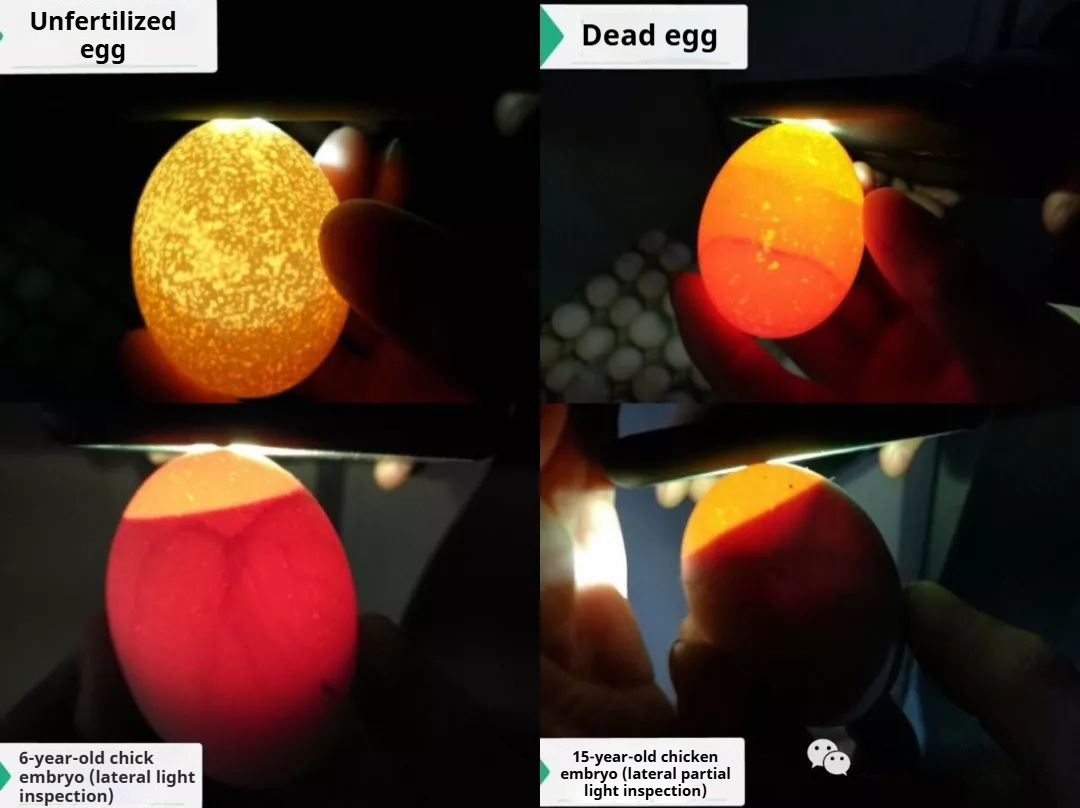
Figure 2 Light test results of eggs from different chicken breeds
The existing literature and research mainly use transmission spectroscopy to detect the gender of hatching embryos. UV/visible/near-infrared transmission spectroscopy is a non-destructive detection method, in which the spectrum can be absorbed by internal substances through the surface of the egg shell and reflected in the spectrum.
According to relevant studies, individual factors such as the shape and internal development of the embryo egg, as well as external factors such as placement, can easily affect the test results. By expanding the spectral band to the ultraviolet visible near-infrared range and comparing the differences in spectral modeling results of eggs placed in different ways and at different hatching ages, it was ultimately determined that the detection model had the best recognition rate (87.14%) on the 7th day of hatching when eggs were placed vertically.
During testing, a halogen lamp or other stable light source is used to illuminate one end of the egg. When the light passes through the interior of the embryo egg, a portion is absorbed and reflected, while the remaining light passes through the embryo egg. The hatching information inside the embryo egg is characterized by transmission spectra.
Experimental section
Figure 3 Technical roadmap for early sex detection in chicken embryo hatching
The specific steps of the embryo egg hatching information collection experiment are as follows:
(1) Prepare the same number of male and female chicken eggs, soak them in a 5% Neogene solution at 37 ℃ for 3 minutes for disinfection, number them, let them dry, and then place them in an incubator for hatching;
(2) Before hatching (d0), embryo egg images and spectra were collected, and thereafter, samples were taken every 24 hours until d7 during the hatching period.
The transmission spectrum detection device for chicken eggs is shown in the figure. The hardware mainly consists of a fiber optic spectrometer (recommended ATP5020P high-sensitivity fiber optic spectrometer, collimating lens, focusing lens, glass fiber, halogen lamp light source (ATG1600 or ATG1100), and a computer. The embryo placement method is divided into horizontal and vertical placement with the big head facing up, respectively, to collect spectra from 0-15d after hatching.
Figure 4 Light path for transmission spectrum detection of chicken embryo eggs
The spectral acquisition band is set to 300-1100nm, with an integration time of 40ms and an average frequency of 3 to improve data stability; Smooth width of 5 to match the resolution of the system.
Figure 5 Transmittance spectra of eggs from different chicken breeds
Figure 6 (left) shows the average spectra of male and female chicken embryos on the 7th day of hatching; (Right) Transmission spectra of d0-d15
The variation of the original average spectrum of chicken embryos with incubation days is shown in Figure 6 (right). The spectral curves of chicken embryos all have strong absorption peaks at the front end, and the magnitude of the spectral values at the front end varies irregularly with the number of days. In the 500-780nm wavelength range, as the incubation days increase, the waveform does not change significantly, but the transmittance gradually decreases. This indicates that during the incubation process, some substances in the absorption peak of the chicken egg in the 500-780nm wavelength range are converted into other substances required for chicken embryo development, resulting in a gradual decrease in concentration and a decrease in spectral response value.
It can be seen that the original average spectral curves of male and female chicken embryos have a generally consistent pattern of wavelength variation, with only some small numerical differences, making it difficult to distinguish between males and females through direct observation.
(3) In order to accurately obtain the gender information of chicken egg embryos and provide a basis for later identification models, on the 15th day of hatching of chicken eggs, artificial cleavage is used to determine the gender of embryos through dissection. The morphology of male testicles and female ovaries is observed with the naked eye to distinguish them as the actual gender of chicken eggs.
(4) In order to find suitable spectral bands for gender identification, the spectrum was divided into different ranges and modeled. It was found that the near-infrared band had the lowest recognition rate, while the ultraviolet and ultraviolet visible bands had improved accuracy compared to the full band model prediction set. Among them, the ultraviolet/visible light band had the highest model accuracy. Therefore, the ultraviolet visible light range of 300-800nm was selected for gender identification of hatching eggs.
Conclusion
The research results indicate that the establishment of UV visible transmission spectroscopy technology and corresponding models provides a feasible method for identifying the gender of early hatched chicken embryos. Although the accuracy needs further improvement, it has broad prospects and great development potential. The transmission spectroscopy method has high detection efficiency and can achieve non-destructive testing, which is suitable for practical application scenarios in egg hatching production lines. However, the recognition rate still needs to be improved at present. To meet the standards of commercial applications, on the one hand, it is necessary to improve the detection accuracy by reducing system noise and other means, and on the other hand, it is necessary to expand the sample size and conduct experiments on multiple strains to enhance the universality of spectral detection methods.
In the near future, when the universality of spectral detection methods can be improved by improving the light source, reducing spectrometer noise, and further optimizing the algorithm model, UV visible spectrometers will become an excellent choice for distinguishing males and females in the early stages of chicken embryo hatching!
Reference:
- Early chicken embryo gender identification based on UV visible transmission spectroscopy technology and extreme learning machine, by Zhu Zhihui, Hong Qi, Wu Linfeng, Wang Qiaohua, Ma Meihu, DOI:10.3964/j.issn.1000-0593(2019)09-2780-08;
- A review of the recent advances for the in ovo sexing of chicken embryos using
optical sensing techniques,Chuanqi Xie, Wensheng Tang and Ce Yang,2023 Poultry Science 102:102906;
- Zhang W, Pan L, Tu K, Zhang Q, Liu M (2014) Comparison of Spectral and Image Morphological Analysis for Egg Early Hatching Property Detection Based on Hyperspectral Imaging. PLoS ONE 9(2):e88659. doi:10.1371/journal.pone.0088659.
Product | ATP8600 Mini NIR Spectrometer
ATP2000 High SNR Spectrometer Sensor
Related Article