ATZW300 Passion Fruit Online Detection Proposal
Product Description
Description
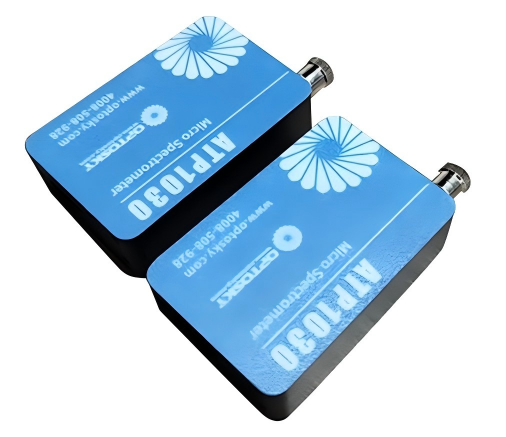
The ATZEW300 fruit acidity and sweetness measuring instrument uses near-infrared light to illuminate fruits. Different internal components of fruits absorb different wavelengths to different degrees. Based on the near-infrared spectral characteristics, a chemometrics method is used to establish an analysis model, which can achieve non-destructive analysis of the internal quality of fruits. Without destroying the sample, it can quickly analyze fruit sugar content, acidity and other indicators, and can analyze internal lesions and defects by establishing a discriminant model for specific fruits.
Feature
- Near-infrared spectroscopy technology, high sampling coverage and higher detection accuracy Online non-destructive testing, no pollution, fast detection speed
- Friendly human-machine interface, simple control, and powerful data analysis capabilities help the fruit online intelligent sorting system
- Modular design, simple installation and convenient operation, can be easily connected to the online intelligent fruit sorting system
Application
- Large fruits (grapefruit, watermelon, cantaloupe, papaya, etc.)
- Medium-sized fruits (oranges, apples, pears, peaches, citrus, etc.)
- Small fruits (grapes, strawberries, blueberries, etc.)
- Test items: fruit sugar content, acidity, internal lesions, etc.
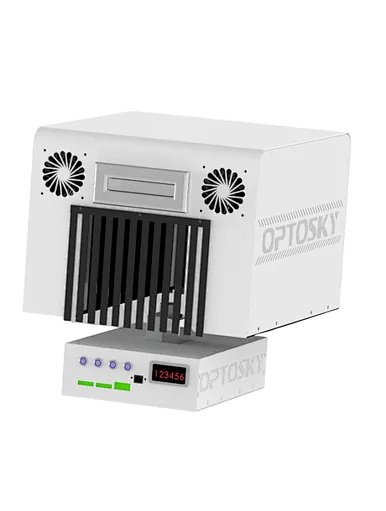
Internal Structure
Installation Diagram
Plan 1: Top Down Lighting
Brief description of the plan:
The tungsten halogen lamp is evenly arranged in a ring shape on the top of the passion fruit, and the probe below receives the spectral information containing the internal information of the fruit.
Technical feasibility:
feasible
Difficulty of implementation:
Moderate
expected result:
Can quickly distinguish passion fruit with different sourness and sweetness.
Cost impact:
number of light sources and placement angles
Risk:
1. The lighting angle of the light source.
2. There are differences in the distance from passion fruit of different sizes to the probe.
3. The production line needs to be modified for the light receiving part, and the terminal needs to cooperate.
Plan2:Side lighting
Brief description of the plan:
The light source is on the same horizontal plane as the equatorial plane of the passion fruit. The three lights are evenly placed at 60°, and the probe receives spectral information on the other side of the fruit.
Technical feasibility:
feasible
Difficulty of implementation:
Moderate
Expected results:
Can quickly distinguish passion fruit with different sour and sweet levels.
Cost impact:
Moderate
Risk:
1. The fruit tray blocks the light source.
2. There are differences in the distance from passion fruit of different sizes to the probe.
Application of UV-Visible Spectrometer in Identification of Synthetic Emerald
New Product Launch | ATP7810 Ultra Wide Range Infrared Grating Spectrometer
Related Article