
Field Spectroradiometer Kiwi Ripeness Detection
author: Callum
2024-09-18

Introduction
Kiwifruit is popular for its delicious taste, rich nutritional value, and high content of vitamin C, polyphenols, and minerals. However, its short storage life and shelf life pose challenges. When kiwifruit is picked after full maturity, the fruit becomes too soft, making packaging and transportation difficult. This limits research on its characteristics and product processing, thus impacting the industry. Therefore, kiwifruit is usually harvested at the physiological maturity stage and allowed to ripen during storage.
Determining the optimal harvest time ensures fruit quality and meets market demand, enhancing economic benefits. Relying on taste or experience to determine kiwifruit ripeness is impractical, and a fast, objective, and non-destructive measurement method is needed. This document employs spectral identification methods to distinguish kiwifruit at different ripeness levels through spectral analysis.
Basic Principle of Field Spectroradiometer
A field spectroradiometer is a crucial scientific instrument used for measuring and collecting spectral data of objects. It measures physical quantities such as brightness, illuminance, reflectance, and spectral distribution. The field spectroradiometer integrates data measurement, collection, storage, and computation, making it a vital tool for gathering spectral data and extracting spectral feature information.
Technically, field spectroradiometers are characterized by high sensitivity and high resolution, featuring built-in fixed holographic gratings and full-array optical detectors. This configuration avoids calibration failures caused by using built-in fiber optics, narrow slits, and moving gratings or prisms.
The applications of field spectroradiometers are broad, including mineral identification and resource estimation in mineral exploration, as well as surface classification and disaster monitoring in remote sensing applications. For instance, in mineral exploration, different minerals have unique spectral features, allowing identification of mineral types and distribution through spectral analysis. In remote sensing, surface classification is performed using spectroradiometers mounted on satellites or UAVs to classify and monitor surfaces like forests, farmlands, and urban areas. Disaster monitoring involves rapid assessment of the extent and severity of natural disasters using spectral analysis.
Workflow
Due to the strong light absorption characteristics of the kiwifruit, to obtain high-quality diffuse reflectance spectra, this document increased the number of halogen light sources and adjusted the angles between them to optimize the entire experimental system.
Data Collection and Analysis
The ATP9100 handheld field spectroradiometer was used to measure the reflectance spectra of kiwifruit after optimizing various experimental parameters. The raw reflectance spectra obtained with the ATP9100 handheld field spectroradiometer are shown below:
The derivative of the reflectance data obtained with the ATP9100 handheld field spectroradiometer is shown below:
From the data, it is evident that mature and immature kiwis exhibit distinct differences in the 540–670 nm and 920–960 nm wavelength ranges, allowing for classification based on ripeness. Subsequently, chemometric methods can be used to fit the spectra and identify characteristic peak positions, facilitating further quantitative analysis of the components.
Conclusion
Using the ATP9100 handheld field spectroradiometer, kiwifruit spectral data can be quickly obtained. Analysis of specific wavelength ranges enables differentiation of ripeness.
Using Field Spectroradiometer to Identify Rice Chlorophyll Concentration
Water Quality Monitoring
Related Article

This study distinguishes natural emeralds from synthetic ones by analyzing their UV-visible-NIR spectral features. Key findings reveal distinct Fe-related and water absorption peaks in natural emeralds, enabling accurate identification.
Using Field Spectroradiometer for Synthetic Emerald Identification
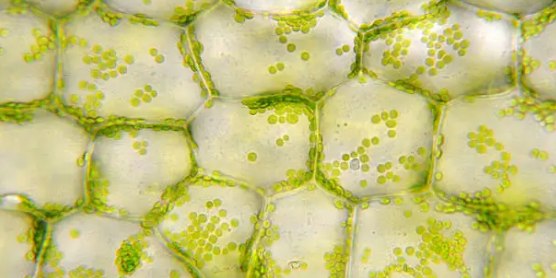
This article investigates using a Field Spectroradiometer to identify chlorophyll concentration in rice leaves. The study highlights the effectiveness of hyperspectral technology for assessing chlorophyll levels in rice leaves using field-based spectral data.
Using Field Spectroradiometer to Identify Rice Chlorophyll Concentration
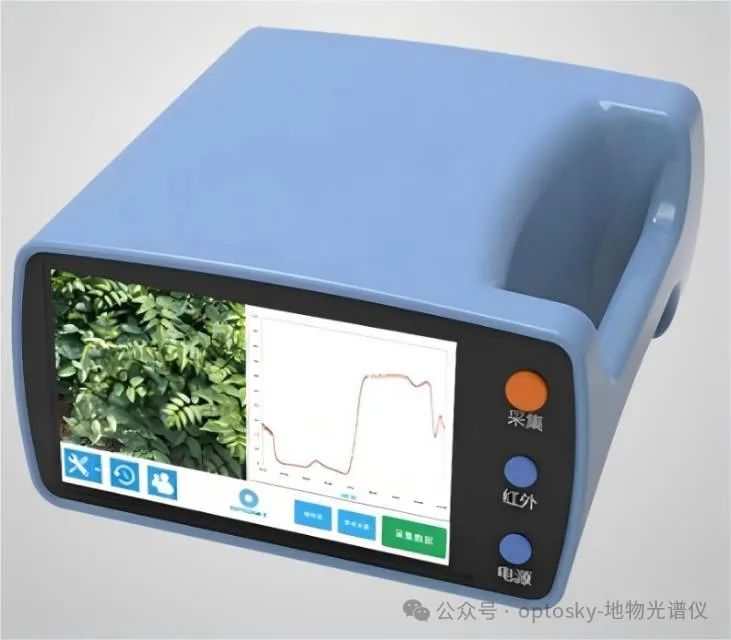
This post introduces the application of field spectrometry technology in predicting and monitoring water pollution. By examining the relationship between water body reflectance spectra and water quality indicators, it demonstrates how spectral technology can be used for large-scale water quality monitoring and dynamic tracking of water pollution development.
Water Quality Monitoring
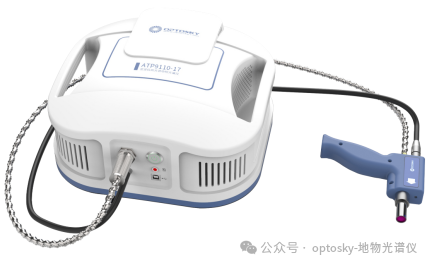
This post explores the importance of real-time measurement of moisture content in forest litter using infrared spectroscopy. It discusses how different moisture levels influence the infrared absorption spectrum of vegetation and explains how spectral data can be used to build predictive models for forest fire prevention.
Forest Fire Prevent