
Introduction to the optical path of a spectrometer
A spectrometer is an instrument specifically used for spectral analysis. Optosky ATP series fiber optic spectrometers combine fiber optic technology and spectral analysis technology to accurately measure the intensity distribution of incident light at different wavelengths.
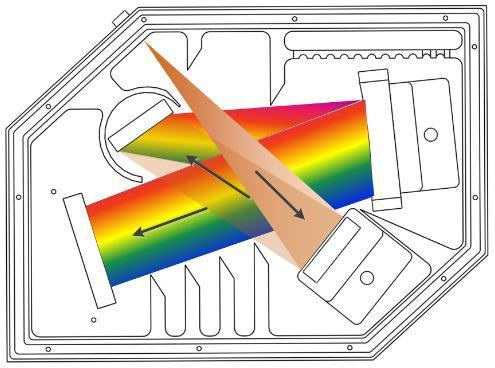
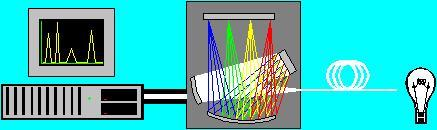
Figure 1. Optosky spectrometer
Its basic structure consists of optical fiber connector, incident slit, collimator, grating, focusing optical system and detector. The slit, collimator, grating and focusing optical system together constitute the internal optical path system of the spectrometer.
Common micro-spectrometers are generally based on the principle of grating spectroscopy. The optical path system of the Optosky spectrometer is mainly divided into reflective and transmissive systems. Transmissive system: The optical system is small in size and has a strong light intensity, but lacks the materials needed to manufacture lenses in the spectral range from far infrared to far ultraviolet, which will lead to inaccurate measured spectral curves. Therefore, it is rarely used and is generally only in the ultraviolet visible range. Reflective system: The applicable spectral range is wider. Although the light intensity is weaker than that of the transmissive system, the reflector does not produce chromatic aberration, which is conducive to obtaining a flat spectrum surface. The use of a reflector for the imaging mirror can ensure the quality of the spectrum received by the detector system. Therefore, the market is mainly dominated by spectrometers with reflective optical paths. In the reflective optical path, the optical path structure forms commonly used in the current fiber optic spectrometer market are divided into: basic Czerny-Turner optical path structure (non-crossed) and crossed Czerny-Turner optical path structure.
Part.01 Basic CT optical path
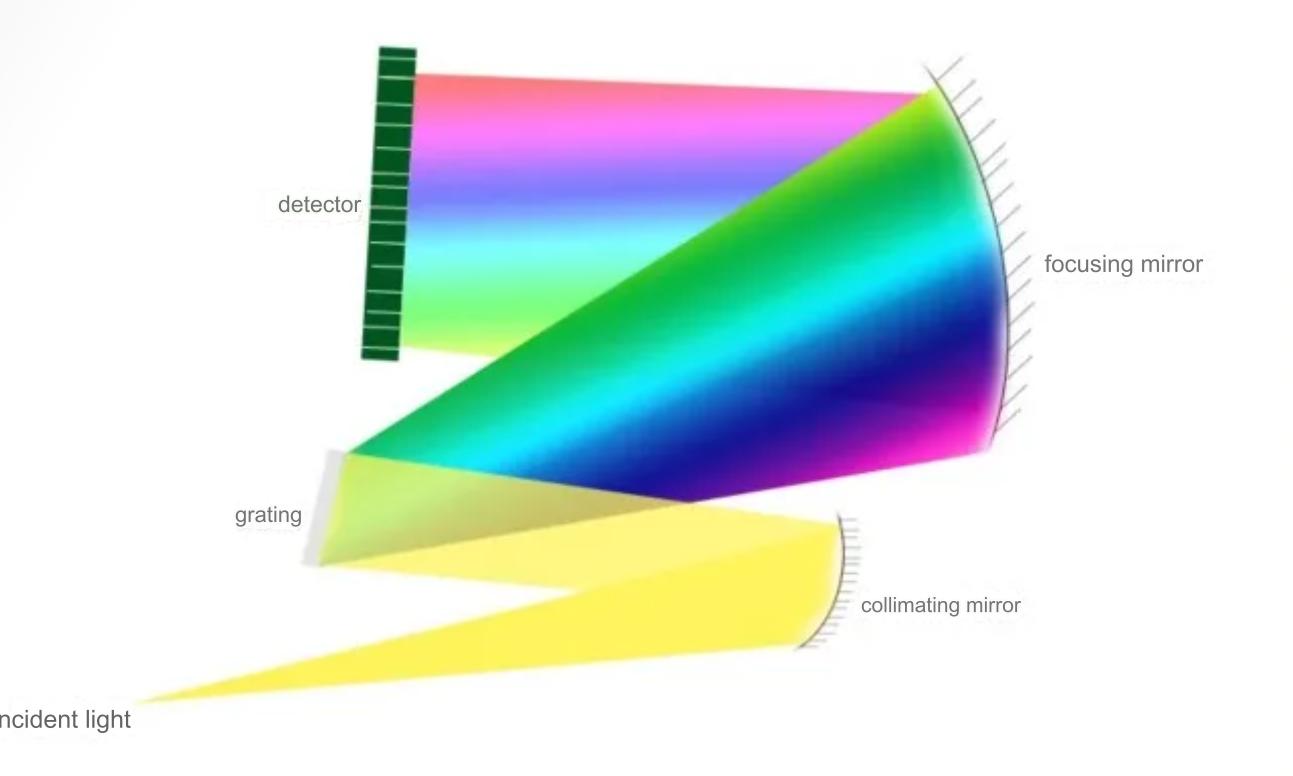
Figure 2. M-type optical path
As shown in the figure, after the incident light passes through the slit, it hits the collimating mirror, reflects the collimated light, and then is diffracted and split by the grating. After passing through the focusing mirror, it is detected by the detector and the spectral information is analyzed. The basic Czerny-Turner optical path structure is often called the M-type optical path structure because its shape resembles the letter "M". This is the origin of the M-type optical path.
The optical performance of the spectrometer optical path is mainly affected by the numerical aperture, spherical aberration, astigmatism, coma and various aberrations, which determine the optical sensitivity, stray light and optical resolution of the system.
The M-type optical path can make the spherical aberration smaller than the aberration tolerance by controlling the relative aperture, thus meeting the resolution requirement. Selectively reducing the numerical aperture of the M-type optical path in the design can significantly improve the resolution. In addition, the M-type optical path can correct astigmatism to a very low level, and because the optical path is relatively symmetrical, the stray light level inside the spectrometer is better than that of the crossed Cheney-Turner optical path.
In general, the M-type optical path has higher resolution and better stray light level, so it is mainly used in high-resolution spectrometers and is suitable for applications such as LIBS and laser wavelength monitoring.
The M-type optical path also looks like the Arabic numeral "3", so the names of Optosky's M-type optical path spectrometers all contain 3 (the third digit is 3), such as ATP5030, ATP5034, ATP3030, ATP3034, etc.
Part.02 Cross CT optical path
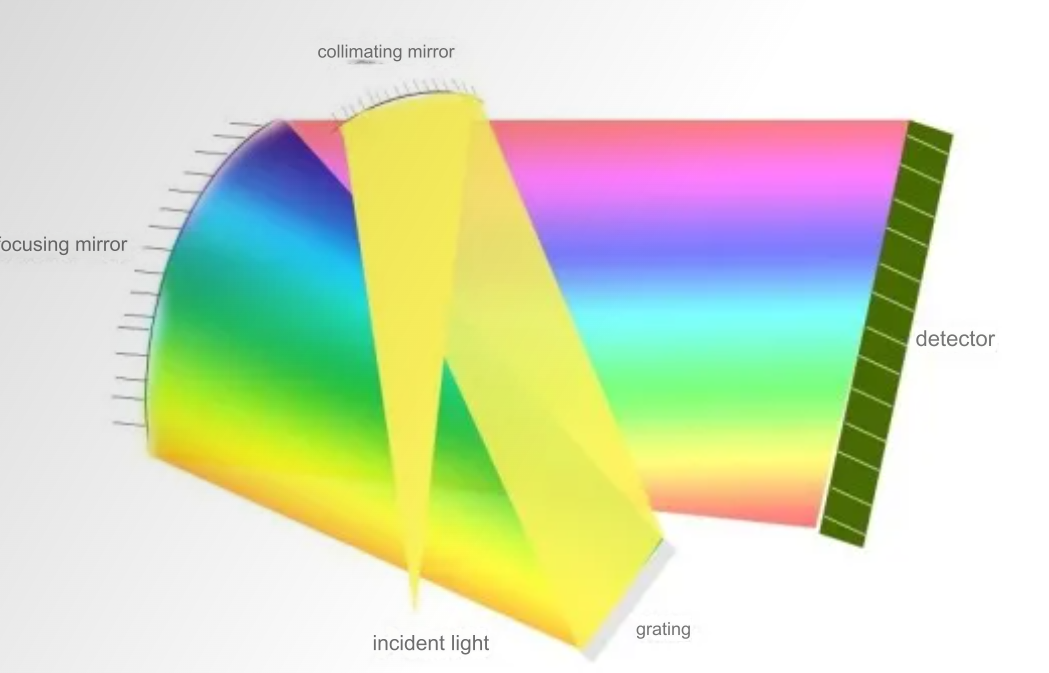
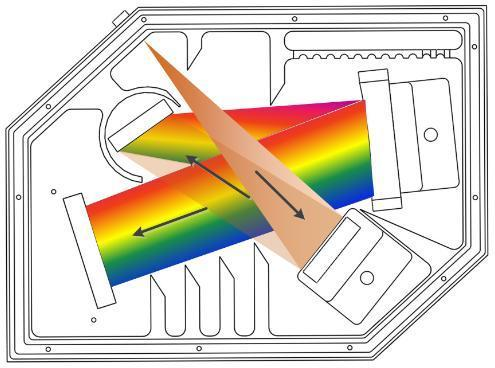
Figure 3. Crossed optical paths
The crossed Cheney-Turner optical path is developed from the M-type optical path.
We usually think that the cross optical path is a folded optical path, which has more advantages in overall structural size and space utilization, and has a more compact and reasonable structure.
|
Specifications |
M-type optical path |
Crossed Cheney-Turner optical path |
|
Dimensions |
Slightly larger size |
Compact structure |
|
Stray light |
Good |
General |
|
Resolution |
High |
General |
|
Stability |
High |
High |
|
Sensitivity |
General |
High |
|
Corresponding recommended products |
Basic type: ATP3030, ATP3034 Cooling type:ATP5030.ATP5034 |
Uncooled:ATP2000,ATP2002,ATP3000,ATP3040 Detector cooling: ATP5020P, ATP5040, ATP6500 |
Compared with the M-type optical path, the coma of the cross-type CT optical path can be calibrated to a relatively ideal value, and the obtained spectral spots are more regular. Although it is not as good as the M-type optical path in terms of spherical aberration, astigmatism, stray light, etc., The structure is compact and the sensitivity is higher, so this cross optical path is usually used in micro-spectrometers and is suitable for most applications.
Part.03 Concave grating beam splitting path
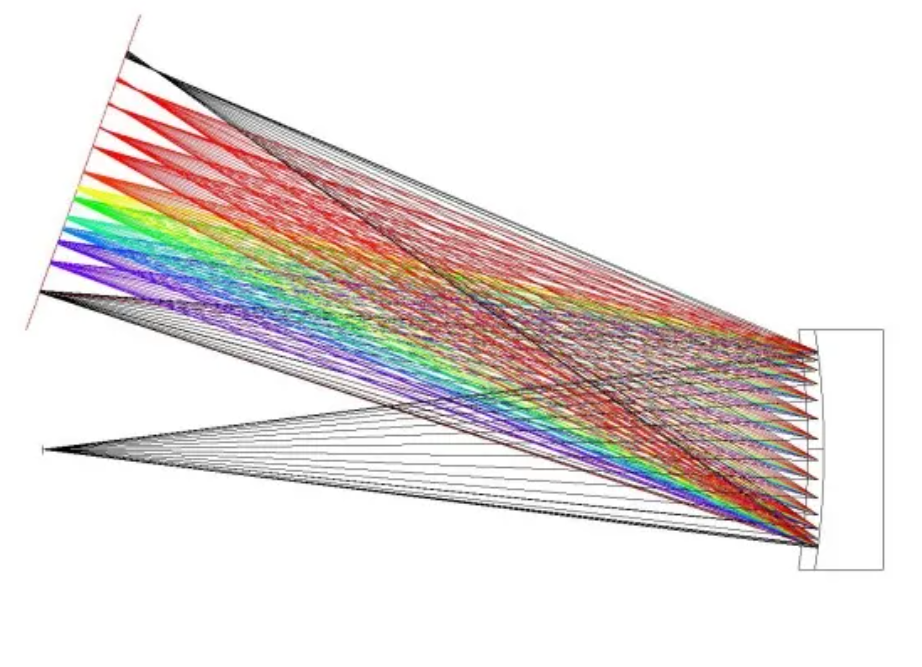
Figure 4. Concave grating beam splitting path
The concave grating spectroscopic optical path adopts a reflective concave grating. By combining the spectroscopic element with the reflective element, the optical elements in the optical path are greatly reduced, the optical path structure is simplified, the stray light level is significantly reduced, and the internal space is saved, so that the spectrometer can be designed to be more compact.
Optosky ATPX5XX series spectrometers adopt this split light path structure, which ensures high performance and high signal-to-noise ratio while providing miniature optical size.
Typical applications:
- Industrial measurement sensors
- LED spectrophotometer
- Fluorescence photometer
- Biochemical analyzer
- Transmittance detection
- Reflectance detection
- UV gas analyzer
Part.04 Transmission grating beam splitting path
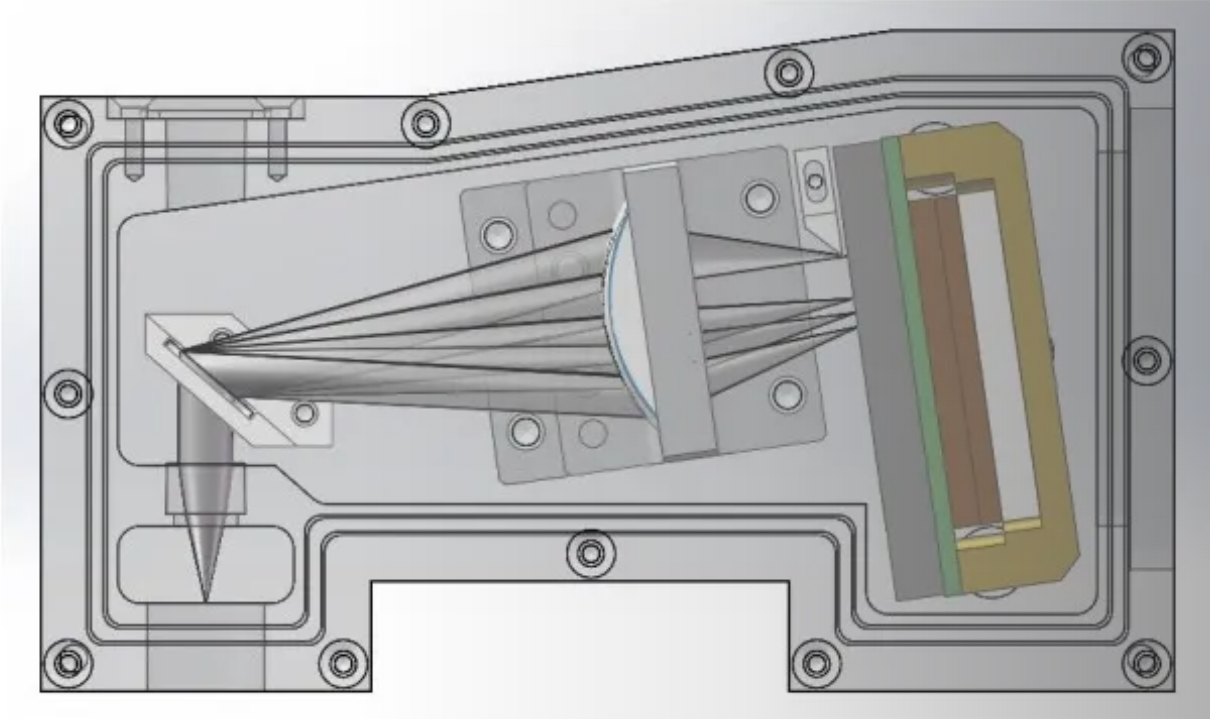
Figure 5. Transmission grating spectrometer
The transmission grating spectroscopic optical path mainly performs spectrometry through the transmission grating. The basic optical path structure is shown in the figure above. Compared with the reflective optical path, the transmission optical path has higher diffraction efficiency and larger bandwidth, and is suitable for occasions that require high resolution and low noise . In addition, the transmission grating is designed with a large numerical aperture optical design, which can receive all photons of the optical fiber (NA=0.22), avoiding the problems of ghost lines and stray light, and has more advantages in weak signal detection. Such as gas analysis Raman spectrometer, fluorescence spectrometer, etc.
Compared with the reflective structure, the transmissive optical system does not require off-axis design, which effectively reduces the aberration caused by off-axis, making the system structure simpler and the resolution higher. However, since all components are transmissive and the optical path is not folded, more space is required. In addition, the cost is the same as the reflective grating spectroscopic optical path, and is also higher than the CT optical path.
Spectroscopy: A Crucial Tool for Quality Control in Various Industries
Introduction to Spectrometer Detectors
Related Article



