
NIR Spectroscopy for E.coli
author: Susan
2021-08-23
Zhao Binglin and others used Principle Component Analysis (PCA) using near-infrared spectroscopy to identify two pathogenic bacteria, Escherichia coli and Listeria monocytogenes.
Taking Escherichia coli and Listeria monocytogenes as the research objects, after separating their cell walls and cytoplasm, their concentration was diluted gradually, and near-infrared spectra were collected. The multivariate scattering correction method is selected as the spectral preprocessing method, and the projection discriminant method based on principal component analysis is used to model and analyze the spectral data of the two pathogenic bacteria. Through the detection test of the verification sample, it is proved that the near-infrared spectroscopy data of the cell walls of the two pathogenic bacteria can be used for identification.
Optosky recommends ATP8000 which is 900-2600 nm spectral range, best Near-infrared spectrometer, and extendable range from UV VIS to Mid IR: 200-5000 nm, free NIR spectrometer software, global leading NIR spectrometer technology from Manufacturer with 20 year and custom or preconfigured wavelength range and optical resolution.
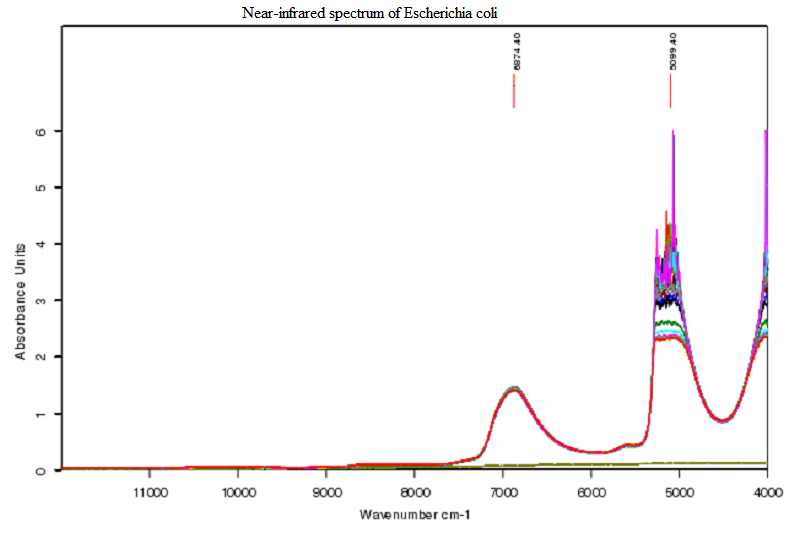
Taking Escherichia coli and Listeria monocytogenes as the research objects, after separating their cell walls and cytoplasm, their concentration was diluted gradually, and near-infrared spectra were collected. The multivariate scattering correction method is selected as the spectral preprocessing method, and the projection discriminant method based on principal component analysis is used to model and analyze the spectral data of the two pathogenic bacteria. Through the detection test of the verification sample, it is proved that the near-infrared spectroscopy data of the cell walls of the two pathogenic bacteria can be used for identification.
Optosky recommends ATP8000 which is 900-2600 nm spectral range, best Near-infrared spectrometer, and extendable range from UV VIS to Mid IR: 200-5000 nm, free NIR spectrometer software, global leading NIR spectrometer technology from Manufacturer with 20 year and custom or preconfigured wavelength range and optical resolution.
How to Identify Gem Authenticity by Spectroscopy
Global Best UV Miniature Spectrometer
Related Article

The ATP7810 is a wide-band, high-resolution infrared grating spectrometer covering up to 0.9–5 μm. Featuring a motorized rotating grating, multiple detector options (InGaAs/MCT), and flexible interfaces (SMA905 or free space, USB/UART control), it delivers high SNR and stability for absorption/reflection/transmission spectroscopy, laser wavelength testing, and fiber optic sensing.
New Product Recommendation | ATP7810 Ultra-Wide Range Infrared Spectrometer Series

This study uses the ATP5200P UV-Vis spectrometer to investigate xanthate adsorption on chalcopyrite surfaces. By analyzing absorbance at 300 nm under controlled pH and temperature, the method optimizes flotation conditions for copper recovery, enabling real-time, sensitive detection of adsorption mechanisms in non-ferrous mineral processing.
Using the ATP5200P Spectrometer to Unravel Xanthate Adsorption and Separation Mechanisms
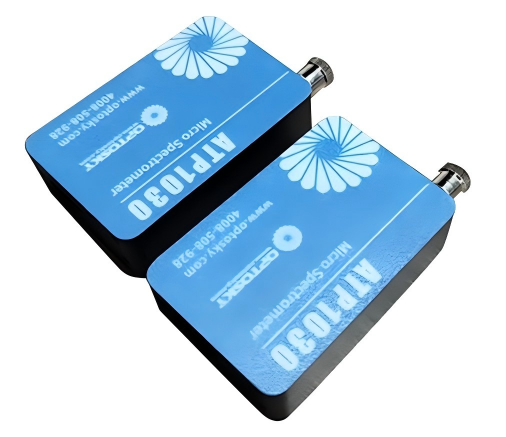
ATP1030 is an ultra‑compact, high‑resolution spectrometer covering 190–1100 nm. With a 1024‑pixel CMOS detector, adjustable integration time down to 1 ms, and USB‑powered design, it delivers reliable performance for applications like online water analysis, color measurement, handheld instruments, and Raman spectroscopy.
Product Recommendation | ATP1030 mini spectrometer Spectrometer

Vis-NIR transmission spectroscopy enables non-destructive identification of infertile duck eggs before incubation, achieving >95% accuracy. By detecting spectral fingerprints (e.g., 836 nm peak for fertile eggs), this method reduces energy waste and improves hatch rates, offering a low-cost, high-throughput solution for modern poultry farming.
Application case | How Spectral Technology is Transforming Duck Egg Farming