
NIR spectroscopy can Detect Acrylamide —Harmful to Health
author: Susan
2021-09-29

Acrylamide is a natural neurotoxin often found in starchy foods. It is formed as a chemical reaction when the food is cooked at high temperatures. Examples of foods with higher levels of acrylamide include fries/chips, potato chips/crisps, breads, cereals and coffee. According to the National Cancer Institute, studies in rodent models have shown that exposure to acrylamide can increase the risk of several types of cancer. Furthermore, because the body converts acrylamide into glycidamide, there is also an association between acrylamide intake and mutations in and damage to DNA. Unfortunately, doing so is easier said than done. That’s because existing techniques for detecting acrylamide are time-consuming, expensive and overly complex.
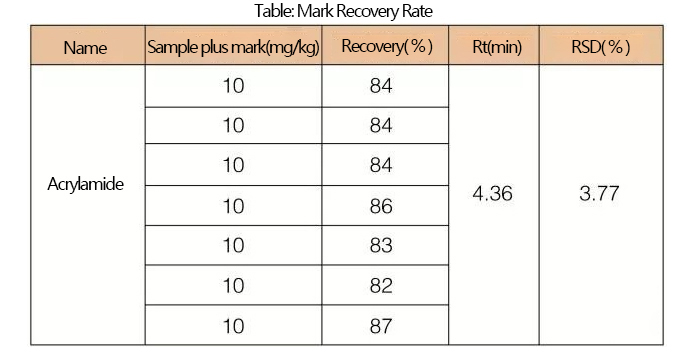
To help food operators comply with the EU directive, the EU-funded AFREELAMIDE project developed a detection device that uses visible/near infrared (vis/NIR) spectroscopy. The new device allows users to conduct real-time monitoring of individual food pieces on site and at a cost that is five times cheaper than traditional inspection means.
As the key of Acrylamide detection device, near-infrared spectroscopy is very important. Optosky recommend ATP8000 which NIR spectrometer widest covers 900-2500nm, small size and could be used as part of the machine's near-infrared modular better.
To help food operators comply with the EU directive, the EU-funded AFREELAMIDE project developed a detection device that uses visible/near infrared (vis/NIR) spectroscopy. The new device allows users to conduct real-time monitoring of individual food pieces on site and at a cost that is five times cheaper than traditional inspection means.
As the key of Acrylamide detection device, near-infrared spectroscopy is very important. Optosky recommend ATP8000 which NIR spectrometer widest covers 900-2500nm, small size and could be used as part of the machine's near-infrared modular better.
Application of In-situ UV-VIS-NIR Spectroscopy in Electrochemistry
Application of NIR Spectroscopy in Tobacco
Related Article

The ATP7810 is a wide-band, high-resolution infrared grating spectrometer covering up to 0.9–5 μm. Featuring a motorized rotating grating, multiple detector options (InGaAs/MCT), and flexible interfaces (SMA905 or free space, USB/UART control), it delivers high SNR and stability for absorption/reflection/transmission spectroscopy, laser wavelength testing, and fiber optic sensing.
New Product Recommendation | ATP7810 Ultra-Wide Range Infrared Spectrometer Series

This study uses the ATP5200P UV-Vis spectrometer to investigate xanthate adsorption on chalcopyrite surfaces. By analyzing absorbance at 300 nm under controlled pH and temperature, the method optimizes flotation conditions for copper recovery, enabling real-time, sensitive detection of adsorption mechanisms in non-ferrous mineral processing.
Using the ATP5200P Spectrometer to Unravel Xanthate Adsorption and Separation Mechanisms
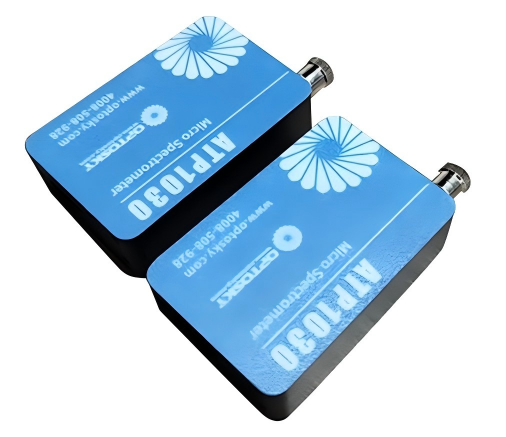
ATP1030 is an ultra‑compact, high‑resolution spectrometer covering 190–1100 nm. With a 1024‑pixel CMOS detector, adjustable integration time down to 1 ms, and USB‑powered design, it delivers reliable performance for applications like online water analysis, color measurement, handheld instruments, and Raman spectroscopy.
Product Recommendation | ATP1030 mini spectrometer Spectrometer

Vis-NIR transmission spectroscopy enables non-destructive identification of infertile duck eggs before incubation, achieving >95% accuracy. By detecting spectral fingerprints (e.g., 836 nm peak for fertile eggs), this method reduces energy waste and improves hatch rates, offering a low-cost, high-throughput solution for modern poultry farming.
Application case | How Spectral Technology is Transforming Duck Egg Farming