
Spectrometer Detector Selection Guide
2025-06-24
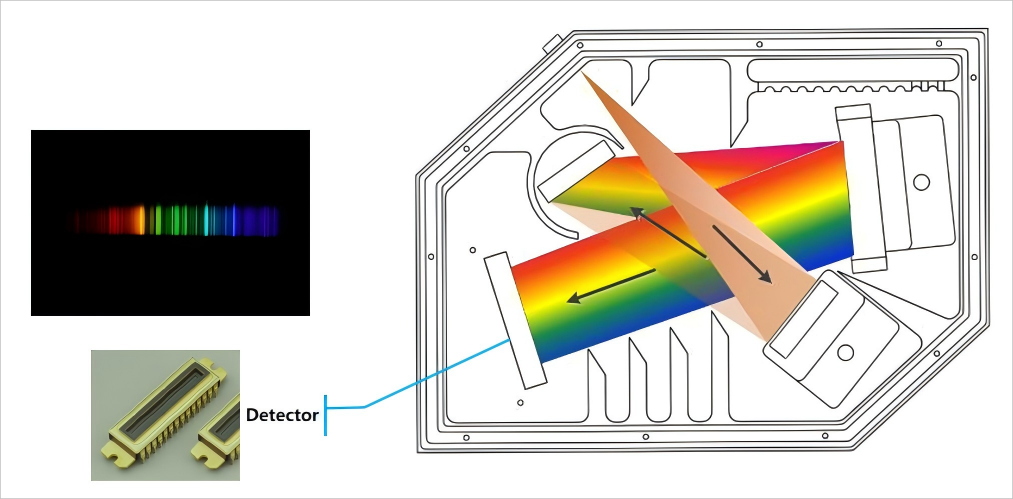
The performance of a spectrometer's detector directly determines measurement accuracy and efficiency. Optosky offers diverse detector solutions tailored to specific needs. This guide analyzes core parameters from material composition, structure, and cooling technology perspectives to help you rapidly identify the optimal solution.
Material Selection: Si vs. InGaAs
|
Detector Type
|
Wavelength
|
Key Applications
|
Representative Models
|
|
Silicon (Si)
|
180-1100 nm
|
Water analysis, fluorescence detection
|
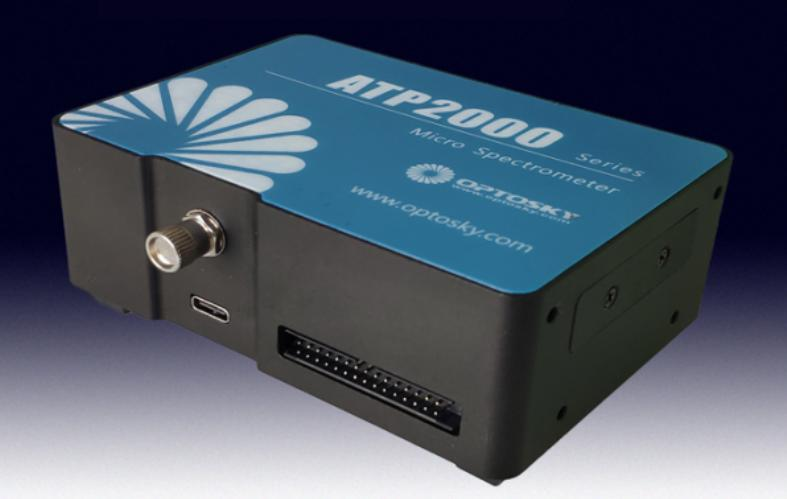
ATP1010, ATP2000
|
|
Indium Gallium Arsenide (InGaAs)
|
900-1700 nm
|
Laser monitoring, agricultural sorting
|
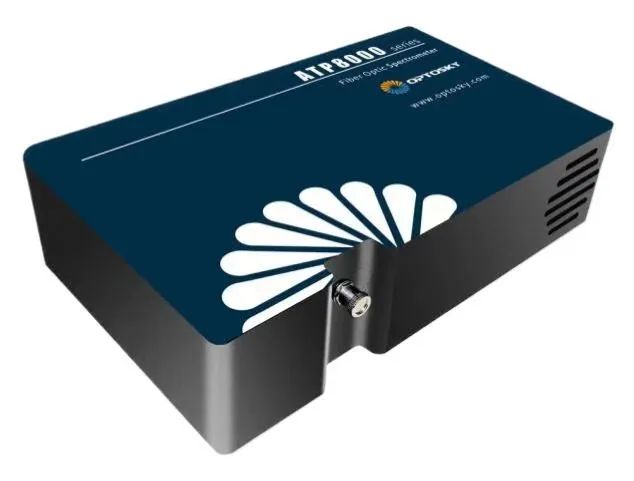
ATP8130, ATP8000
|
Selection Criteria:
-
Cost-performance: Si detectors suit routine lab applications
-
IR necessity: InGaAs is irreplaceable for infrared detection despite higher cost
-
Speed: ATP8130's 100 μs-100 ms response boosts production line efficiency
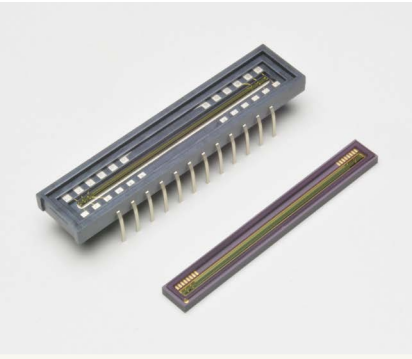
CMOS vs. CCD: Performance-Driven Applications
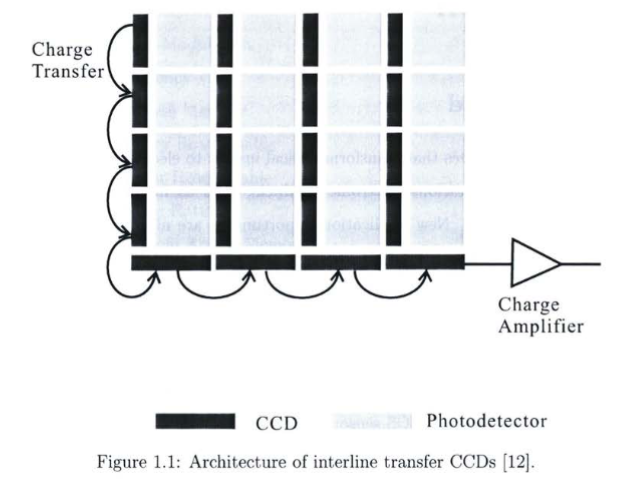
CCD Detectors
-
Strengths: High sensitivity (6.5 μV/e⁻), ultra-low noise (8 e⁻ dark noise)
-
Applications: Raman spectroscopy, extreme environments
-
Models:
- ATP5020P/R (0.05 nm resolution, cooled)
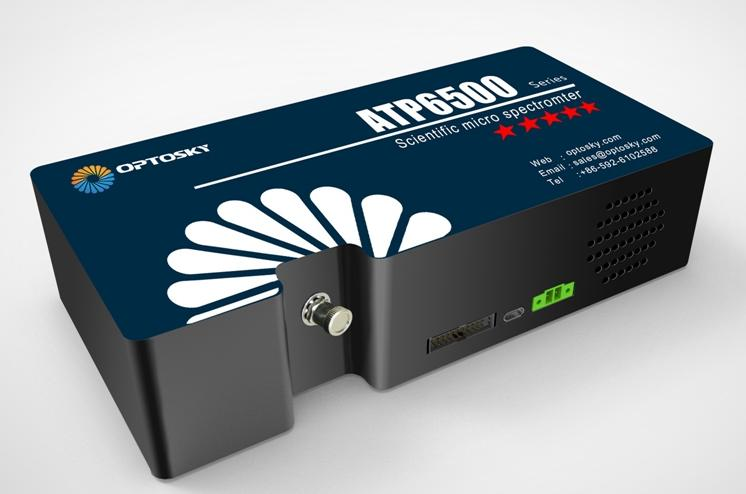
- ATP6500 (-70°C deep cooling, SNR >1000:1)
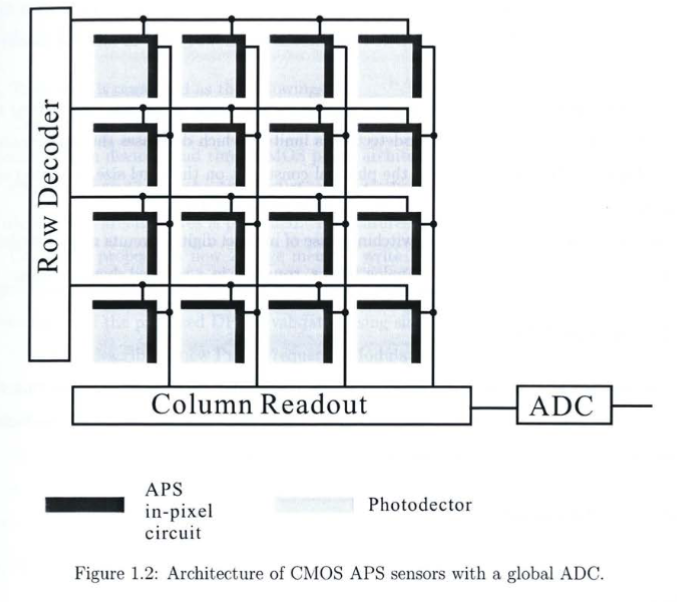
CMOS Detectors
-
Advantages: Parallel readout architecture, low power (1.5W), multi-channel capability
-
Industrial Use: LIBS, real-time monitoring
-
Model Example: ATL30007 (multi-spectrometer configuration)
Cooling Technology: Balancing Performance & Cost
|
Technology
|
Dynamic Range
|
Operating Temp.
|
Use Cases
|
Models
|
|
TEC Cooled
|
Up to 20,000:1
|
-70°C to -5°C
|
High-precision research
|
ATP5334, ATP6500
|
|
Uncooled
|
>3,000:1
|
Ambient
|
Industrial screening, education
|
ATP2000
|
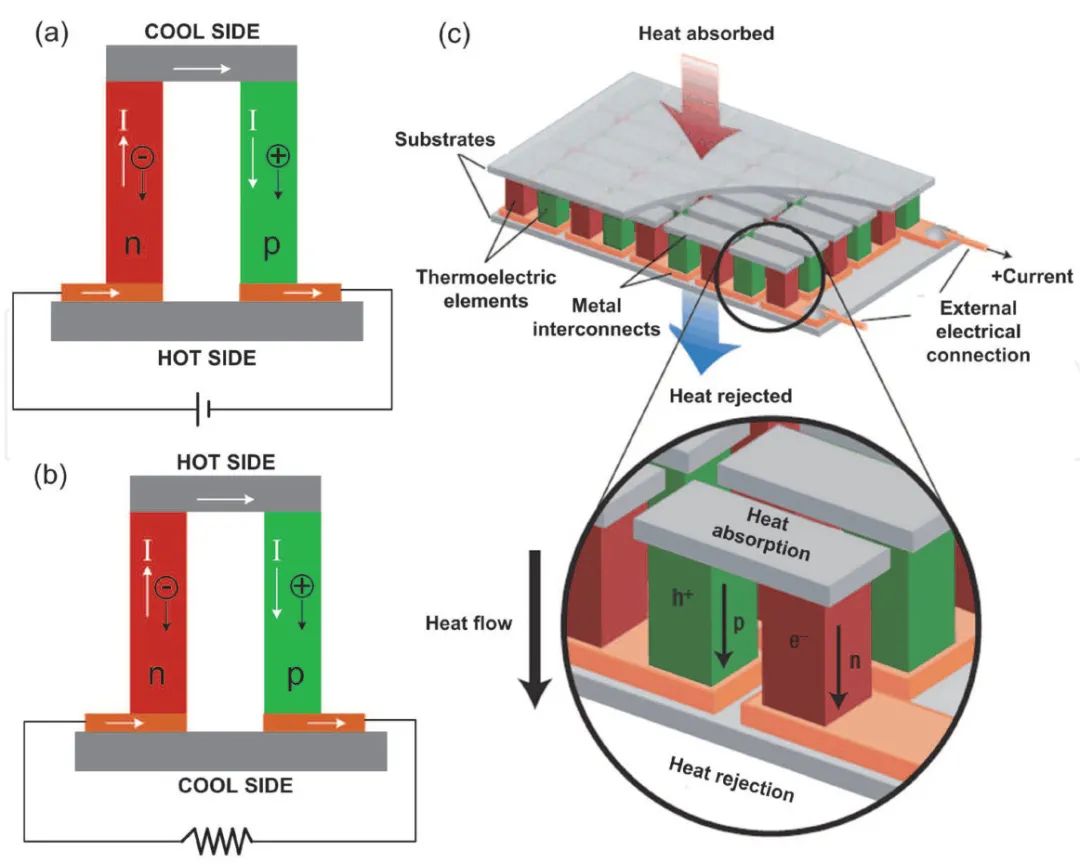
Core Performance Metrics
-
Optical Resolution
-
Defined by FWHM of elemental emission lines
-
Determined by grating density, slit width, and pixel size
-
Dynamic Range
-
ATP6500's 20,000:1 range enables simultaneous LIBS and fluorescence detection
-
Signal-to-Noise Ratio (SNR)
-
Routine lab: >100:1 (color measurement)
-
Precision analysis: >1000:1 (trace detection)
-
Integration Time
-
Range: μs to seconds
-
Trade-off: Longer time boosts signal but increases noise


Selection Guidelines
By Wavelength
UV-VIS-NIR (180-1100nm): Si-based CCD/CMOS (ATP1010, ATP2000P, ATP5020)
SWIR (900-2500nm): InGaAs detectors (ATP8000, ATP8130, ATP8600)
By Application
Research: Cooled CCD (ATP5020P/R, ATP6500)
Industrial: Uncooled CMOS (ATP2000, ATP3334, ATL30007)
By Budget
Economy: Uncooled CMOS (ATP1010, ATP2000)
Premium: Cooled back-illuminated CCD (ATP5020P/R, ATP6500)
Optosky's spectrometers deliver tailored detector solutions spanning research to industrial applications. Whether prioritizing ultimate performance with cooled CCDs or high-speed processing with CMOS architectures, our instruments combine high reliability and cost-effectiveness to provide precise spectral solutions worldwide.
Spectral Analysis: Applications in the Industrial Manufacturing Field
Spectral Diagnostics of Diesel Flame Radiation in Gasifiers
Related Article

The ATP7810 is a wide-band, high-resolution infrared grating spectrometer covering up to 0.9–5 μm. Featuring a motorized rotating grating, multiple detector options (InGaAs/MCT), and flexible interfaces (SMA905 or free space, USB/UART control), it delivers high SNR and stability for absorption/reflection/transmission spectroscopy, laser wavelength testing, and fiber optic sensing.
New Product Recommendation | ATP7810 Ultra-Wide Range Infrared Spectrometer Series

This study uses the ATP5200P UV-Vis spectrometer to investigate xanthate adsorption on chalcopyrite surfaces. By analyzing absorbance at 300 nm under controlled pH and temperature, the method optimizes flotation conditions for copper recovery, enabling real-time, sensitive detection of adsorption mechanisms in non-ferrous mineral processing.
Using the ATP5200P Spectrometer to Unravel Xanthate Adsorption and Separation Mechanisms

ATP1030 is an ultra‑compact, high‑resolution spectrometer covering 190–1100 nm. With a 1024‑pixel CMOS detector, adjustable integration time down to 1 ms, and USB‑powered design, it delivers reliable performance for applications like online water analysis, color measurement, handheld instruments, and Raman spectroscopy.
Product Recommendation | ATP1030 mini spectrometer Spectrometer

Vis-NIR transmission spectroscopy enables non-destructive identification of infertile duck eggs before incubation, achieving >95% accuracy. By detecting spectral fingerprints (e.g., 836 nm peak for fertile eggs), this method reduces energy waste and improves hatch rates, offering a low-cost, high-throughput solution for modern poultry farming.
Application case | How Spectral Technology is Transforming Duck Egg Farming