Application: Spectrometer Sensor in LIBS Solutions
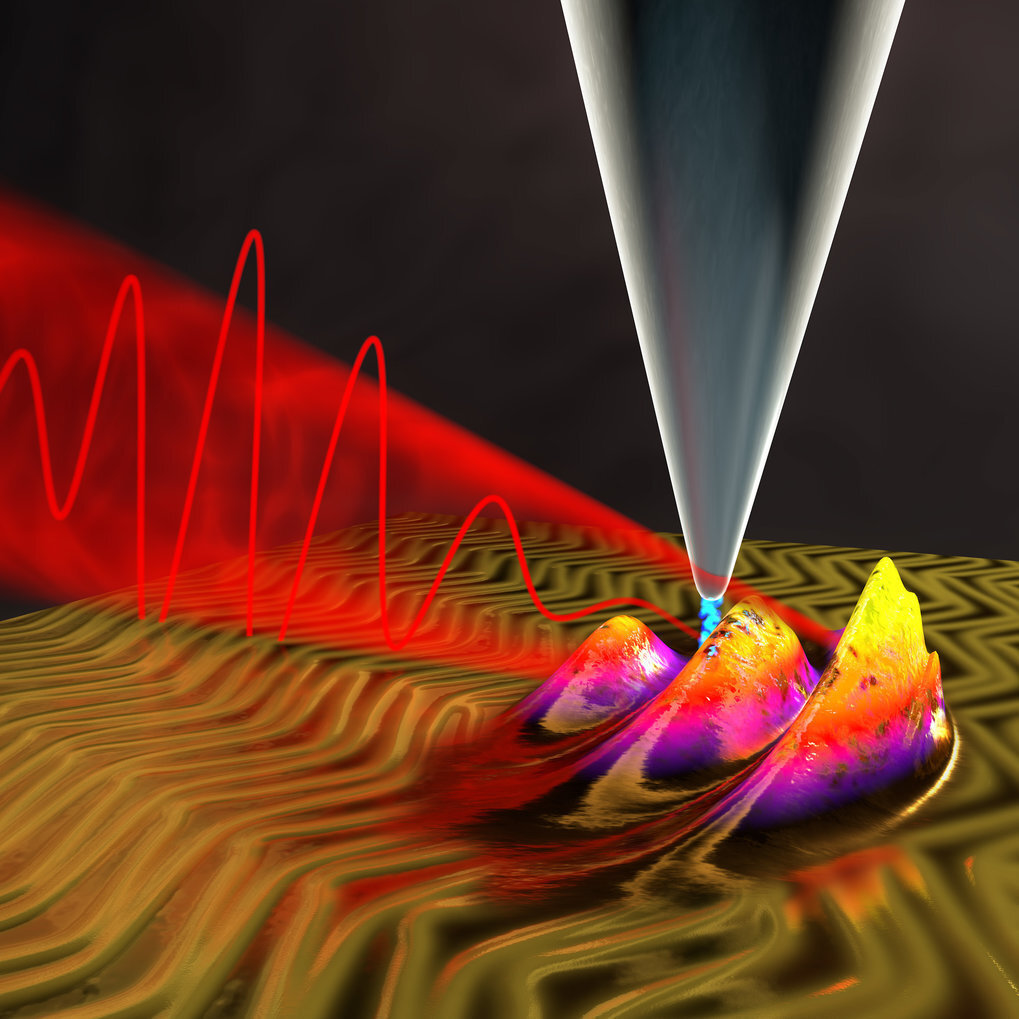
Laser-Induced Breakdown Spectroscopy (LIBS) is an atomic emission spectroscopy-based analytical technique and a form of micro-destructive testing.
The working principle involves using high-energy laser pulses to irradiate the sample's surface, instantly generating a high-temperature plasma. During the cooling process of the plasma, elements in the sample are excited in atomic or ionic form and emit characteristic spectra. By analyzing these spectra, the elemental composition and content of the sample can be inferred. This technique is applicable to solid, liquid, and gas samples.
LIBS requires no sample preparation, can detect multiple elements simultaneously, has fast measurement speeds, allows for remote non-contact measurements, and features a simple system structure. Due to the extremely short duration of the laser pulse, the ablation of the sample is minimal, making it one of the least destructive processes. Spectrometer sensors, with their wide spectral range and high precision, play a key role in LIBS by collecting and analyzing the spectral signals emitted by the plasma.
01 LIBS Working Process
Laser Excitation: The laser provides high-energy pulse beams, which are focused onto the sample surface for excitation.
Plasma Formation: The high-energy laser ablates the surface of the sample, causing rapid evaporation of material and generating a high-temperature plasma.
Emission Spectrum: As the plasma cools, it emits characteristic spectral lines (atomic emission lines) and returns to its ground state.
Spectral Analysis: The emitted plasma light is collected by a collection device and transmitted to the spectrometer, where the spectral lines are detected and analyzed, allowing for the determination of the elemental composition of the sample.。
Figure 2. Typical Characteristic Spectrum of an Alloy Steel Sample
02 LIBS Measurement System Setup
Figure 3. Basic LIBS Measurement System
- Laser: Emits high-energy ultrashort laser pulses to excite the sample. Typically, a 1064 nm/532 nm Nd:YAG laser is used.
- Focusing Device: Focuses the excitation light onto the sample surface. Typically, a lens group is used for focusing.
- Receiving Mirror Group: Collects the returning light signal and transmits it to the spectrometer. Typically, a cosine corrector or an integrating sphere is used for light collection.
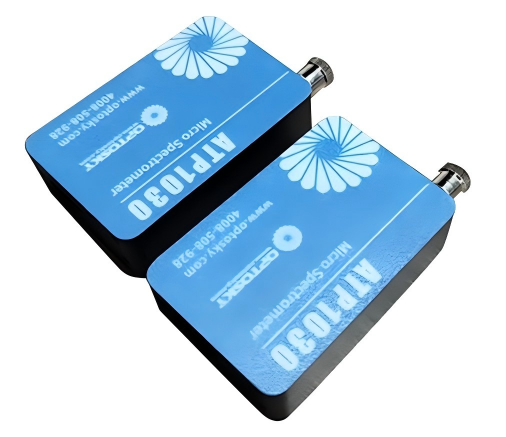
- Spectrometer: Analyzes the returned plasma emission light signal and outputs spectral data. Typically, an ATL30007 multi-channel, high-resolution, wide-range array spectrometer sensor is used.
- Analysis and Synchronization Module Group (PC): Processes the output spectral data, analyzes the elements and their concentrations based on the spectral information measured by the spectrometer, and provides trigger signals to synchronize the laser pulse output.
03 Characteristics of the Spectrometer Sensor
Figure 4. ATL30007 Multi-Channel Spectrometer Sensor
· Wide Spectral Range: Covers a broad spectral range from 180 nm to 1100 nm, enabling the LIBS system to detect and analyze a wide variety of elements.
· Element Detection Accuracy: The multi-channel combination synchronously collects data, splitting the spectral range to achieve higher resolution, allowing the system to distinguish subtle spectral features of different elements.
· Trace Element Detection: Equipped with a high-pixel linear array detector, offering high sensitivity and the ability to detect elements at the ppm (parts per million) level.
· Real-time Online Analysis: The optimal detection window occurs during the continuous reduction of background radiation and the enhancement of element characteristic spectral lines. The spectrometer sensor generates the spectrum in one shot, offering controllable microsecond-level delay and millisecond-level integration time, enabling rapid online data acquisition.
04 LIBS Application Fields
Environmental Monitoring: Monitoring of atmospheric pollutants, marine pollutants.
Material Analysis: Analysis of steel, aerospace materials, minerals, petroleum, and geological exploration.
Medical Diagnosis: Analysis of biological tissues and pharmaceuticals.
Cultural Heritage: Analysis of ancient building materials and art authentication.
Others: Agriculture and forestry testing, industrial sorting and recycling, pharmaceutical industry, military and defense.
Figure 5. Air - Laser-Induced Breakdown Spectrum
Figure 6. Industrial Wastewater Containing Chromium Elements - Laser-Induced Breakdown Spectrum
Figure 7-1. Online Monitoring of Molten Aluminum
Figure 7-2. Aluminum Sample - Laser-Induced Breakdown Spectrum
05 Summary
The application of spectrometer sensors in LIBS is very broad. Their high resolution and wide spectral range enable accurate detection and analysis of various elements. LIBS technology, with its advantages of no sample preparation, minimal sample damage, fast real-time analysis, and simultaneous multi-element monitoring, shows great potential in fields such as geological research, deep space exploration, materials science, environmental monitoring, and biomedicine.
References:
Laser-induced Breakdown Spectroscopy and its Applications in Elemental Analysis,Journal of Materials Science and Engineering, 2011 (3) 455-460,428 GUO Lianbo, NIU Xuechen, ZHANG Mengsheng, et al. Analysis of the Application Progress in Laser-induced Breakdown Spectroscopy:A Review (Invited)[J]. Acta Photonica Sinica, 2023, 52(3):0352104
ATP2000 High SNR Spectrometer Sensor
Application of Spectrometer Sensor for Automatic Cobalt Ion Detection in Wet Zinc Smelting
Related Article