
Spectroscopic Methods for Quality Monitoring in High-Oil Soybean Storage
2025-05-26

01 Technical Challenges in High-Oil Soybean Storage Quality Monitoring
Soybeans, a primary source of edible oil and plant protein, are highly susceptible to quality degradation during storage due to their rich lipid and protein content.
Key quality indicators include:
-
Crude Fatty Acid Value (KOH):
-
Reflects lipid oxidation levels. A rise from 3.5 mg/g to 5 mg/g signals significant oxidation, producing harmful aldehydes and ketones.
-
Protein Solubility Ratio:
- Declines from 75% to 60%, indicating reduced functional properties (e.g., gelation, emulsification) critical for soy-based products.
-
Sensory Deterioration:
- Mold contamination alters color (darkening, spots) and odor (musty), signaling safety risks.

Limitations of Traditional Methods
Destructive Sampling: Renders tested samples unusable for sale/processing.
Time-Consuming Analysis: Days to weeks for lab results, delaying corrective actions.
High Costs: >¥2,000 per batch, limiting frequent monitoring.

02 Advantages of Spectrometers
Core Technical Principles
-
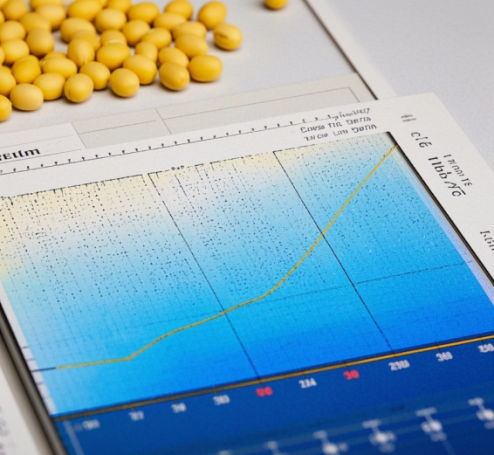
Spectral Range: 400-2500 nm (visible to near-infrared)
-
High-Resolution Grating: Detects subtle changes in fatty acid oxidation and protein structure.
-
PCA-Based Modeling: Correlates spectral features with quality indices (e.g., fatty acid value, protein solubility).
Key Performance Metrics
-
Speed: <2 seconds per sample.
-
Sensitivity: Fatty acid detection limit of 0.05 mg/g.
-
Stability: Cooled detectors (-30°C) minimize noise and thermal drift.
03 Application
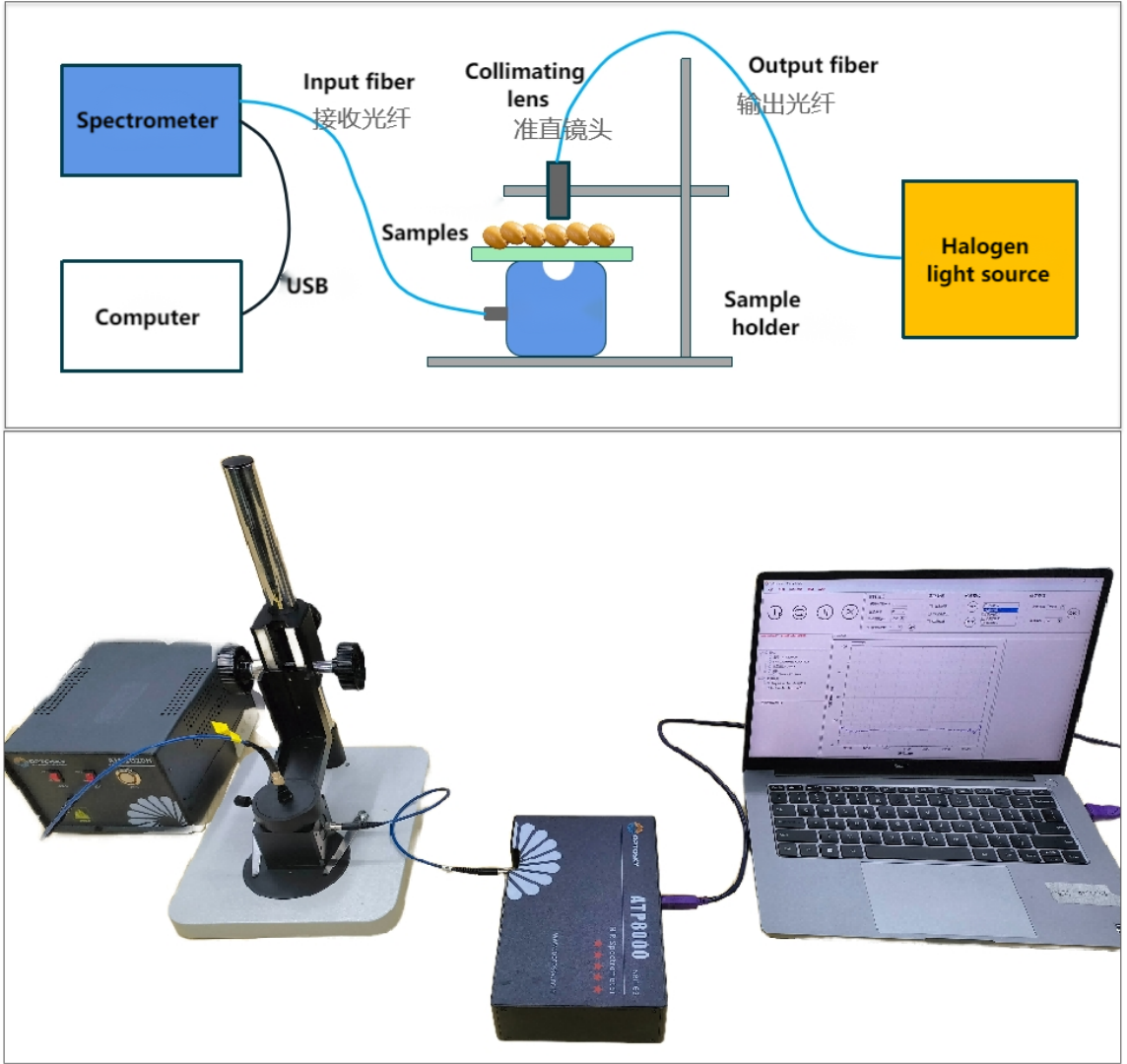
Measurement Setup
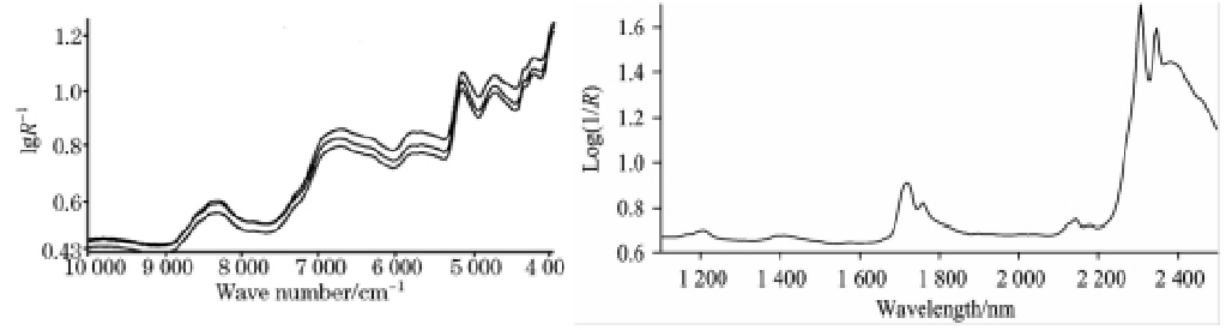
Near-infrared spectrum of soybean grains:
Real-Time Storage Monitoring
Grid-Based Monitoring: 30 spectrometers in a 5,000-ton silo provide 3D quality mapping.
Early Warning: Alerts trigger when fatty acid value increases >0.1 mg/g daily.

In-Line Processing Quality Control
100% Inspection: Integrated with conveyor belts for real-time defect detection.
Defect Recognition: 99.2% accuracy for moldy beans, 98.5% for damaged beans.

04 Optimization and Future Trends
Technical Challenges
Matrix Interference: Moisture >15% reduces accuracy due to overlapping NIR absorption.
Environmental Sensitivity: Non-cooled detectors degrade with >5°C fluctuations.
Data Standardization: Incompatibility across spectrometer models complicates analysis.
Innovations
Miniaturization: Handheld devices for field use with cloud connectivity.
Multi-Spectral Fusion: Combines XRF for elemental analysis (N, P, K, heavy metals).
AI-Driven Systems: Deep learning models for automated quality grading and storage optimization.
Industry Outlook
Spectrometers are poised to revolutionize soybean storage and processing under China’s food security initiatives. Continuous advancements in portability, multi-modal sensing, and AI integration will enhance quality control, reduce waste, and boost agricultural productivity.
Spectral Analysis: Revolutionizing Rosewood Identification
Application of Spectrometer in Potato Late Blight Research
Related Article

The ATP7810 is a wide-band, high-resolution infrared grating spectrometer covering up to 0.9–5 μm. Featuring a motorized rotating grating, multiple detector options (InGaAs/MCT), and flexible interfaces (SMA905 or free space, USB/UART control), it delivers high SNR and stability for absorption/reflection/transmission spectroscopy, laser wavelength testing, and fiber optic sensing.
New Product Recommendation | ATP7810 Ultra-Wide Range Infrared Spectrometer Series

This study uses the ATP5200P UV-Vis spectrometer to investigate xanthate adsorption on chalcopyrite surfaces. By analyzing absorbance at 300 nm under controlled pH and temperature, the method optimizes flotation conditions for copper recovery, enabling real-time, sensitive detection of adsorption mechanisms in non-ferrous mineral processing.
Using the ATP5200P Spectrometer to Unravel Xanthate Adsorption and Separation Mechanisms
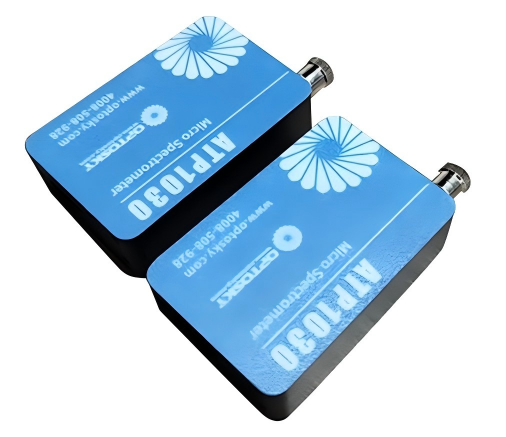
ATP1030 is an ultra‑compact, high‑resolution spectrometer covering 190–1100 nm. With a 1024‑pixel CMOS detector, adjustable integration time down to 1 ms, and USB‑powered design, it delivers reliable performance for applications like online water analysis, color measurement, handheld instruments, and Raman spectroscopy.
Product Recommendation | ATP1030 mini spectrometer Spectrometer

Vis-NIR transmission spectroscopy enables non-destructive identification of infertile duck eggs before incubation, achieving >95% accuracy. By detecting spectral fingerprints (e.g., 836 nm peak for fertile eggs), this method reduces energy waste and improves hatch rates, offering a low-cost, high-throughput solution for modern poultry farming.
Application case | How Spectral Technology is Transforming Duck Egg Farming