
ATH6100 Practical Case Study: Jade Analysis
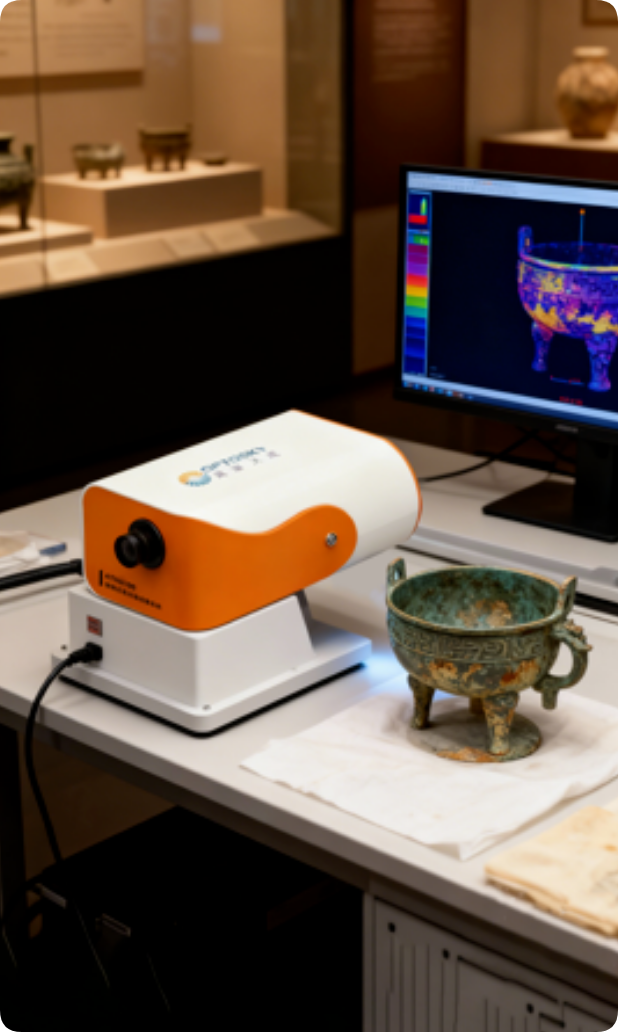
Jade artifacts are important carriers of traditional Chinese culture, embodying rich historical, artistic, and scientific value. After hundreds to thousands of years of burial, the surfaces of ancient jade develop unique color alterations, weathering layers, and mineralogical changes. These features record the material source, burial environment, and preservation state of the jade, serving as crucial evidence for archaeological identification and cultural heritage conservation.
Traditional ancient jade identification relies mainly on expert experience, judging by color, patterns, texture, and other visual characteristics – which carries inherent subjectivity and limitations. In addition, some chemical and physical testing methods require sampling, potentially damaging precious artifacts. Therefore, developing rapid, accurate, and non‑destructive testing techniques is of great significance for jade authentication, conservation, and digital research of cultural heritage.
01 Testing Method
Hyperspectral imaging technology integrates spectral analysis with spatial imaging capabilities, enabling the acquisition of continuous, fine spectral information for every pixel on the surface of ancient jade, thus forming a data cube containing spatial, spectral, and intensity information. Compared with conventional RGB images, hyperspectral imaging can capture material differences invisible to the naked eye, offering a new technical approach for non‑destructive analysis of ancient jade.
During the testing process, a hyperspectral camera scans the jade surface to obtain reflectance spectra from different regions. Using spectral correction, characteristic band extraction, spectral matching, and other methods, researchers can analyze spectral differences caused by variations in mineral composition, structural changes, and burial environment effects.
By combining algorithms such as Spectral Angle Mapping (SAM), Principal Component Analysis (PCA), and machine learning classification, the system can further achieve:
- Jade material identification: comparing characteristic spectra with standard databases to assist in determining the mineral composition of different jade types;
- Alteration‑color zone analysis: identifying spectral response differences among red, yellow, black, and other altered areas;
- Surface condition assessment: evaluating weathering, oxidation, and surface alterations to provide data support for artifact conservation.
02 Research Conclusions
Hyperspectral testing technology can break through the limitations of traditional visual identification methods. By using continuous spectral information, it reveals microscopic differences on the surface and in the shallow subsurface layers of ancient jade, enabling refined analysis of material composition, alteration colors, and preservation status.
Experimental data and classification results
The study shows that jade areas with different mineral compositions and different degrees of weathering exhibit distinct spectral response differences. Hyperspectral imaging can effectively record these variations and establish objective evaluation criteria through data analysis. This technology requires no contact with or damage to the sample, enabling rapid, high‑precision testing, and provides a new technical pathway for archaeological research, ancient jade authentication, and museum conservation.
03 Recommended Instrument
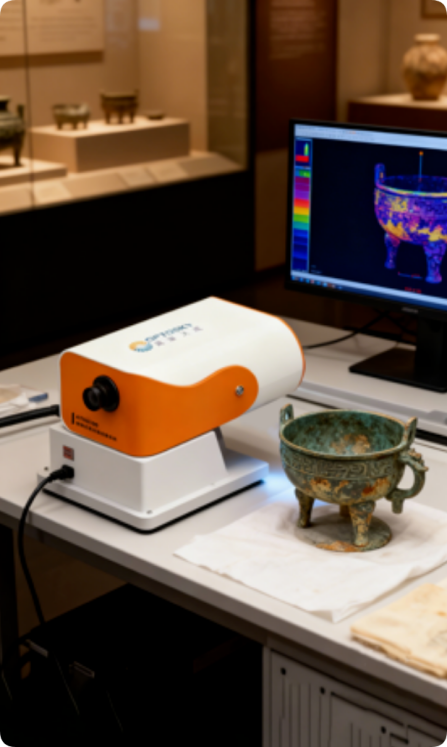
The ATH6100 is a series of ultra‑portable hyperspectral imaging instruments independently developed by Optosky with proprietary intellectual property rights, covering the visible to short‑wave infrared bands.
The ATH6100 features a built‑in scanning mechanism that allows hyperspectral scanning and imaging of a target without requiring large rotations of the camera. In addition, it includes a built‑in lithium battery, CPU, and an optional autofocus system, while offering high resolution, high image quality, and excellent performance. It is lightweight, flexible, and boasts outstanding battery life, intelligent operation, comprehensive data processing and analysis functions, as well as real‑time monitoring, real‑time calibration, and real‑time inversion output. It is widely suitable for both field and laboratory applications.
For more information, please contact:
Email: [email protected]
Web: www.optosky.net
UAV Hyperspectral Remote Sensing for Rice Yield Prediction
Hyperspectral Citrus Damage Detection
Related Article