
Can Sunburned Chili Peppers Be Non-Destructively Graded? Hyperspectral Imaging ATH3000 Offers a New Answer
A study of 218 chili pepper samples demonstrates that hyperspectral imaging combined with multi-feature fusion can achieve three-level identification of healthy, mild, and severe sunburn, with the optimal model reaching an overall accuracy of 97.2% on the prediction set.
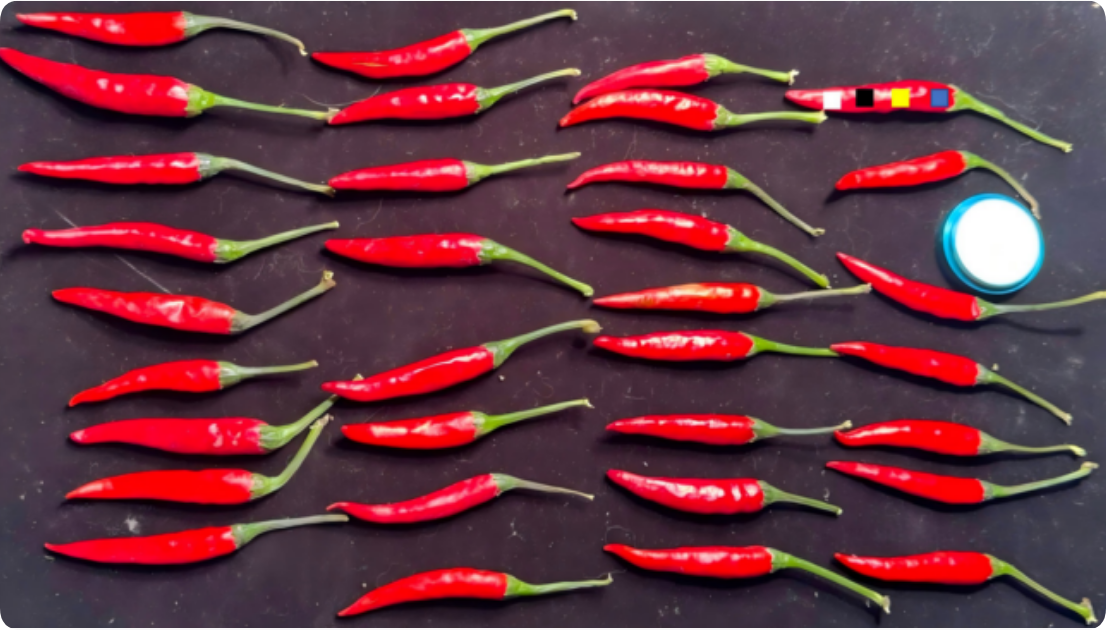
Under strong light and high-temperature conditions, chili pepper fruits may develop yellow spots, tissue necrosis, and scabbing. This "sunburn" is a non-infectious physiological disorder that affects fruit appearance and commercial value. In actual production, the degree of sunburn is mainly judged by manual observation; for fruits with mild symptoms or those at grade boundaries, grading results are easily influenced by experience and observation conditions.
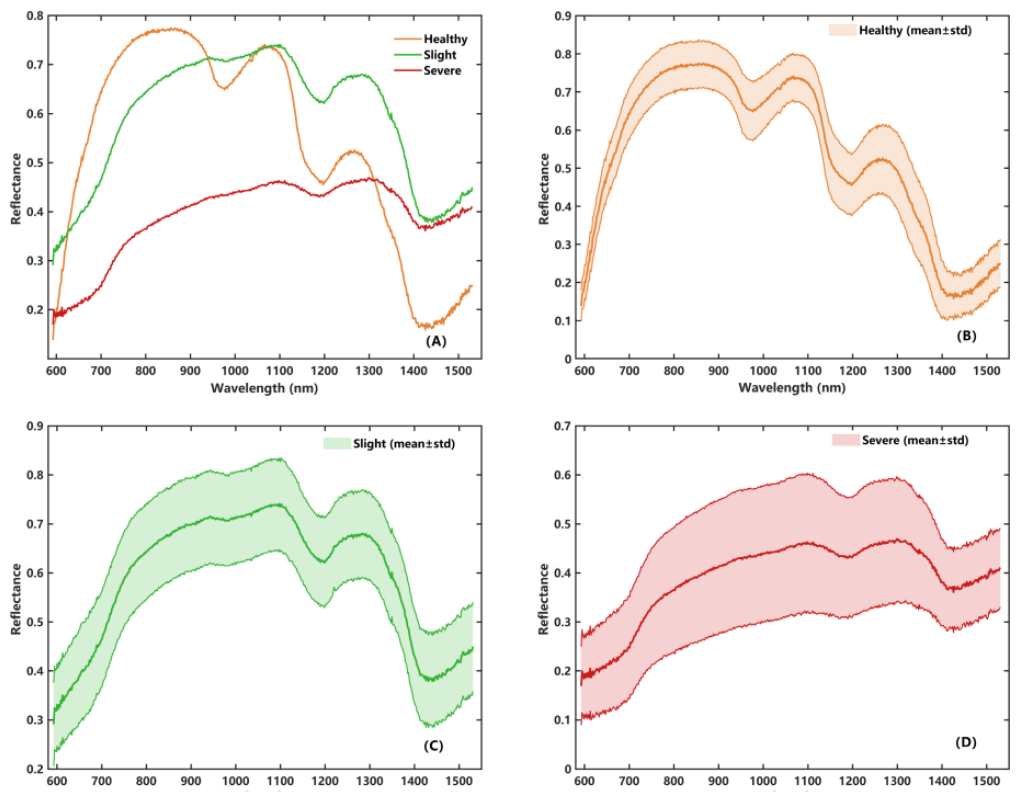
Recently, a research team explored non-destructive three-level identification of chili pepper sunburn using hyperspectral imaging and spectral feature fusion.
01 Research Objects--218 samples divided into three grades
The research team used "Xiangla 702" chili peppers grown in the Alar region of Xinjiang, obtaining 218 valid samples:
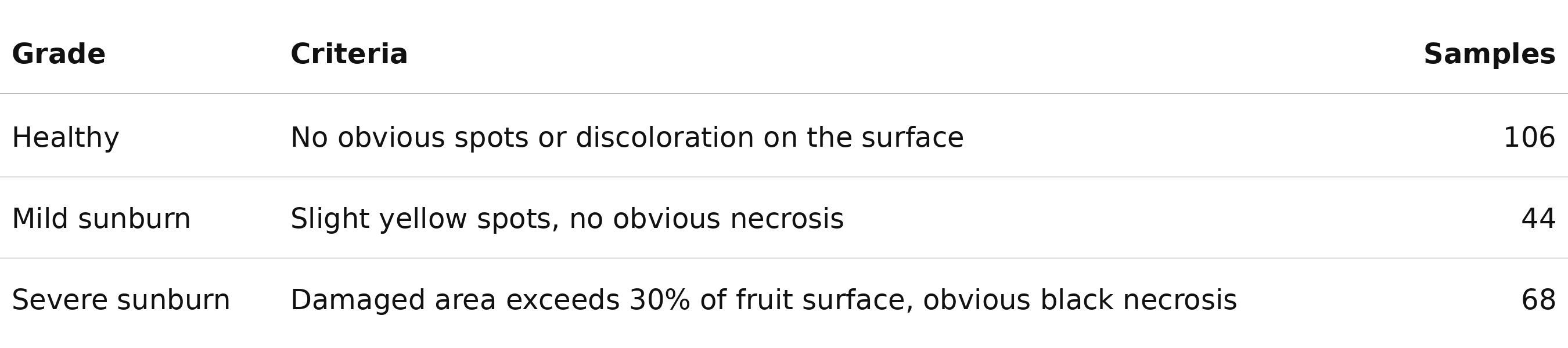
Among them, 147 samples were used for modeling, and 71 samples were used for prediction validation. The study focused on the identification of mild sunburn, because the damage manifestations of such fruits are relatively subtle and more easily confused with adjacent grades.
02 Acquisition and Analysis--Extracting spectral clues from fruit images
The experiment used a push-broom hyperspectral imaging system to collect fruit images under controlled lighting conditions. The camera detection range was 390–1712 nm, and the study actually selected data from 592–1531 nm for analysis.
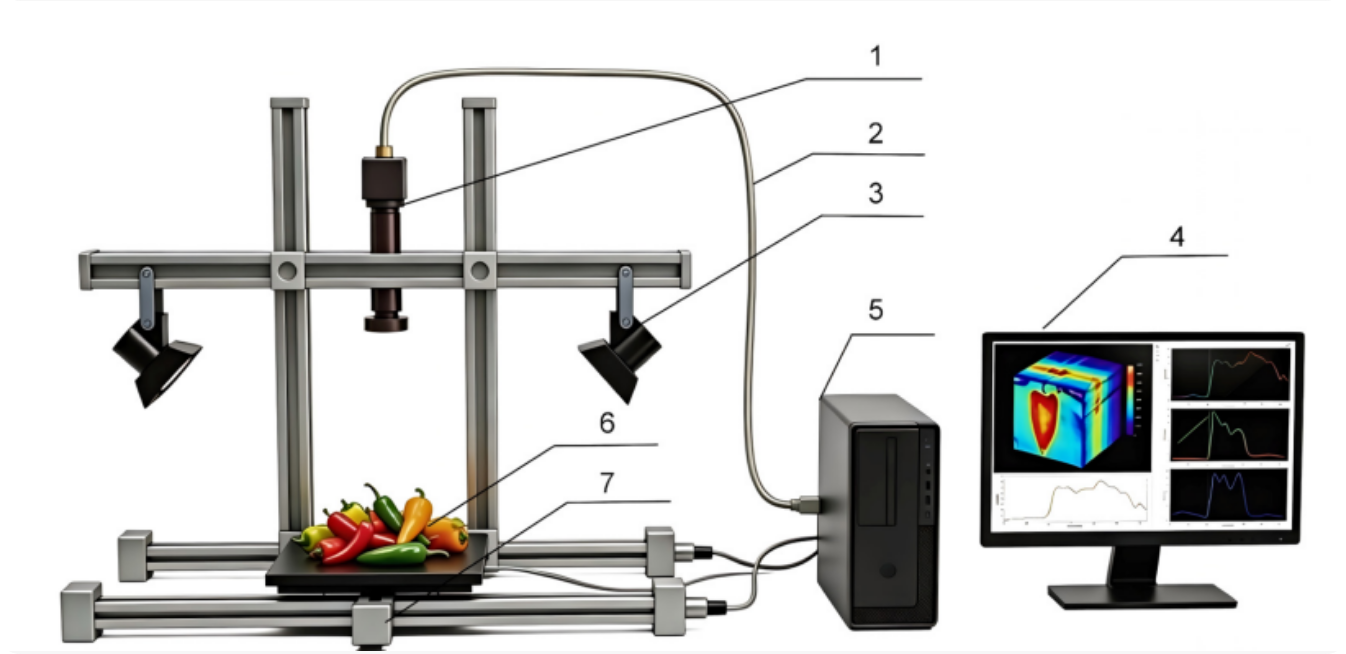
Researchers selected 4 regions of interest on each fruit surface, avoiding the stem, shadow edges, and obvious reflections, and then used the average spectrum to represent that sample. After black-and-white reference correction and wavelet denoising, the team observed spectral differences among different sunburn grades: as damage worsened, the red-edge curve near 650–750 nm, as well as absorption features near approximately 980 nm and 1430 nm, all changed.
These phenomena provided clues for grading. However, the paper did not independently measure fruit pigment content and tissue water content, so spectral changes cannot be directly equated with quantitative changes in corresponding physiological indicators.
03 Research Methods--Fusion of three complementary feature types
Hyperspectral images contain a large number of continuous bands, with both rich information and redundancy and noise. The research team used three methods to extract features:
• PCA (Principal Component Analysis) summarized the overall variation in spectra. The first two principal components cumulatively explained approximately 97% of the spectral variance.
• 2DCOS (Two-Dimensional Correlation Spectroscopy) analyzed the correlation of spectral changes with sunburn grade, identifying three sensitive wavelengths: 778 nm, 1071 nm, and 1381 nm.
• CARS (Competitive Adaptive Reweighted Sampling) screened bands useful for grading, ultimately obtaining 24 characteristic wavelengths.
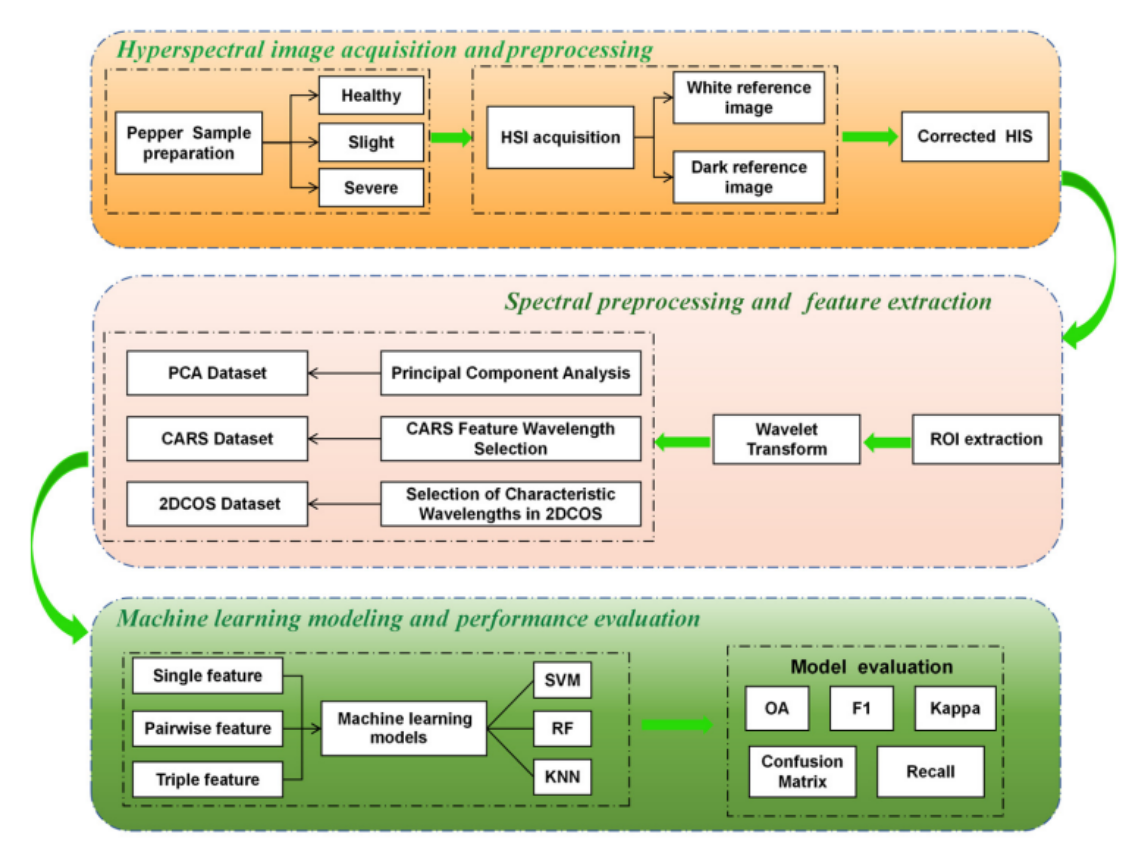
Subsequently, the team compared full-spectrum, single-feature, pairwise fusion, and three-feature fusion schemes, and established classification models using Support Vector Machine (SVM), Random Forest (RF), and K-Nearest Neighbors (KNN), respectively.
Experimental Results: Optimal Model Accuracy Reaches 97.2%
The combination of PCA + 2DCOS + CARS three-feature fusion with SVM achieved the best results in this study. On the prediction set of 71 samples, the overall accuracy was 97.2%, the macro-average F1 score was 0.963, and the Kappa coefficient was 0.956. The recall rates for healthy and mildly sunburned samples were both 100%, and the recall rate for severely sunburned samples was 90.9%.
Under the same three-feature fusion input, the overall accuracies of the RF and KNN models were 95.8% and 94.4%, respectively. From the classification results, the main confusion occurred between mild and severe sunburn; the optimal SVM model correctly identified all mild samples in the prediction set, while a small number of severe samples were still classified as mild.
The "mild identification" here refers to identifying fruits that already show slight visible symptoms, and does not mean the model has achieved early warning before symptoms appear.
04 From Research Methods to Application--Optosky provides customized services
This study provides a clear technical pathway: sample collection → hyperspectral imaging → spectral feature screening → grading model establishment → scenario validation. For different crops, different damage types, and different usage environments, equipment configuration and algorithm models need to be designed around specific tasks.
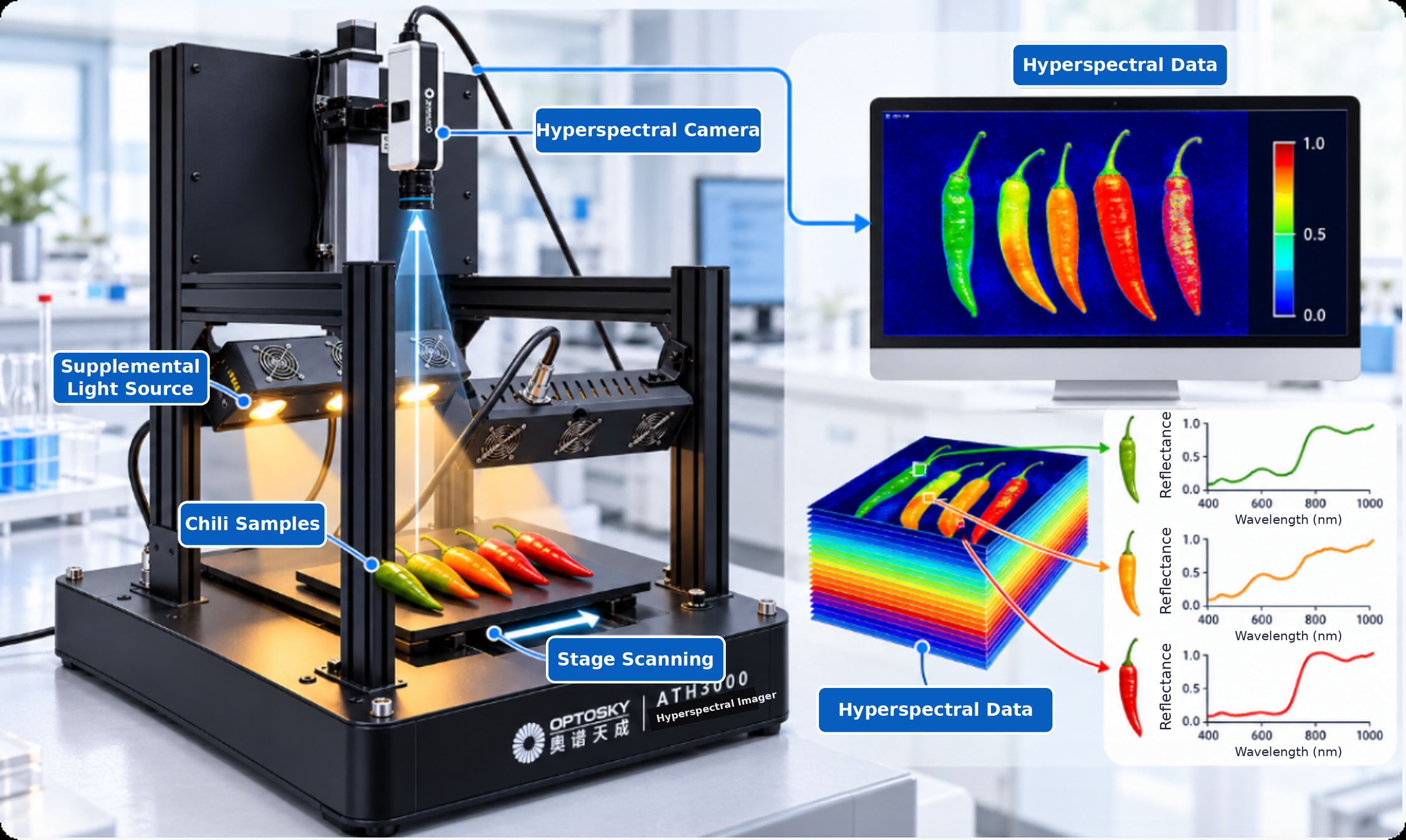
Optosky can provide customized technical services for horticultural crop quality inspection and damage grading needs:
Acquisition scheme design: Configure suitable hyperspectral imaging equipment, light sources, and motion platforms based on the size, morphology, and detection targets of samples such as chili peppers, tomatoes, and citrus. Laboratory hyperspectral imaging systems such as the ATH8100 can be used for sample collection and preliminary method research.
Spectral analysis and model development: Conduct reflectance correction, region extraction, characteristic wavelength screening, and classification modeling around customer samples, and compare methods such as SVM and Random Forest according to the task.
Application workflow customization: Design data acquisition, result display, and software integration workflows based on scenarios such as laboratory research, post-harvest grading, or production line inspection, and conduct testing and optimization for actual samples.
The key to a customized solution is to first clarify the detection object and grading standards, and then validate the effect using the customer's real samples. The 97.2% in the paper comes from a single chili pepper variety, one sampling session, and controlled laboratory lighting conditions, and cannot be directly regarded as the detection performance of other varieties, field environments, or Optosky equipment. Subsequent applications still need to verify cross-batch stability, acquisition efficiency, and on-site adaptability.
For more information, please contact:
Email: [email protected]
Web: www.optosky.net
Precision fertilization by UAV for rice at tillering stage in cold region based on hyperspectral remote sensing prescription map
Born for Large-Area Remote Sensing! Optosky Releases the ATH9600 Multi-Lens UAV-Borne Multispectral Imaging System
Related Article
