
Technology | Single InGaAs vs. CMOS+InGaAs in Hyperspectral Imaging
When purchasing hyperspectral equipment, we often see the same specification: spectral range 400–1700 nm. But upon further investigation, we find that some devices use a single InGaAs detector, while others use a CMOS+InGaAs dual detector. Why are there two technical approaches for the same spectral range? What are the differences in imaging performance, spectral analysis, and practical applications?
01 First, Understand Why a Single InGaAs Can Cover Visible Light
The Chinese name for InGaAs is "indium gallium arsenide," a semiconductor material used for photodetection. Common standard InGaAs detectors have a response range of approximately 900–1700 nm and cannot be assumed to cover visible light near 400 nm.
InGaAs photodiodes for near-infrared light detection. Features include high speed, high sensitivity, low noise, and spectral responses ranging from 0.5 μm to 2.6 μm.

To achieve 400–1700 nm coverage, a visible-light-extended InGaAs detector processed with special techniques is required. For example, by thinning the indium phosphide layer that absorbs visible light, more visible light reaches the underlying InGaAs photosensitive layer, achieving a broad spectral response from 400 nm to 1700 nm.
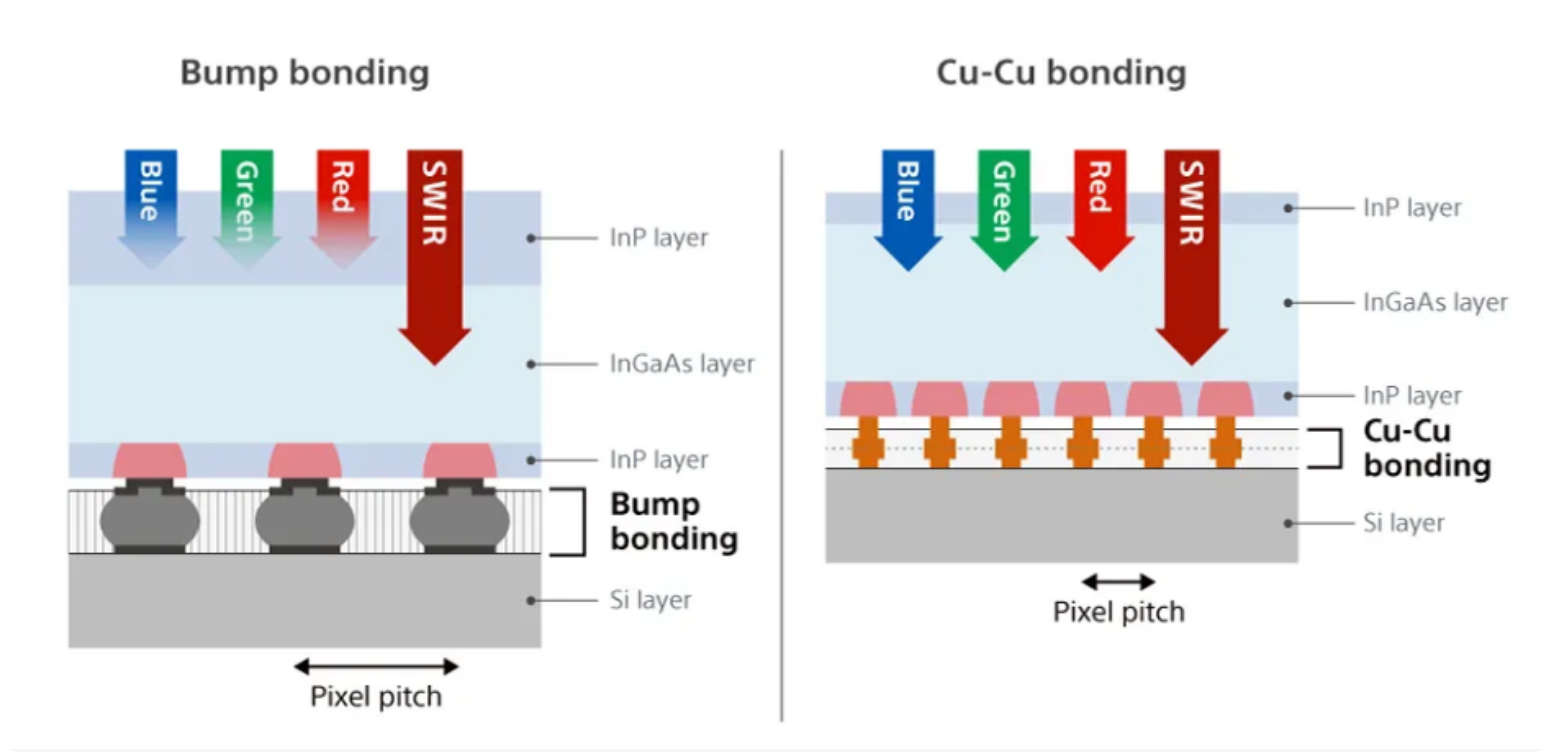
Therefore, "a single InGaAs covering 400–1700 nm" is technically achievable, but it depends on the specific model.
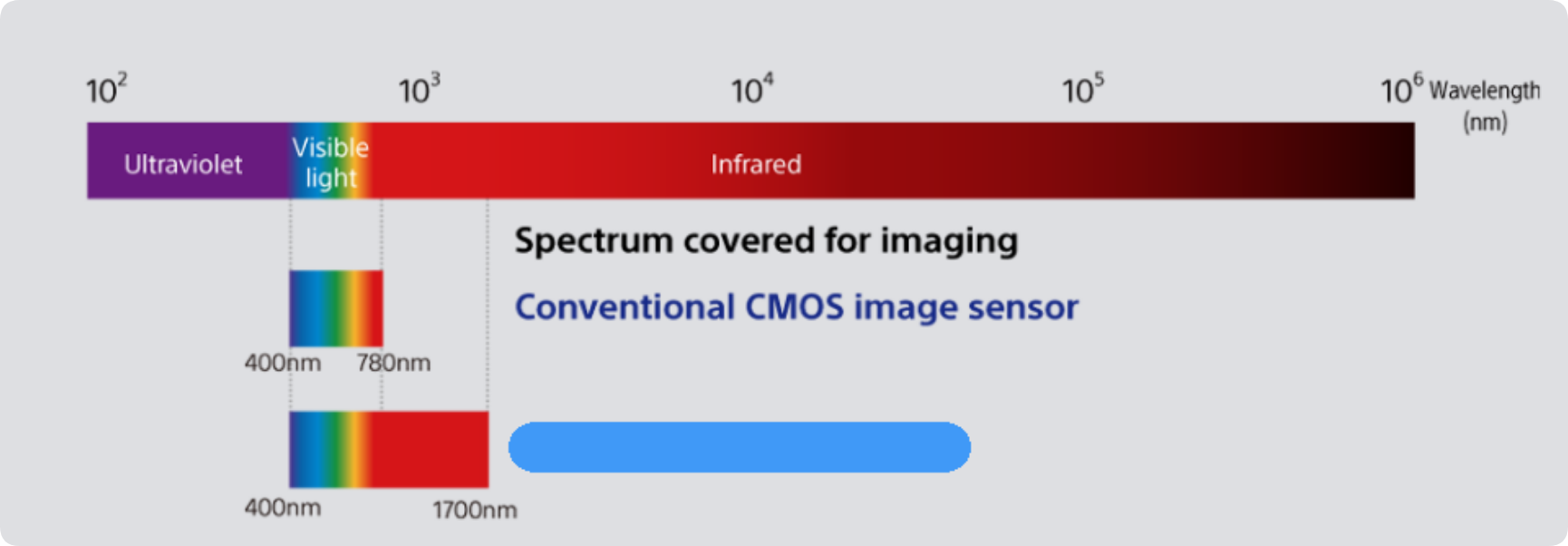
There is also an easily confused concept: InGaAs is a photosensitive material, while CMOS usually refers to a circuit process or a type of image sensor. InGaAs detectors themselves can also be equipped with CMOS readout circuits.
The "CMOS+InGaAs" mentioned in this article specifically refers to a dual-detector solution consisting of a silicon-based CMOS photosensitive array and an InGaAs photosensitive array.
At the same time, broadband detectors also need to be combined with spectral dispersion optical systems and other components to form hyperspectral imaging equipment.
02 Two Approaches: Full-Segment Acquisition and Segmented Collaboration
Single InGaAs solution: one photosensitive array receives broadband spectra.
In a typical dispersive hyperspectral system, after light is dispersed, different wavelengths fall on different positions of the same detector. Using a broadband InGaAs, spectral information in the 400–1700 nm range can be received on the same photosensitive array.
From a structural perspective, this solution helps reduce cross-detector data registration and stitching steps, providing space for compact integration. However, a single detector still requires correction for wavelength, radiometric response, and image distortion, and cannot be understood as "requiring no calibration at all."
CMOS+InGaAs solution: two photosensitive arrays handle different spectral bands separately.
In a typical configuration, the silicon-based CMOS handles approximately 400–1000 nm, and InGaAs handles approximately 900–1700 nm. The specific boundary and overlap region are determined by the equipment design.
This solution allows separate selection of detector pixel size, gain, exposure, and dispersion parameters for different bands. Correspondingly, the system needs to handle time synchronization, spatial registration, and radiometric consistency between the two data streams.
Dual detectors do not necessarily mean two independent lenses. For example, current broadband hyperspectral systems use a shared front-end optical design with dual spectrometers to achieve registered imaging of different bands.
For more information, please contact:
Email: [email protected]
Web: www.optosky.net
Precision fertilization by UAV for rice at tillering stage in cold region based on hyperspectral remote sensing prescription map
Can Sunburned Chili Peppers Be Non-Destructively Graded? Hyperspectral Imaging ATH3000 Offers a New Answer
Related Article
