
New Product | Multi-Parameter Drinking Water Analyzer
2024-12-09

Drinking Water Pollution Situation
Impact of Industrialization and Urbanization:
According to statistics, approximately 20 billion tons of untreated industrial wastewater and domestic sewage are discharged directly into water bodies in China each year, posing a severe threat to drinking water sources.
Relevant Laws and Regulations
Many countries have developed a series of laws and policies, such as those related to infectious disease prevention, drinking water sanitation supervision, and drinking water quality standards. These laws explicitly require monitoring and supervision of drinking water to ensure public safety. These regulations provide a legal basis for the formulation and implementation of drinking water monitoring policies. The implementation of these policies is a concrete measure to ensure that the production, supply, and use of drinking water comply with health standards and requirements, thereby safeguarding public health.
Selection of Monitoring Parameters
Residual Chlorine:
Residual chlorine is a byproduct of drinking water disinfection, indicating effective control of pathogens such as bacteria, viruses, and parasites in the water. Insufficient residual chlorine content can lead to inadequate control of microorganisms like bacteria.
pH:
When the pH of drinking water is too acidic, calcium in the water may react with acidic substances, reducing calcium absorption in the human body. If the pH is too high (overly alkaline), ions such as calcium and magnesium may form scale deposits.
Turbidity:
Turbidity is an essential indicator reflecting the amount of suspended particles in drinking water. These particles may include substances such as silt, clay, organic matter, and microorganisms (including bacteria, viruses, and protozoa). High turbidity increases the risk of microbial growth.
Conductivity:
Conductivity reflects the dissolved ion content in water. High conductivity in drinking water suggests a higher presence of minerals (e.g., calcium, magnesium), heavy metals (e.g., lead, mercury), or other dissolved salts (e.g., chlorides, sulfates).
Dissolved Oxygen:
Dissolved oxygen significantly impacts the taste of drinking water. Low dissolved oxygen levels promote the growth of anaerobic bacteria, such as Clostridium tetani and Clostridium botulinum, which can cause unpleasant odors. Conversely, high dissolved oxygen levels may alter the microbial balance in the gastrointestinal tract, potentially affecting the growth of beneficial bacteria and indirectly impacting digestion.
Instrument Overview
ATE5400 Series Drinking Water Multi-Parameter Online Analyzer
Developed and manufactured by OPTOSKY, the ATE5400 is a next-generation water quality monitoring device. It utilizes modern sensor technology, automatic control technology, specialized data analysis software, and communication networks to form an automated online water quality monitoring system. This product integrates pH electrodes, residual chlorine electrodes, temperature electrodes, conductivity electrodes, and low-range turbidity electrodes into a single unit.
The instrument can be flexibly installed according to the site conditions at monitoring stations, requires minimal space, and combines automation and communication technology. It effectively meets the requirements for unattended real-time monitoring and data transmission of drinking water quality parameters. It is ideal for long-term, continuous online monitoring of drinking water networks and secondary water supply systems, providing continuous, real-time, and accurate monitoring of water quality and its variations. This device is indispensable for water plant production control, water resource management, and public health supervision.
Product Display
Internal Diagram of Flow Cell Installation
Diagram of Stabilizing and Ventilation Module
Instrument Features
- All measurement, display, and transmission modules are integrated into a compact enclosure, ensuring easy installation.
- The one-piece flow cell design ensures stable water flow for accurate monitoring data.
- Equipped with fault self-diagnosis, abnormal information recording, and information upload functions.
- Optional remote intelligent diagnostic system for quicker remote monitoring and fault troubleshooting.
- Easy operation without complex sample processing or chemical reagents, minimizing secondary pollution risks.
Product Specifications
- Installation Method: Wall-mounted
- Dimensions: 620x400x220mm
- Data Processing: Multifunctional industrial control terminal for data acquisition, analysis, display, calibration, and storage operations.
- Power Supply: AC220V
- Inlet: PU pipe with outer diameter φ6, flow rate 300m/min, pressure 0.1-0.2 MPa
- Sensor Measurement Ranges:
- pH: 0-14
- Turbidity: 0-20 NTU
- Temperature: 0°C-50°C
- Residual Chlorine: 0-20 mg/L
- Conductivity: 0-20 ms/cm
Application
- Water plant production control
- Water resource management
- Public health supervision
- Drinking water networks
- Secondary water supply systems
- Rural water supply
About Us
OPTOSKY was founded by Dr. Hongfei Liu, an international expert in spectroscopy (member of the Russian Academy of Natural Sciences, recipient of China’s “Ten Thousand Talents Program,” Ministry of Science and Technology Innovation Talent Promotion Program, Xiamen’s “Double Hundred Talent Program,” Ph.D. from CAS Shanghai, and postdoctoral researcher at Xiamen University). OPTOSKY is dedicated to developing world-class spectroscopic analysis instruments with a mission to become a leading global supplier.
Based on its proprietary technologies in optomechatronics, spectral analysis, weak photoelectric signal processing, and cloud computing, OPTOSKY has established Raman spectroscopy as its flagship product, with expertise extending to fiber optic spectroscopy, hyperspectral imaging, ground object spectroscopy, fluorescence spectroscopy, and LIBS. OPTOSKY's products and brand are among the top globally, serving fields including scientific research, public safety, environmental protection, and industrial measurement. Due to their excellent performance, OPTOSKY products are exported to over 70 countries worldwide. For more information, please call: 4008-508-928
3D Fluorescence Spectroscopy: An Innovative Tool for Water Quality Management
Related Article
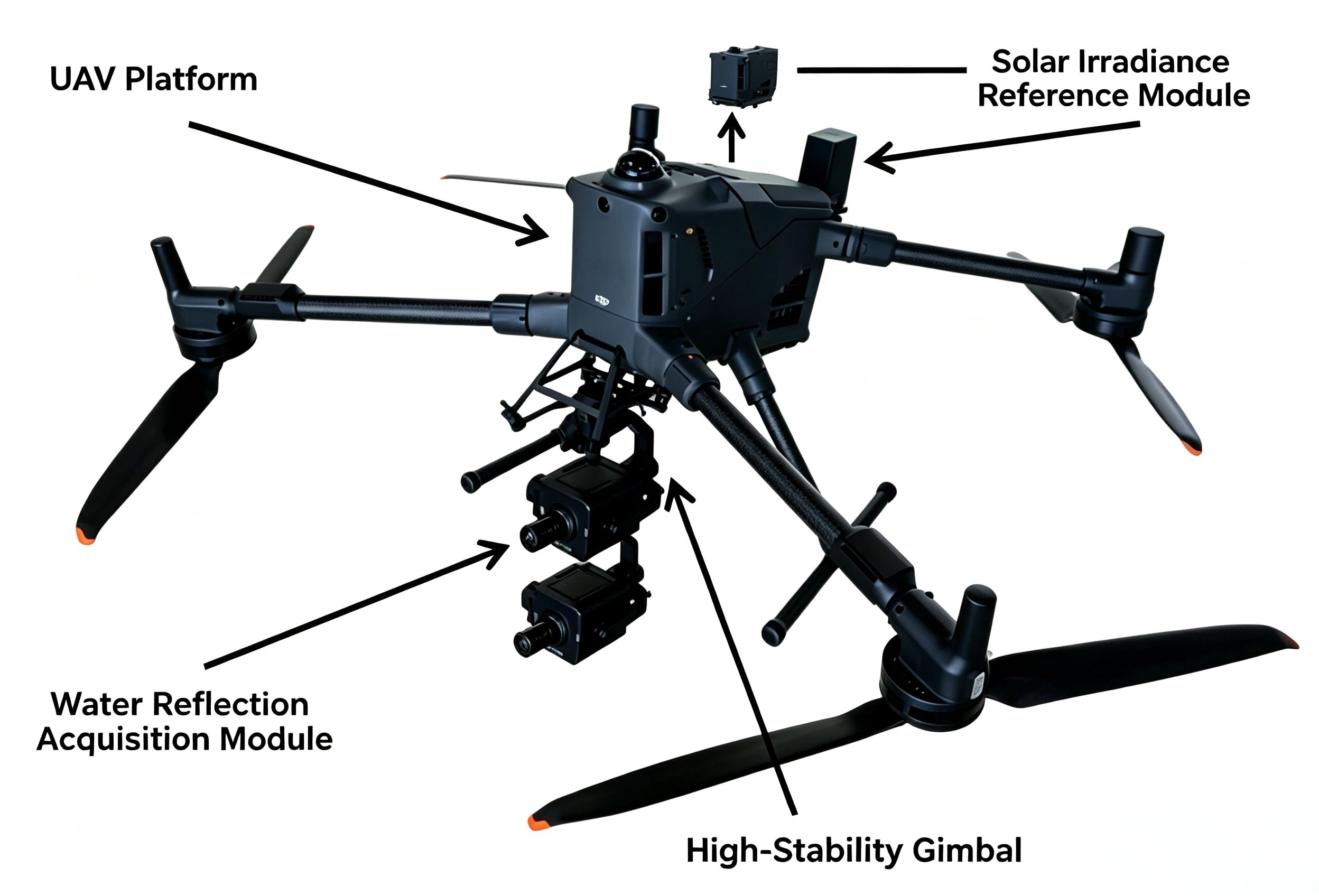
Discover the ATE9020 drone‑mounted real‑time hyperspectral telemetry system – instant in‑flight inversion of chlorophyll, COD, total N/P, turbidity, and ammonia, with live heatmaps and video evidence for emergency water monitoring.
New Launch ATE9020 In Flight Water Inversion

A clean Raman spectrum? It starts with the right filter. Without a good filter, even the best laser can't save your data. High OD, steep edge, proper wavelength matching — that's how you block Rayleigh and reveal real Raman signals. Don't let stray light ruin your peaks.
A Good Raman Spectrum Starts with a Good Filter
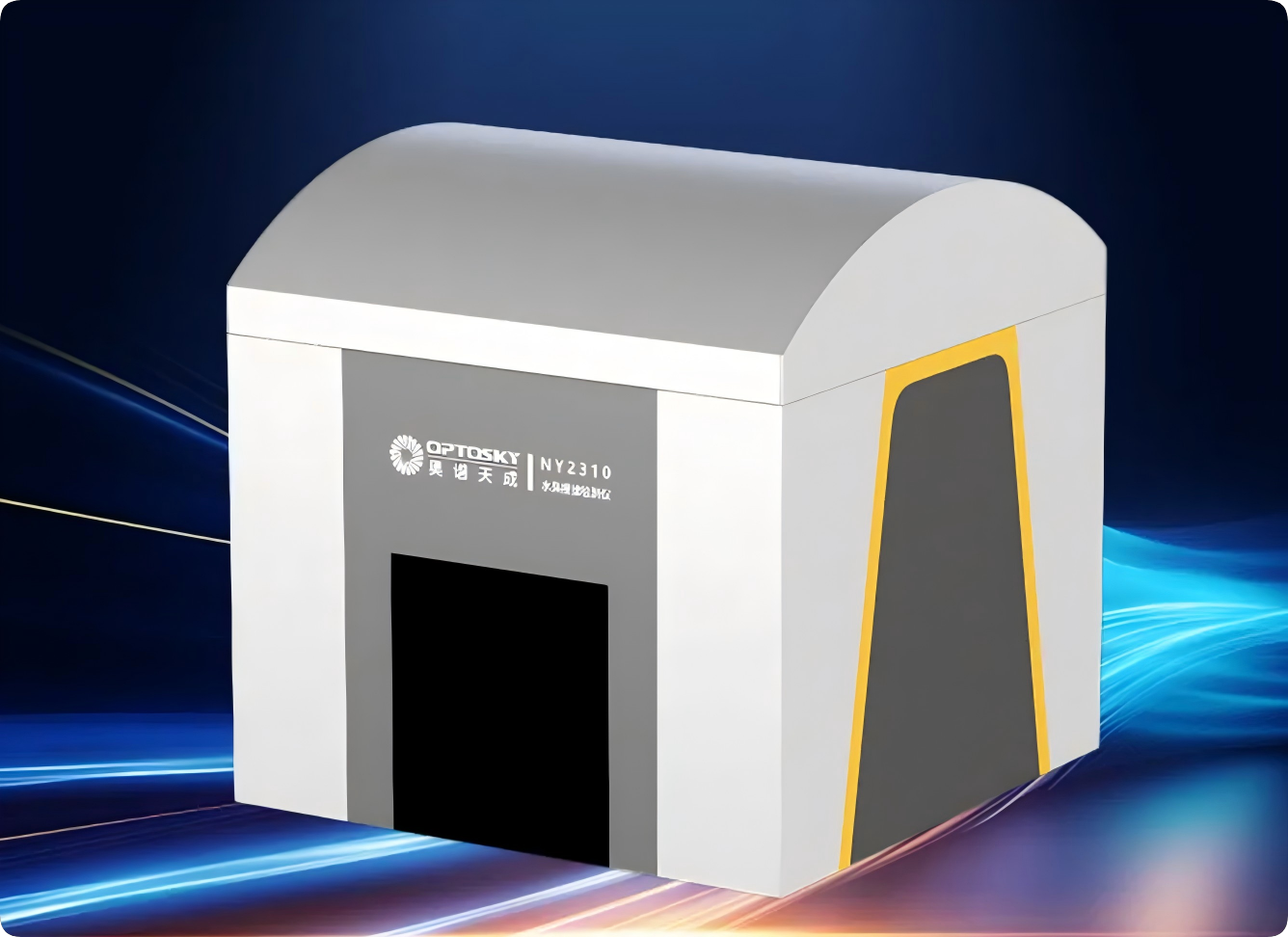
The NY2310 Online Fruit Appearance Defect Detector integrates machine vision and AI to enable fully automated, high-precision fruit inspection. It identifies color, shape, size, and surface defects in real time, with speeds up to 10 fruits per second and over 95% sorting accuracy. Designed for easy integration, it enhances efficiency and consistency in sorting citrus, apples, pears, peaches, and other fruits.
Applications | Fully Automated Fruit Appearance Inspection Combining Machine Vision and AI Algorithms
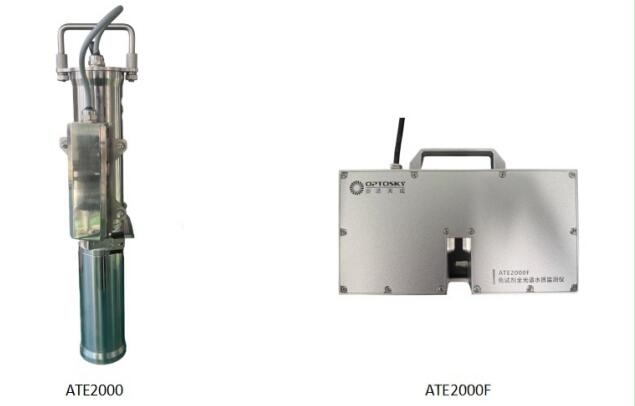
Optosky’s ATE2000 is a flexible core spectral sensor (focusing on TP, TN, COD) that requires integration with carriers like buoys or existing stations, ideal for upgrading current monitoring platforms cost-effectively. The ATE5300 is an all-in-one, ready-to-use monitoring station integrating the ATE2000 with extra sensors (e.g., pH, turbidity), suited for new independent deployments needing multiple parameters and rapid setup.
Monitors vs. Stations: Full-Spectrum Water Quality