Application recommendation | NY6000 detects mineral oil mixed in edible oil
2024-11-11

Mineral oil refers to the base oil obtained from the crude oil after atmospheric or vacuum distillation, solvent refining, dewaxing and deasphalting. Recent news reports show that the liquids transported by some domestic general cargo tankers are not fixed. They not only carry edible liquids such as syrup and soybean oil, but also transport chemical liquids such as coal-to-oil. In order to save costs, many tankers do not clean the tanks during the transportation process. Some edible oil manufacturers do not strictly control and do not check whether the tanks are clean according to regulations, causing the edible oil to be contaminated by residual chemical liquids, which has caused serious harm to human health. According to relevant information, long-term intake of edible oil containing these chemical residues may cause human poisoning, symptoms such as nausea, vomiting, diarrhea, and even irreversible damage to organs such as the liver and kidneys.
The Raman principle is an inelastic scattering phenomenon in which the frequency of light waves changes due to scattering when light interacts with matter. When light passes through a medium, most of the light propagates in the original direction, and a small part of the light is scattered and changes in frequency. This change is closely related to the vibration and rotational energy levels of the material molecules. The detection limit of conventional Raman spectroscopy in mineral oil is relatively high, and effective detection can only be achieved when doping of more than 10% is usually required. Surface-enhanced Raman spectroscopy (SERS) is a technology that uses surface enhancers to enhance the Raman signal of the molecules to be measured. SERS has the advantages of high detection sensitivity, strong target recognition and easy operation, and is widely used in fields such as environment, food, life sciences and materials analysis. Through special nanostructures or metal surfaces, the Raman signals of molecules can be significantly enhanced to achieve efficient detection of low-content, complex samples. Through Raman surface enhancement technology, the detection limit of mineral oil doped in edible oil can be significantly reduced to 0.5%, which can reach the "Detection of Animal and Vegetable Fats and Mineral Oils" (GB/T37514-2019). Raman detection is portable and fast, which gives Raman great potential for detecting adulteration in edible oils.
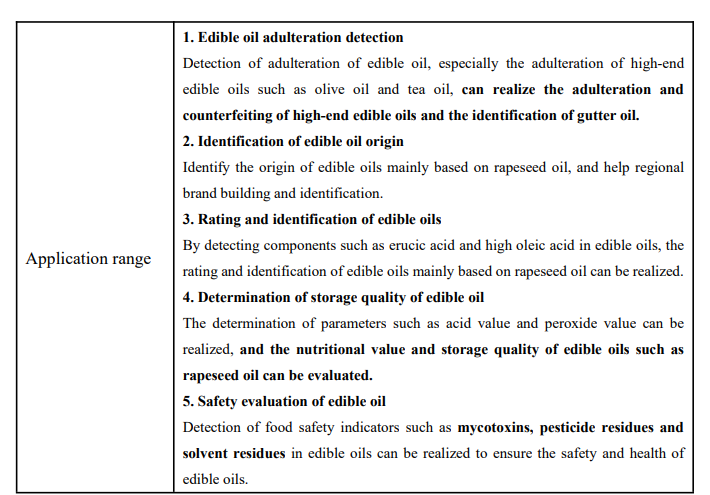
As a leading domestic spectroscopy company, Optosky is committed to the research and development of Raman spectroscopy, focusing on solving customers' pain points in mineral oil adulteration detection. It has launched the NY6000 edible oil comprehensive detection system, which can qualitatively identify the types of mineral oils. Combined with SERS, it can quantitatively identify mineral oil adulteration and can effectively identify 0.5% adulterated samples.
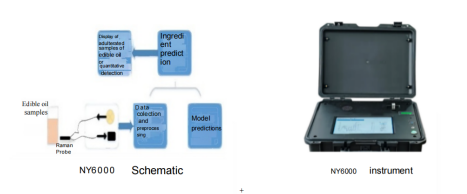
Product Features
One machine with multiple functions: It can perform quantitative and qualitative tests on the safety and quality indicators of edible oil.
Safe and environmentally friendly: No need to conduct complex chemical experimental analysis, avoiding operators from contacting highly corrosive, highly toxic, flammable and explosive high-risk chemicals, improving safety;
High sensitivity: The use of high-sensitivity cooling CCD can realize the detection of low-doped edible oil doping;
Strong applicability: The instrument design takes into account both volume and performance, meeting the index detection of edible oils such as tea oil, soybean oil, and olive oil;
One-click analysis: Equipped with powerful and user-friendly spectral analysis software, one-click operation means that both experts and first-time users of Raman spectrometers can quickly and accurately collect edible oil data and analyze edible oil indicators.
Application Examples
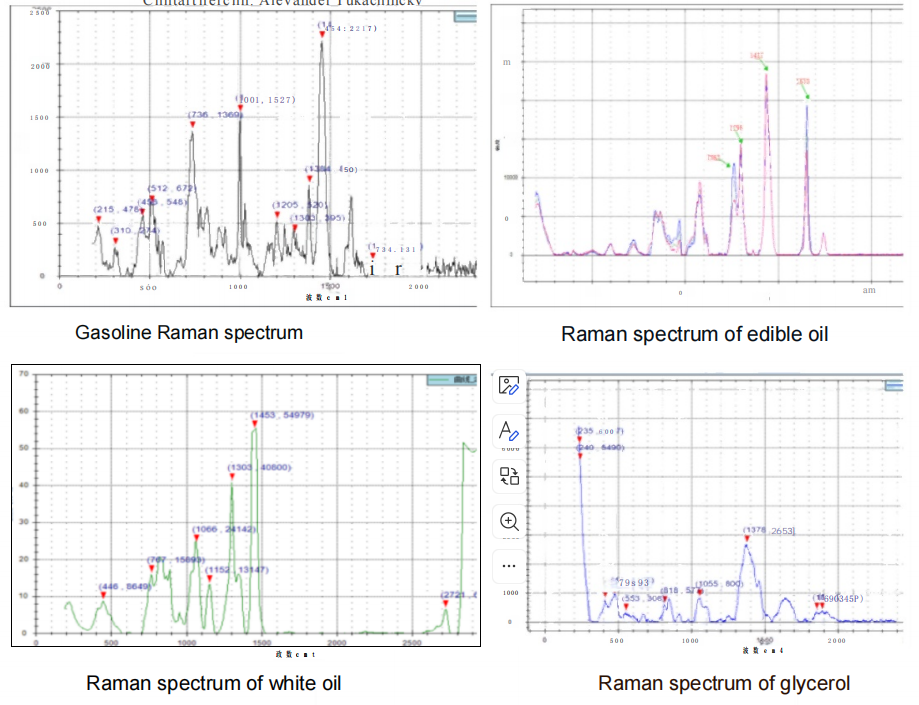
As shown above, the characteristic peaks of gasoline Raman spectrum are 736cm-1, 1001cm-1, etc.
The characteristic peaks of edible oil Raman are 1262cm-1, 1298cm-1, 1437cm-1, 1653cm-1, etc.
The characteristic peaks of white oil Raman are 1066cm-1, 1303cm-1, etc.
The characteristic peaks of glycerol Raman are 818cm-1, 1055cm-1, etc.
Through different Raman characteristic peaks, coal-to-oil and mineral oil can be identified. It effectively prevents the mixing of gas oil and edible oil.
Quantitative identification
Using surface enhanced Raman spectroscopy (SERS), the amount of doping can be identified semi-quantitatively.
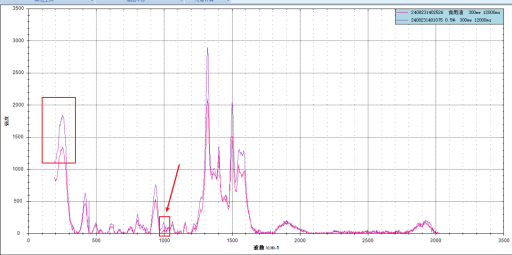
As mentioned above, through the enhancement reagent, mineral oil generally contains phenyl and has a characteristic peak at 1000cm-1, while normal vegetable oil is a long-chain fatty acid and will not have a peak at this position. At the same time, it can also be quantitatively analyzed well at 200cm-1.
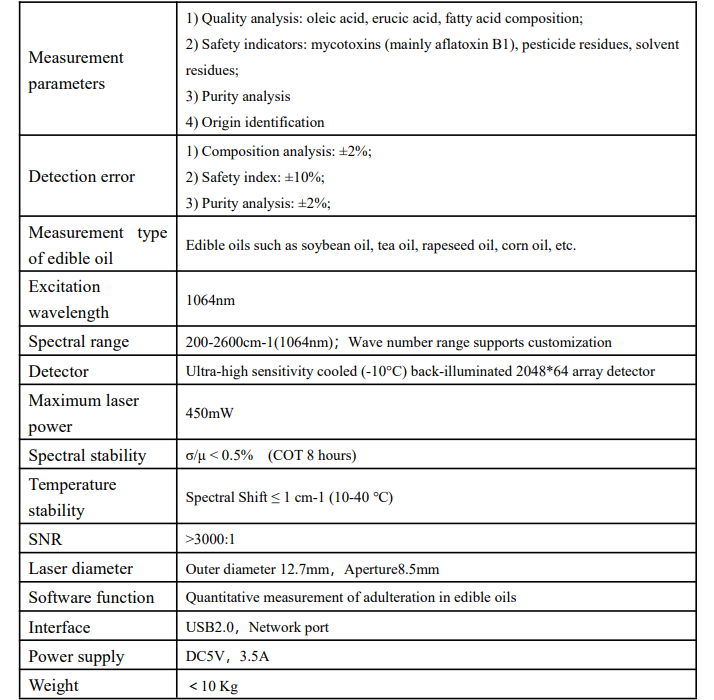
Instrument parameters
Summarize
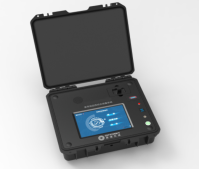
NY6000 is a comprehensive edible oil quality detection system based on Raman spectroscopy technology. It can truly be a multi-functional machine, and can detect indicators such as edible oil adulteration, origin, and edible oil fatty acid composition (such as erucic acid, high oleic acid, etc.). The instrument uses a highly sensitive refrigerated CCD, which can detect the adulteration of low-doped edible oil products. It is equipped with powerful and user-friendly spectral analysis software and one-button operation, which means that both experts and first-time users of Raman spectrometers can quickly and accurately collect edible oil data and analyze edible oil indicators. If you are interested in the above solutions or have other measurement application scenarios, or want to know more about the solution design details, please call 4008-508-928 for consultation.
Product Recommendation: UV3000 UV-Vis Spectrophotometer
Product recommendation | NY6000 comprehensive analysis of edible oil
Related Article
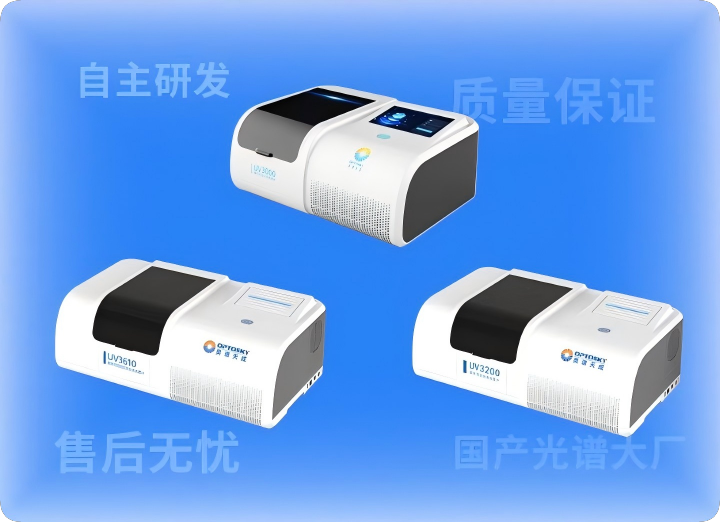
Optosky's spectrophotometer series includes the UV3000 (dual‑beam, 6‑position cell holder, touchscreen/pulsed xenon options), UV3200 (double monochromator, low stray light, high sensitivity), and UV3610 (UV‑Vis‑NIR). Designed for teaching, pharmaceuticals, water quality, and advanced research – stable, accurate, and efficient.
Racing with Light, Multi-Product Launch | Stable · Accurate · Efficient – Spectrophotometer Series

The Optosky ATF4500 is a high-performance 3D fluorescence spectrophotometer featuring a 150W xenon lamp, dual monochromators, 0.8nm resolution, and a high-sensitivity PMT detector (200–900nm). It enables fast, multidimensional fluorescence analysis for life sciences, environmental monitoring, food safety, and materials research.
New Product Launch | ATF4500 3D Fluorescence Spectrophotometer