
UV-VIS Spectroscopy: Decoding the Optimal Harvest Time for Dai Medicine Alstonia Scholaris Leaves
2025-11-04
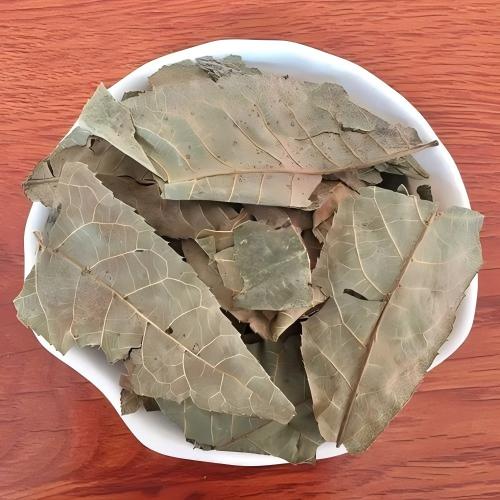
Alstonia scholaris leaves, known as "Dengtaiye" in Dai medicine, are commonly used to treat lung heat cough and lymph node swelling. Their therapeutic efficacy is closely tied to harvest timing. Traditional harvesting based on experience often leads to inconsistent quality due to seasonal variations. UV-VIS (Ultraviolet-Visible) spectroscopy, with its advantages of speed, non-destructiveness, and holistic assessment, provides a scientific solution for identifying the optimal harvest period and studying the quality of Dengtaiye.
-
Why Focus on Harvest Time for Dengtaiye?
Dengtaiye originates from the Apocynaceae family plant Alstonia scholaris. Dai medicine considers it "cold, bitter, slightly astringent," entering the fire and water constitutions, with significant heat-clearing and detoxifying effects. However, its active components (like alkaloids and flavonoids) fluctuate with the seasons:
Xishuangbanna, the main production area, has three distinct seasons: Cold (Nov-Feb), Hot (Mar-Jun), and Rainy (Jul-Oct). Significant differences in temperature, humidity, and sunlight directly impact component accumulation.
While traditional guidelines state it can be "harvested year-round," the actual content of active components can vary by several times across different months. Blind harvesting compromises efficacy.
Thus, a technology capable of "quantifying quality" is needed to accurately pinpoint the optimal harvest window.
-
UV-VIS Spectroscopy: Revealing Compositional Differences
Active components in plants, such as alkaloids and flavonoids, contain structures like conjugated double bonds that produce characteristic absorption in specific UV-Vis wavelength ranges – akin to a unique "optical fingerprint" for each component. UV-VIS spectroscopy captures these fingerprints:
Sample Preparation: 0.025g of powdered Dengtaiye leaf is ultrasonically extracted for 40 minutes with absolute ethanol (experimentally verified for highest extraction efficiency and most peaks). The filtrate is used for testing.
Spectral Scanning: Using absolute ethanol as a reference, the 235-800nm range is scanned, recording absorbance changes.
Data Analysis: Differences in active component content across harvest times manifest as variations in absorption peak positions and intensities within the spectrum. Analyzing these differences allows for harvest time discrimination and quality assessment.
-
Spectral Analysis: Discriminating Harvest Periods
Research involving UV-VIS analysis of Dengtaiye leaves from 12 different months yielded three key findings:
-
Spectrum Divided into Three Segments; Differences Concentrated in the "Key Region"
The spectrum can be divided into three segments based on absorption features, with the 235-400nm range being the "core signal region" for difference of quality:
-
Segment 1 (235-400nm): Contains the most absorption peaks (around 270, 287, 325nm), corresponding to characteristic absorptions of alkaloids and flavonoids. Significant absorbance variations across months provide clear "fingerprint" characteristics.
-
Segment 2 (400-500nm): Fewer peaks (near 410, 464nm), minimal absorbance change, limited information value.
-
Segment 3 (500-800nm): Only one stable peak at 665nm (likely chlorophyll), no significant monthly absorbance differences, unable to distinguish harvest time.
2. Principal Component Analysis (PCA): Rapid "Clustering" of Harvest Periods
Applying PCA to the spectral data, the first three principal components achieved a cumulative contribution rate of 97.22%, capturing nearly all quality information:
-
Samples from the same month clustered closely in the 3D score plot, while different months were clearly separated.
-
Samples from October to February clustered together, while those from March to September formed other distinct groups, visually reflecting quality differences between the cold season and other seasons.
-
Cold Season Harvest Yields Optimal Quality
Comparing spectral absorbances across months: Leaves harvested from October to February (the Dai calendar cold season) showed significantly higher absorbance in the critical 235-400nm range, indicating the richest content of alkaloids, flavonoids, and other active components. Samples from the hot and rainy seasons exhibited lower absorbance and relatively poorer quality.
These findings were highly consistent with subsequent HPLC (High-Performance Liquid Chromatography) analysis, further validating the reliability of UV-VIS spectroscopy.
IV. Advantages of UV-VIS Technology: Why It Suits Dai Medicine Research
1. Rapid & Efficient: Single measurement takes ~10 minutes, minimal sample preparation, far faster than traditional chemical analysis (e.g., HPLC requires >1 hour).
-
Non-destructive & Eco-friendly: Minimal chemical reagent consumption, preserves medicinal samples, ideal for batch screening.
-
Holistic Assessment: Reflects overall changes in all components with conjugated structures, avoiding the limitation of single-component evaluation – particularly suitable for complex traditional medicines like Dai medicine, which often lack standard reference compounds.
-
Cost-Effective: Simple instrument maintenance, lower detection cost compared to chromatographic techniques, facilitating adoption by local quality control agencies.
-
Recommended Product: Optosky Spectrometers
V. Practical Value: Paving the Way for Dai Medicine Modernization
This research not only identified the optimal harvest period for Dengtaiye as October to February but also established a new paradigm for quality evaluation of traditional medicines:
-
For growers: Enables precise seasonal harvesting, improving qualification rates and market value.
-
For pharmaceutical companies: Allows rapid identification of raw material harvest time, ensuring consistent drug efficacy.
-
For Dai medicine research: Provides a reference for studying harvest times of other traditional medicines (e.g., Dai medicine "Yajiaohadun"), promoting the transition from "experience-based" to "science-based" practice.
Conference
-
UV-Vis结合HPLC FP对不同采收期傣药灯台叶的鉴别及品质研究,杨妮娜,张霁,赵艳丽,王元忠,赵应红,光谱学与光谱分析,2016,Vol. 36,Issue (12): 4021-4027 DOI: 10.3964/j.issn.1000-0593(2016)12-4021-07.
Applications | Nutritional Content Analysis of Rice Seeds Based on NIR Spectroscopy
Product Recommendation: UV3000 UV-Vis Spectrophotometer
Related Article
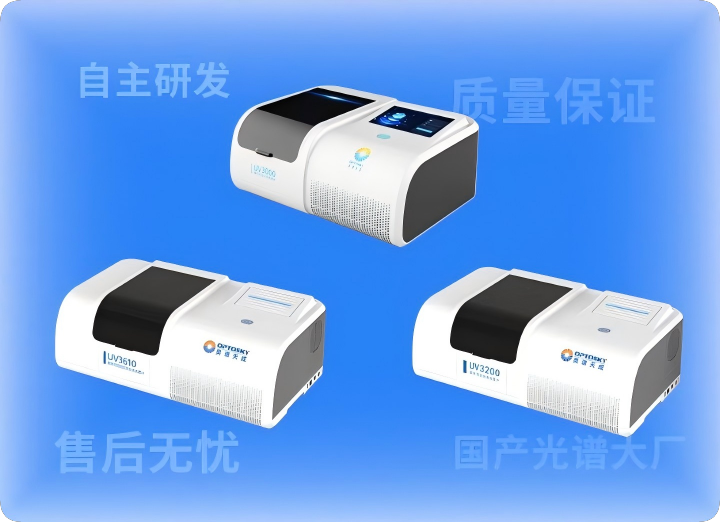
Optosky's spectrophotometer series includes the UV3000 (dual‑beam, 6‑position cell holder, touchscreen/pulsed xenon options), UV3200 (double monochromator, low stray light, high sensitivity), and UV3610 (UV‑Vis‑NIR). Designed for teaching, pharmaceuticals, water quality, and advanced research – stable, accurate, and efficient.
Racing with Light, Multi-Product Launch | Stable · Accurate · Efficient – Spectrophotometer Series
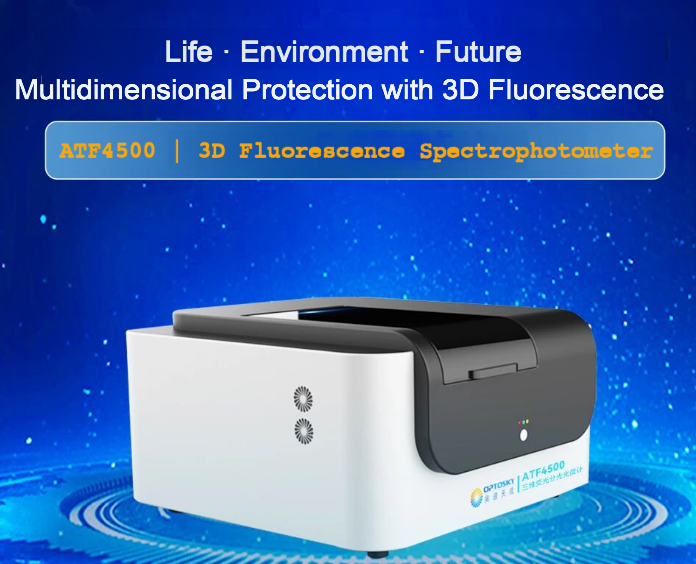
The Optosky ATF4500 is a high-performance 3D fluorescence spectrophotometer featuring a 150W xenon lamp, dual monochromators, 0.8nm resolution, and a high-sensitivity PMT detector (200–900nm). It enables fast, multidimensional fluorescence analysis for life sciences, environmental monitoring, food safety, and materials research.
New Product Launch | ATF4500 3D Fluorescence Spectrophotometer
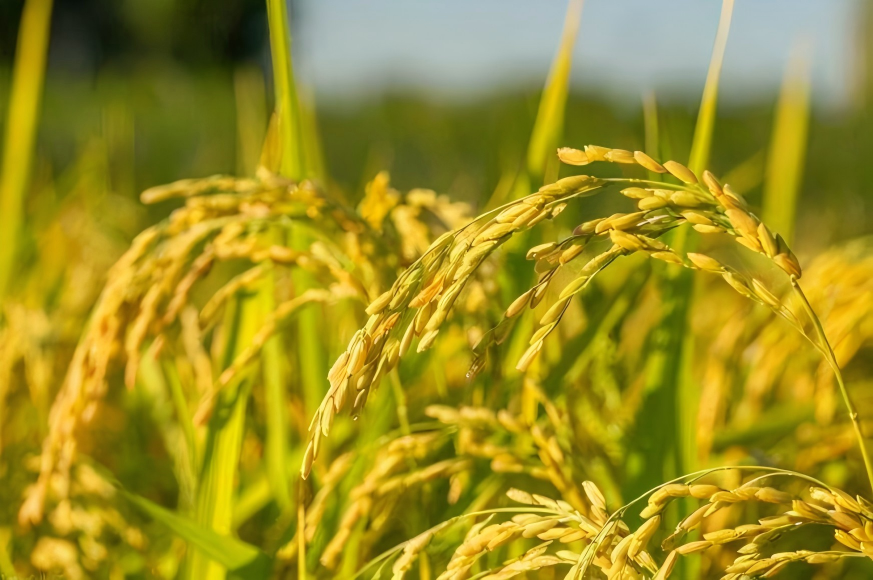
Optosky's NIR spectroscopy technology enables rapid, non-destructive analysis of nutritional components in rice seeds, including protein, fat, and starch content.
Applications | Nutritional Content Analysis of Rice Seeds Based on NIR Spectroscopy
The UV-Vis spectrophotometer is an analytical instrument based on the Beer-Lambert law. It analyzes substances by measuring their absorption of ultraviolet-visible radiation. Widely used in metallurgy, geology, environmental protection, agriculture, and scientific research, the instrument consists of a light source, monochromator, absorption cell, detector, and signal processor.
Product Recommendation: UV3000 UV-Vis Spectrophotometer