
UAV Hyperspectral Remote Sensing for Rice Yield Prediction
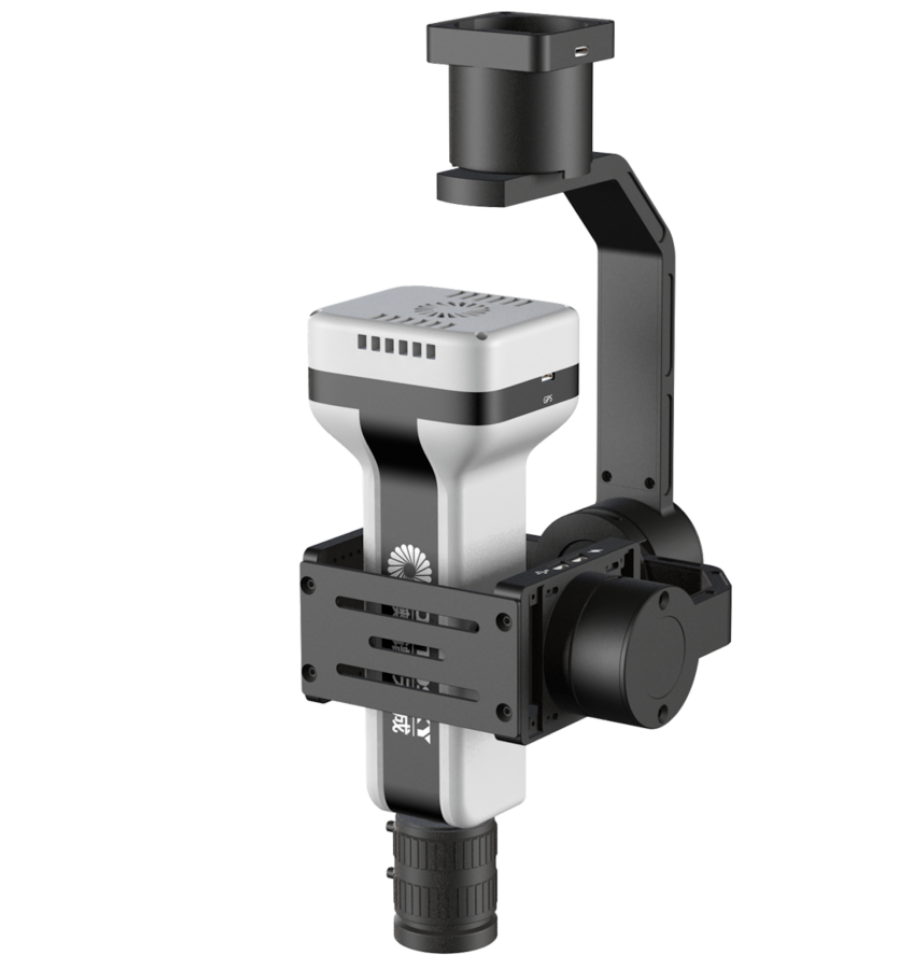
Against the backdrop of food security, accurate rice yield estimation has become a key research direction in smart agriculture. This paper presents the core technical workflow of UAV‑based hyperspectral remote sensing for rice yield prediction, and discusses, with reference to the Optosky UAV hyperspectral system, how to build an integrated solution covering data acquisition, growth monitoring, and yield forecasting, providing technical references for agricultural research and precision management.
01 UAV Hyperspectral Remote Sensing Is Transforming Traditional Rice Yield Estimation
Rice is one of the most important staple crops in China, and its yield directly affects national food security. However, large‑area rice yield surveys still mainly rely on manual sampling, empirical statistics, and conventional remote sensing methods, which suffer from low sampling efficiency, limited coverage, and insufficient prediction accuracy.
In recent years, the rapid development of UAV remote sensing has pushed agricultural monitoring into the era of centimeter‑level spatial resolution. Compared with conventional RGB and multispectral cameras, hyperspectral imaging can acquire hundreds or even thousands of continuous narrow‑band channels, enabling precise detection of chlorophyll content, nitrogen levels, water status, canopy structure, and biomass changes in rice. This provides a much richer data foundation for crop growth monitoring and yield prediction.
The paper indicates that by combining hyperspectral data with environmental monitoring data (temperature, humidity, light, CO₂) and plant phenotypic parameters (plant height, stem diameter, etc.), it is possible to establish an intelligent prediction model covering the entire growth cycle, realizing an integrated analysis pipeline from growth monitoring → growth diagnosis → yield prediction, thereby significantly improving prediction accuracy and agricultural management efficiency.
With the advance of artificial intelligence, deep learning can fully exploit the non‑linear features hidden in high‑dimensional spectral data, offering a new breakthrough for the application of UAV hyperspectral remote sensing in smart agriculture.
02 How Does Deep Learning Achieve High‑Precision Rice Yield Prediction?
The study was conducted in the Northeast China rice region. A UAV‑mounted 400–1000 nm hyperspectral imaging system was used to continuously monitor rice at the tillering, jointing, heading, and grain‑filling stages. Simultaneously, environmental factors and agronomic indicators were collected to build a comprehensive dataset.
The overall technical workflow consists of the following main steps:
1. UAV Hyperspectral Data Acquisition
Multi‑temporal hyperspectral images were acquired by UAV, followed by:
- Radiometric calibration
- Geometric correction
- Geo‑referencing
- Canopy extraction
- Orthomosaic stitching
Subsequently, spectral preprocessing algorithms such as SG smoothing, SNV, and MSC were applied to improve spectral quality.
2. Selection of Key Wavelengths
Because hyperspectral data have high dimensionality, three methods were used to select sensitive bands for LAI, plant nitrogen content (PNC), and above‑ground biomass (AGB):
- SPA (Successive Projections Algorithm)
- CARS (Competitive Adaptive Reweighted Sampling)
- RF‑RFE (Random Forest Recursive Feature Elimination)
Examples of sensitive bands:
- Red‑edge 706 nm and 720 nm are highly sensitive to LAI;
- 529 nm and 571 nm effectively reflect nitrogen changes;
- 680 nm, 849 nm, and 969 nm are closely related to biomass and water information.
The study also found that the following variables had the highest correlation with final yield and could be used as inputs to the deep learning model:
- NDVI
- LAI
- Light intensity
- Relative humidity
- Stem diamete
3. Deep Learning Model Construction
① QRCNN‑BIGRU‑MLLA – mainly used for rice growth monitoring, achieving:
- LAI inversion
- PNC inversion
- AGB inversion
The model integrates:
- CNN for spectral feature extraction
- BiGRU for learning temporal changes
- MLLA attention mechanism for cross‑modal fusion
This enables dynamic monitoring across different growth stages.
② QRBILSTM‑MHSA – mainly used for final yield prediction.
Model features include:
- BiLSTM to learn the full‑growth‑cycle time series;
- MHSA (Multi‑Head Self‑Attention) to highlight key growth stages;
- Quantile regression to provide yield interval predictions.
The model not only outputs final yield but also gives a 95% confidence interval, enabling agricultural risk assessment.
Finally, the paper constructed a complete software system that implements:
Hyperspectral data processing → Growth monitoring → Yield prediction → Risk analysis
forming a complete decision‑making pipeline for smart agriculture.
03 Building a Total Solution for Precise Rice Yield Estimation
Optosky’s ATH series UAV‑mounted hyperspectral imaging systems cover multiple spectral ranges, including 400–1000 nm, 900–1700 nm, and 400–2500 nm, and can be integrated with DJI M350 RTK, M400, and other UAV platforms to meet agricultural monitoring needs at different scales.
Combined with the Optosky UAV hyperspectral system, a complete rice yield estimation workflow can be established:
① High‑quality data acquisition – using the hyperspectral imaging system to acquire continuous spectral data throughout the entire rice growth cycle, combined with RTK positioning to achieve centimeter‑level spatial accuracy, providing a reliable data foundation for subsequent modeling.
② One‑stop data processing – relying on Optosky’s hyperspectral data processing software, users can perform:
- Radiometric correction
- White‑reference correction
- Geometric correction
- Orthomosaic stitching
- Band browsing
- Spectral extraction
- Vegetation index calculation
- Spectral statistical analysis
This rapidly generates research‑grade hyperspectral data products.
③ Deep learning model training – combining hyperspectral features such as LAI, NDVI, and red‑edge indices with multi‑source data including meteorological, soil, water, and fertilizer information, it is possible to build yield prediction models adaptable to different regions and varieties, achieving more accurate estimation.
④ Precision agriculture decision‑making – ultimately forming a closed‑loop smart agriculture system covering data acquisition → growth monitoring → yield prediction → risk assessment → precision management, which can be widely applied to:
- Precise rice yield estimation
- Growth monitoring
- Nitrogen fertilizer management
- Pest and disease early warning
- Agricultural research and breeding
- High‑standard farmland construction
- Digital agriculture platform development
With advances in deep learning, large models, and digital agriculture, UAV hyperspectral remote sensing is moving from “seeing” to “understanding, accurately calculating, and precisely managing.” In the future, combined with Optosky’s high‑performance UAV hyperspectral systems and intelligent analytics platforms, agricultural remote sensing will be further driven toward intelligent, automated, and precise directions, providing stronger technical support for ensuring food security and high‑quality development of modern agriculture.
References
- Li Peilin. Research on Rice Yield Prediction Method Based on Deep Learning and Hyperspectral Imaging[D]. Daqing: Heilongjiang Bayi Agricultural University, 2026.
For more information, please contact:
Email: [email protected]
Web: www.optosky.net
Hyperspectral AI for Non‑Destructive Peach Brix Prediction
ATH6100 Practical Case Study: Jade Analysis
Related Article