
Top Four Benefits of LC/MS in Pesticide Detection
2024-11-04

Organic farming began in the 1960s in the U.S. as a countercultural movement. As public awareness of the negative effects of pesticides grew, so did the demand for organic foods. According to the latest survey from the Organic Trade Association, organic sales surpassed $63 billion between 2020 and 2021, with an annual increase of $1.4 billion (total growth of 2%). Food sales, which account for more than 90% of organic sales, reached $57.5 billion. Research indicates that rising consumer demand for organic food is closely linked to concerns over the impact of pesticides. To regulate pesticide use, the U.S. Environmental Protection Agency (EPA) has set maximum residue limits (MRLs) for pesticides in food, and international regulatory bodies have established similar standards to strengthen pesticide control.
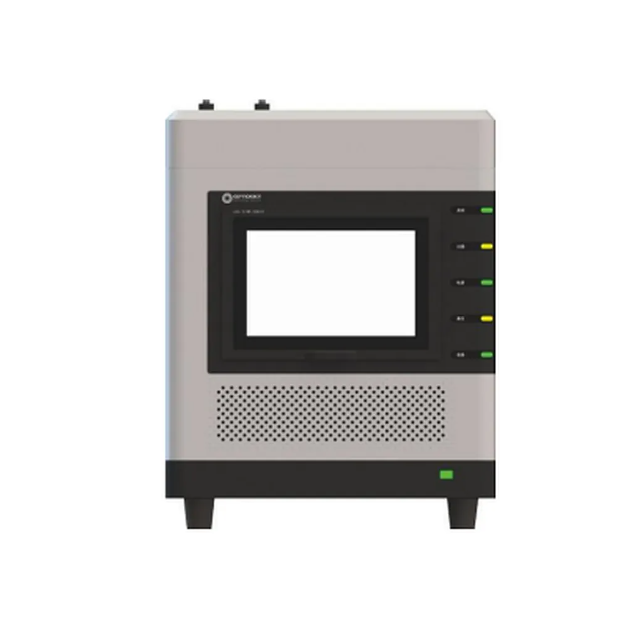
Liquid chromatography-tandem mass spectrometry (LC/MS/MS) addresses the need for pesticide residue analysis by providing more reliable data to support food safety monitoring. While gas chromatography (GC) and liquid chromatography (LC) are commonly used for pesticide residue testing, mass spectrometry (MS) has become increasingly important in pesticide analysis due to its higher efficiency. As the demand for pesticide residue testing and regulatory requirements continue to increase, laboratories are striving for more efficient analytical methods. LC/MS/MS technology enhances pesticide residue testing methods, improving data reliability and supporting food safety monitoring.
Here are the four key advantages of LC/MS/MS in pesticide residue analysis:
1. Sensitivity
The World Health Organization reports that over 1,000 pesticides are used globally to protect crops from pests, with each pesticide having distinct properties and toxicological effects. To control pesticide residues, regulatory agencies like the European Commission have established maximum residue limits (MRLs) to ensure residues remain at low levels. For instance, some foods are required to have pesticide residues as low as 10 µg/kg. Although traditional gas chromatography-mass spectrometry (GC/MS) is widely used for its speed and sensitivity in detecting multiple compounds in a single run, its application is limited to volatile molecules and requires larger sample volumes. As regulatory demands expand, more food testing laboratories are adopting LC/MS/MS with electrospray ionization (ESI) for its higher sensitivity and specificity, allowing for more precise pesticide detection that aligns with current regulatory standards.
2. Selectivity
LC/MS/MS allows for the simultaneous screening of multiple pesticide residues, even in complex food matrices. Through specific multiple reaction monitoring (MRM) transitions, LC/MS/MS provides highly accurate identification of pesticide residues, achieving exceptional selectivity. High-performance mass filters deliver high resolution without sacrificing transmission, ensuring improved selectivity and sensitivity.
3. Specificity
LC/MS/MS technology offers two different ionization techniques—electrospray ionization (ESI) and atmospheric pressure chemical ionization (APCI)—for analyzing pesticide residues, enhancing the specificity and reliability of testing results.
4. Efficiency
Laboratories must comply with pesticide residue regulations and optimize operational efficiency to achieve a strong return on investment. By reducing analysis time and increasing instrument uptime, LC/MS/MS technology enables laboratories to enhance analytical efficiency, ensuring a more streamlined and effective testing process.
TOC content detection in industrial wastewater
Related Article

We chose the TOC-2000 TOC analyzer and configured an organic carbon standard solution in accordance with the standard "HJ 501-2009 Determination of Water Quality TOC Combustion Oxidation-Non-Dispersive Infrared Absorption Method" to measure the total organic carbon in the sample using the combustion oxidation method.
TOC content detection in industrial wastewater

Using the Optosky TOC-2000 total organic carbon meter to measure water samples with high chlorine compounds can achieve comprehensive, simple and accurate determination under certain conditions. High chloride content has basically no effect on the TOC measurement results of water samples.
Determination of TOC content of high chlorine samples by dry oxidation method
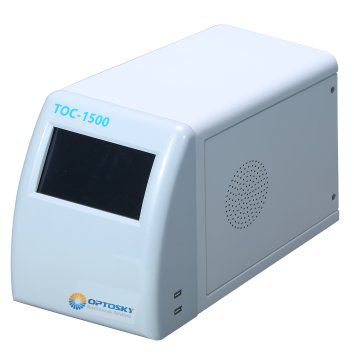
TOC total organic carbon analyzers have been increasingly used in the environment, drinking water, pharmaceuticals, electronics, power plants and other industries. In 2003, the four national ministries and commissions officially included TOC in the water pollutant pollution equivalent value table as an important indicator for environmental monitoring in the newly promulgated "Standard Management Measures for the Collection of Pollution Fees".
Water quality standards related to TOC analysis

A user of a pharmaceutical company in Shanghai formulated a cleaning method based on product properties, production processes and other factors, and implemented equipment cleaning in accordance with the established cleaning procedures. It also used a TOC 3000 total organic carbon analyzer to analyze the TOC content in the clean water of its pharmaceutical equipment. Verify the cleaning effectiveness of pharmaceutical equipment.
Example of TOC testing of pharmaceutical equipment cleaning validation