
Unmanned airborne pine nematodes Early warning plan
author: Yilia
2022-12-13
What is pine nematode disease?
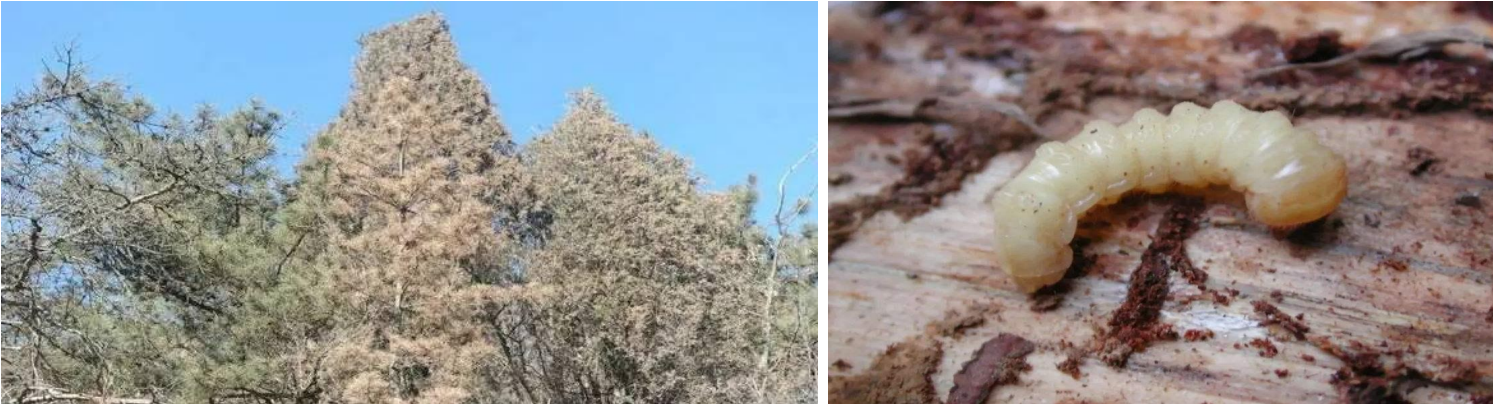
Pine xylophilus dubbed 'cancer' of pine trees!
l Extremely destructive;
l Once the pine tree is infected, it will die in about 40 days;
l There is no effective drug to treat it, which is called "cancer" of pine trees;
l If effective measures are not taken, the entire pine forest will die within 3-5 years
l Since the discovery of pine xylophilus in 1982, it has spread rapidly, including Jiangsu,
14 provinces (cities, districts) in Anhui, Shandong, Zhejiang, Guangdong and other parts of the country issued
over 80,000 hectares, resulting in the death of a large number of pine trees.
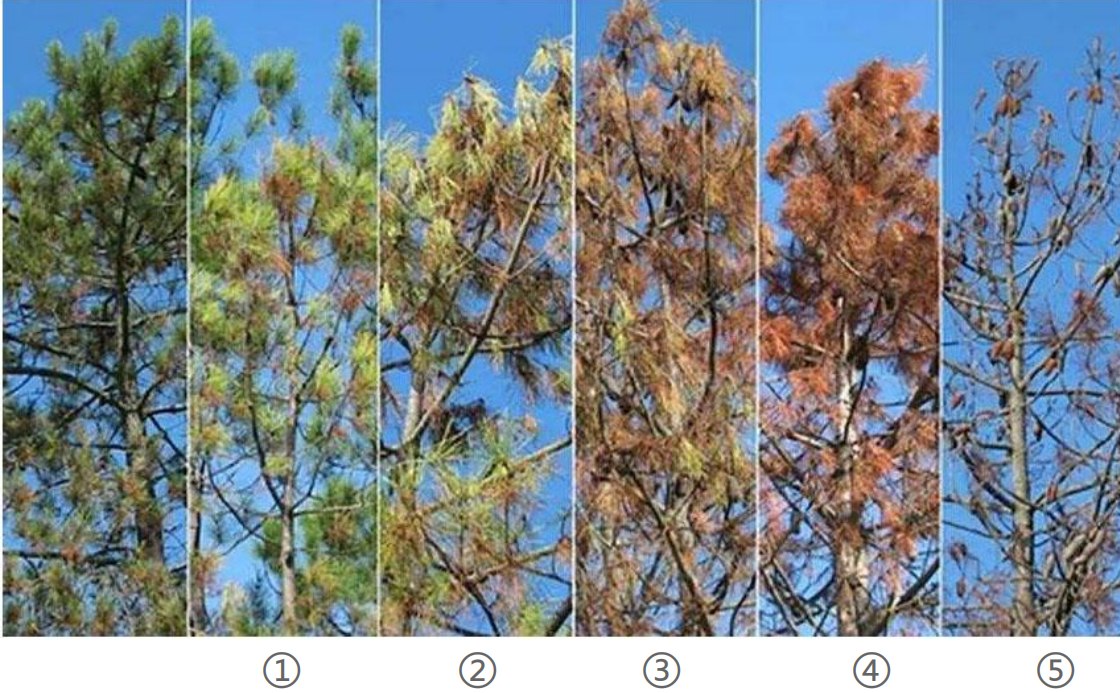
① The appearance is normal, the secretion of resin decreases or stops, and the transpiration decreases;
②The needles begin to change color, resin secretion stops, and traces of beetle infestation and egg laying by longhorns or other beetles can usually be observed;
③ Most of the needles turn yellowish-brown and wilted, and beetle crumbs are usually seen;
④ All the needles turn yellowish brown, and the diseased tree withers and dies, but the needles do not fall off. At this time, there are generally many kinds of pests living on the tree.
Why hyperspectral can discover Early pine nematode disease?
When green and healthy plants are eroded by diseases and insect pests, the chlorophyll contained in the leaves gradually decreases until there is no chlorophyll.
The spectrum appears as:
① The chlorophyll absorption band in the spectral reflectance curve of green plants
less energy, less strength,
②Increased spectral reflectance in the visible light band region
Compared with the spectral reflectance of the healthy leaves as shown in the figure, the reflectance of the damaged leaves is higher than that of the normal vegetation leaves in the visible light band, but the spectral reflectance in the infrared band range is significantly reduced.
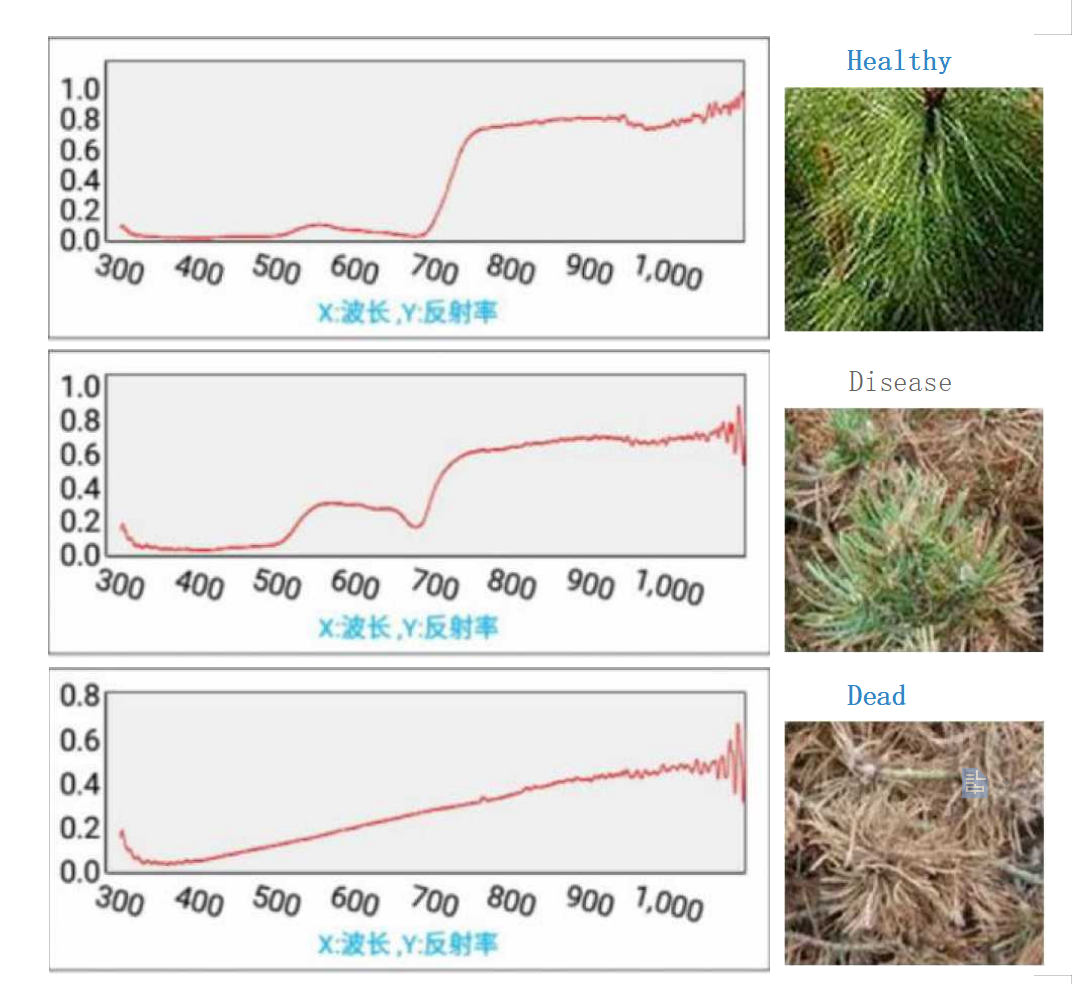
Based on this knowledge, the spectral feature information of the changes in each band of the spectral region of vegetation eroded by diseases and insect pests is obtained, especially the change information of the spectral features in the near-infrared band is extracted, and then leaf pigment, cell structure, and water content can be obtained. Quantitatively analyze the damage of pests and diseases.
Thus, it is possible to monitor the classification status of masson pine pests and diseases in a wide range and large scale.
Why UAV hyperspectral can monitor pine nematode disease?
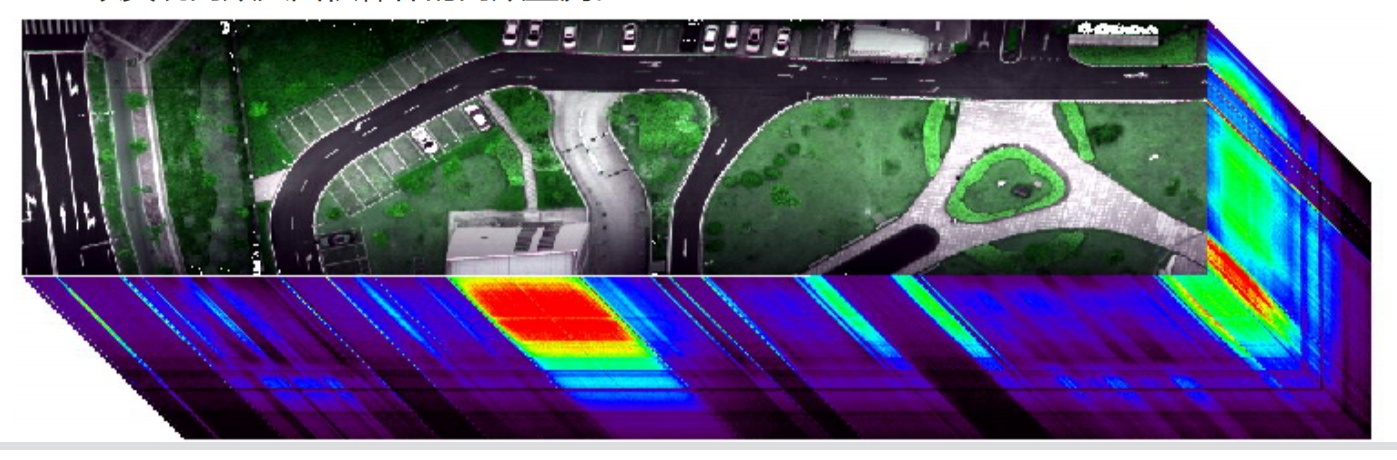
• Hyperspectral characterizes high-resolution optical information, which utilizes many narrow bands of electromagnetic waves (typically <10nm) to obtain data about objects of interest.
•Hyperspectral images are acquired by imaging spectrometers, which provide tens to hundreds of narrow-band spectral information for each pixel and generate a complete and continuous spectral curve.
•The image information can reflect the external quality characteristics of the sample such as size, shape, defect, etc. Since different components have different spectral absorption, the image will reflect a defect more significantly at a specific wavelength, and the spectral information can fully reflect Differences in the physical structure and chemical composition of the sample.
•Using hyperspectral characteristics can identify pine monitoring in different disease stages. And combined with unmanned aerial vehicles, it can realize the effective monitoring of large-scale forests.
Pine xylophilus dubbed 'cancer' of pine trees!
l Extremely destructive;
l Once the pine tree is infected, it will die in about 40 days;
l There is no effective drug to treat it, which is called "cancer" of pine trees;
l If effective measures are not taken, the entire pine forest will die within 3-5 years
l Since the discovery of pine xylophilus in 1982, it has spread rapidly, including Jiangsu,
14 provinces (cities, districts) in Anhui, Shandong, Zhejiang, Guangdong and other parts of the country issued
over 80,000 hectares, resulting in the death of a large number of pine trees.
① The appearance is normal, the secretion of resin decreases or stops, and the transpiration decreases;
②The needles begin to change color, resin secretion stops, and traces of beetle infestation and egg laying by longhorns or other beetles can usually be observed;
③ Most of the needles turn yellowish-brown and wilted, and beetle crumbs are usually seen;
④ All the needles turn yellowish brown, and the diseased tree withers and dies, but the needles do not fall off. At this time, there are generally many kinds of pests living on the tree.
Why hyperspectral can discover Early pine nematode disease?
When green and healthy plants are eroded by diseases and insect pests, the chlorophyll contained in the leaves gradually decreases until there is no chlorophyll.
The spectrum appears as:
① The chlorophyll absorption band in the spectral reflectance curve of green plants
less energy, less strength,
②Increased spectral reflectance in the visible light band region
Compared with the spectral reflectance of the healthy leaves as shown in the figure, the reflectance of the damaged leaves is higher than that of the normal vegetation leaves in the visible light band, but the spectral reflectance in the infrared band range is significantly reduced.
Based on this knowledge, the spectral feature information of the changes in each band of the spectral region of vegetation eroded by diseases and insect pests is obtained, especially the change information of the spectral features in the near-infrared band is extracted, and then leaf pigment, cell structure, and water content can be obtained. Quantitatively analyze the damage of pests and diseases.
Thus, it is possible to monitor the classification status of masson pine pests and diseases in a wide range and large scale.
Why UAV hyperspectral can monitor pine nematode disease?
• Hyperspectral characterizes high-resolution optical information, which utilizes many narrow bands of electromagnetic waves (typically <10nm) to obtain data about objects of interest.
•Hyperspectral images are acquired by imaging spectrometers, which provide tens to hundreds of narrow-band spectral information for each pixel and generate a complete and continuous spectral curve.
•The image information can reflect the external quality characteristics of the sample such as size, shape, defect, etc. Since different components have different spectral absorption, the image will reflect a defect more significantly at a specific wavelength, and the spectral information can fully reflect Differences in the physical structure and chemical composition of the sample.
•Using hyperspectral characteristics can identify pine monitoring in different disease stages. And combined with unmanned aerial vehicles, it can realize the effective monitoring of large-scale forests.
New product|recommendation-GF900 UAV-borne laser methane telemetry system
Application of UAV-hyperspectral imaging for rice growth monitoring
Related Article

Discover Optosky’s air–ground collaborative hyperspectral solution for mine ecological restoration monitoring. Combining UAV hyperspectral imaging, fixed-point rotating-scan systems, and field spectroradiometers, it supports vegetation, soil, mineral alteration, and water environment monitoring for green mine evaluation and restoration acceptance.
Applications | Hyperspectral Mine Restoration Monitoring
Compare single InGaAs and CMOS+InGaAs detector architectures in hyperspectral imaging. Learn why both can cover 400–1700 nm, how visible-light-extended InGaAs works, and the trade-offs in calibration, spectral registration, and system integration for applications in agriculture, food safety, and industrial inspection.
Technology | Single InGaAs vs. CMOS+InGaAs in Hyperspectral Imaging
Discover how hyperspectral imaging combined with multi-feature fusion (PCA + 2DCOS + CARS) enables non-destructive three-level grading of chili pepper sunburn with 97.2% accuracy. Learn about the ATH3000 system and Optosky's customized solutions for horticultural crop quality inspection and damage classification.
Can Sunburned Chili Peppers Be Non-Destructively Graded? Hyperspectral Imaging ATH3000 Offers a New Answer
Discover the Optosky ATH9600 multi-lens UAV-borne multispectral imaging system—featuring 67° ultra-wide FOV, synchronous snapshot, 3.75 μm large pixel, and native DJI X-Port integration. Ideal for large-area farmland monitoring, orchard management, pest early warning, water quality inversion, and complex crop classification. Born for efficient, all-weather low-altitude remote sensing.
Born for Large-Area Remote Sensing! Optosky Releases the ATH9600 Multi-Lens UAV-Borne Multispectral Imaging System