
Real-Time Water Quality Monitoring with Hyperspectral Remote Sensing
2024-11-08
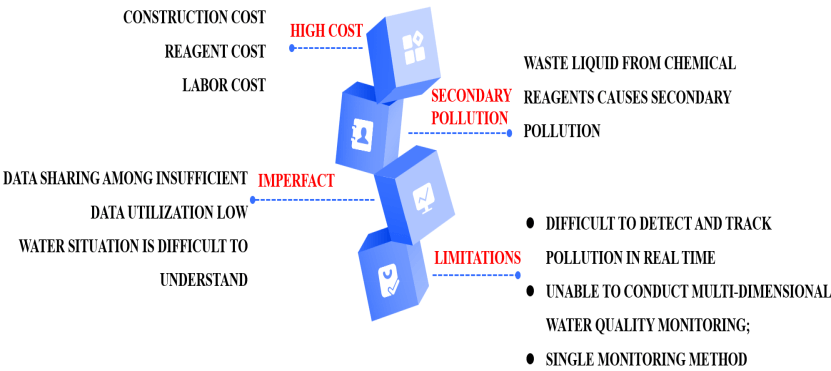
Challenges Faced
Water resources are essential for life, and with the improvement in people's living standards and increasing focus on environmental issues, public demand for drinking water safety and water ecological quality has grown significantly. There is a growing need for the public to understand the quality of nearby water bodies, driving the expansion of water quality monitoring efforts to meet public rights to information and a healthy environment.
Traditional monitoring of rivers and lakes mainly relies on field sampling and laboratory analysis. This method involves setting fixed points and profiles in rivers and lakes, requiring years of continuous monitoring, recording, and analysis. Although this method can achieve a certain level of data accuracy, it cannot capture the overall temporal and spatial quality of rivers and lakes. It is also time-consuming and labor-intensive, with limited monitoring areas. As a result, it only provides partial and typical representation and fails to meet the demands for real-time, rapid, and large-scale monitoring and evaluation. Furthermore, pollution source tracing is difficult, hindering the ability to detect pollution discharge quickly.
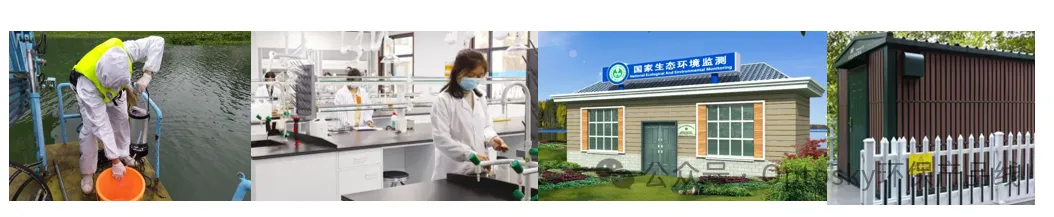
Industry difficulties
Optosky Breaks Tradition “A Beam of Light” Innovating a New Model for Water Environment Monitoring”
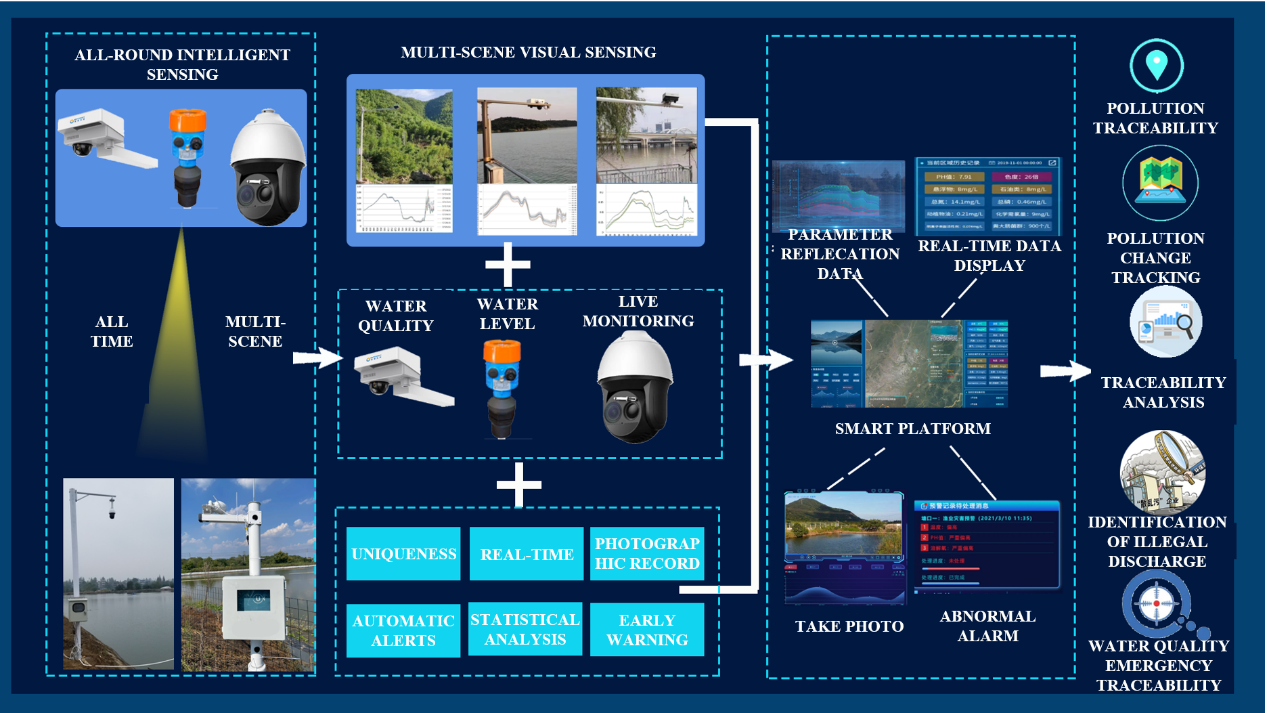
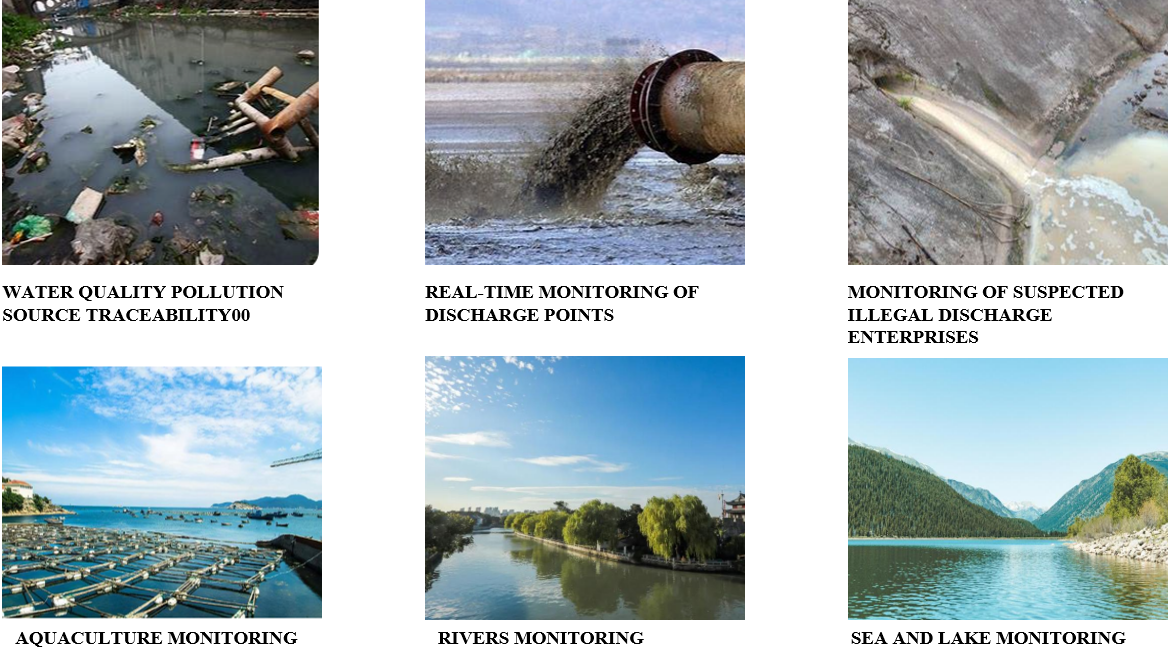
To overcome the limitations of traditional water quality monitoring, Optosky has launched the ATE7000 Hyperspectral Remote Sensing Water Quality Multi-Parameter Real-Time Monitoring System. This solution is targeted at monitoring applications for rivers, lakes, oceans, and water sources. The ATE7000 integrates hyperspectral water quality monitoring, liquid level radar, and on-site video recording. It compensates for the limitations of traditional monitoring methods and works complementarily to achieve efficient, real-time, continuous, and pollution-free monitoring of water quality.
Optosky also participated in developing the industry standard "Guideline for Spectroscopy-Based Online Water Quality Monitoring Systems", which was published in 2020.
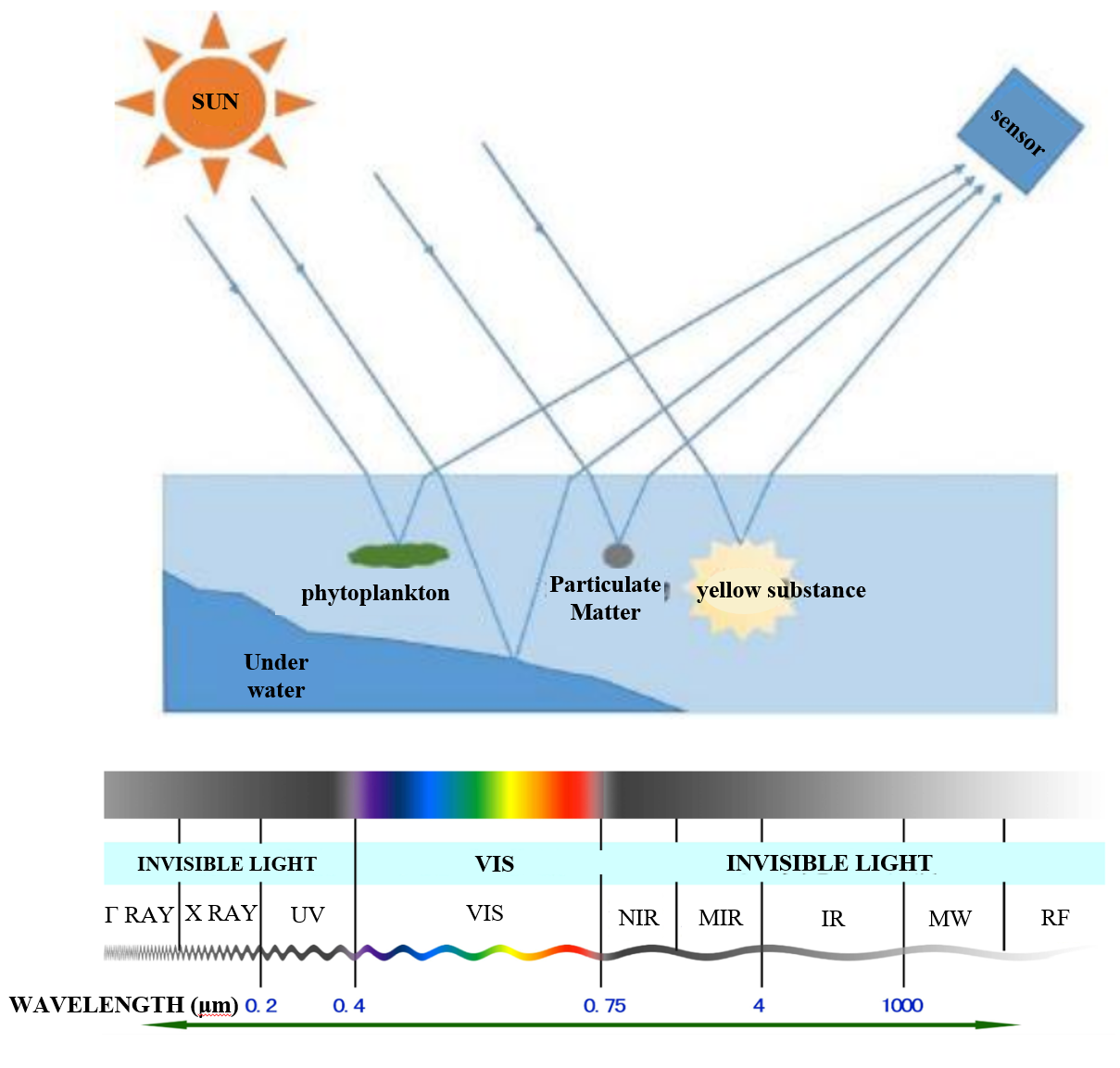
Hyperspectral Remote Sensing Principle
- Hyperspectral technology is applied to detect ground objects by measuring their reflection, transmission, absorption, and emission properties.
- Objects on the Earth's surface exhibit unique spectral characteristics due to differences in composition, internal structure, surface conditions, and spatiotemporal environments.
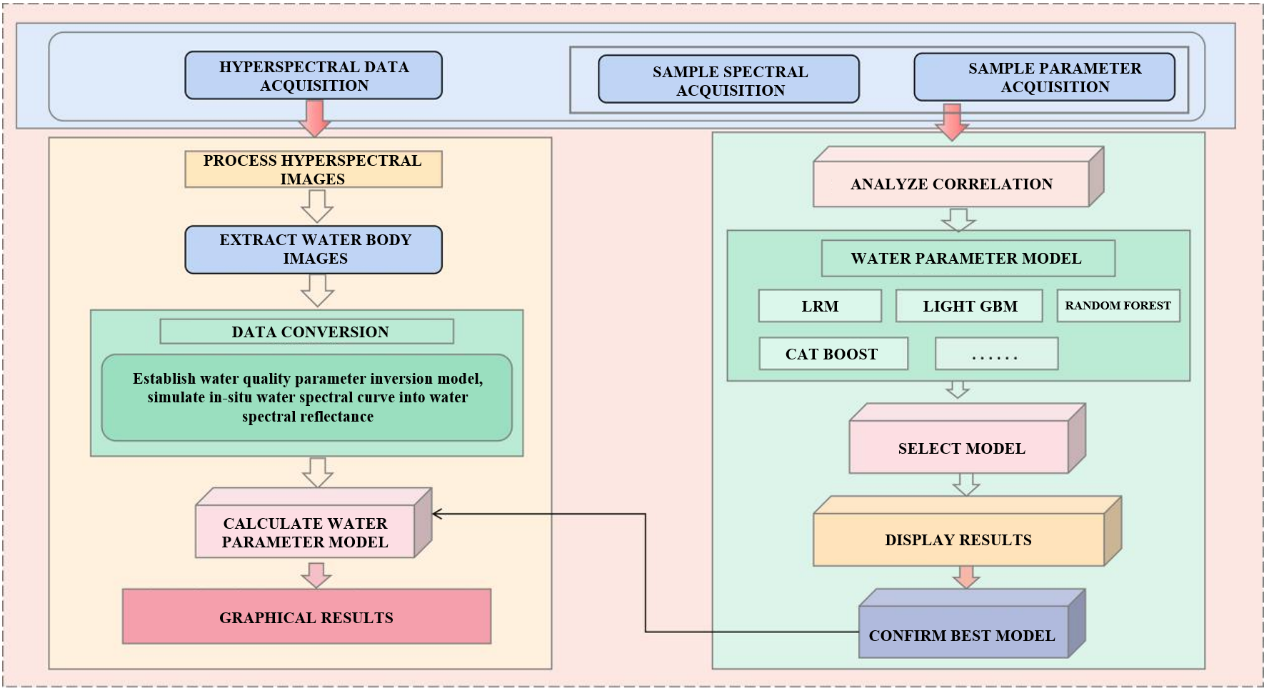
Hyperspectral Remote Sensing Algorithm Process
National Policy Supporting Hyperspectral Water Quality Monitoring Development
In the "14th Five-Year Marine Ecological Environment Protection Plan" of 2022, the Ministry of Ecology and Environment emphasized targeted pollution control focusing on coastal bays and estuaries. The plan supports implementing pollution source control measures across land and sea and improving the nearshore marine environment through coordinated governance.
In 2024, the Central Government issued a notice on "Accelerating the Establishment of a Modernized Ecological Environment Monitoring System," which highlights the importance of sensitive and accurate monitoring. The goal is to ensure high standards for data accuracy, timeliness, and comprehensiveness, promoting cross-media monitoring and multi-indicator monitoring stations. Additionally, the policy emphasizes developing rapid pollution screening, on-site detection, and complex indicator assessment methodologies.
Solution
The ATE7000 transmits monitoring data and on-site images to a cloud platform based on the “One River, One File” framework, enabling real-time multi-point information collection. Threshold alarms can be set for each point, allowing historical data reviews and global trend analysis. The cloud platform can integrate various water quality monitoring instruments within the user’s jurisdiction to achieve extensive, long-term, and comprehensive water environment monitoring and analysis. It also supports remote experiments via the internet, makes the testing of the project easier.
Product Recommendation
The ATE7000 Hyperspectral Water Quality Monitoring System is designed for monitoring applications in rivers, lakes, oceans, and water sources. This real-time, online remote sensing product uses internationally advanced hyperspectral water quality remote sensing technology. It incorporates a high-performance hyperspectral analyzer developed by Optosky in partnership with the Chinese Academy of Sciences, supported by significant investment and extensive water sample experimentation. The ATE7000 provides real-time multi-parameter water quality and liquid level data and issues alerts in case of anomalies, capturing visible light videos and images.
Advantages
1. Zero footprint – only requires a single pole with no ground occupancy, cost-effective, easy to install, and simple to maintain.
2. On-site measurement – non-contact measurement under natural conditions without sampling, eliminating reagent consumption and secondary pollution.
3. Fast measurements, extensive parameters, and automatic upgrades – enables rapid multi-parameter analysis in seconds, covering up to 20 water quality parameters. Integration with the cloud platform ensures continuous model improvement through deep learning optimization.
4. Integrated equipment operation – establishes a comprehensive monitoring network across an entire basin via the cloud platform, enhancing monitoring capability and supporting decision-making for water pollution control.
Features
1. Supports multiple water quality indicators, such as chlorophyll, total nitrogen, total phosphorus, and transparency.
2. Spectral Band: 400-1000 nm
3. Spectral Resolution: 1 nm
4. Water Quality Accuracy Deviation: < 20%
5. Monitoring Speed: Seconds
6. Monitoring Height: 8 meters
7. Water Level Monitoring: 80 GHz radar with accuracy within 5 mm
8. Millimeter wave radar water level accuracy error: less than 5mm
9. Weather-Resistant: unaffected by wind, rain, fog, and high temperatures
10. Video Output: Up to 2560x1440 @ 30fps HD
Installation Method of ATE7000
The ATE7000 should be installed in an open, unobstructed area near the shore using a monitoring pole. Ideal installation conditions include:
- Located directly above the monitored water body, with deep water and no visible bottom.
- Positioned horizontally without shadow interference.
- Open terrain, ample light, no light-blocking objects, and no shoreline reflections on the water surface.
Application Scenarios
Application Scenario—Fluorescence Technology New Application
Hyperspectral Paddy Weed Identification Solution
Related Article

Discover Optosky’s air–ground collaborative hyperspectral solution for mine ecological restoration monitoring. Combining UAV hyperspectral imaging, fixed-point rotating-scan systems, and field spectroradiometers, it supports vegetation, soil, mineral alteration, and water environment monitoring for green mine evaluation and restoration acceptance.
Applications | Hyperspectral Mine Restoration Monitoring
Compare single InGaAs and CMOS+InGaAs detector architectures in hyperspectral imaging. Learn why both can cover 400–1700 nm, how visible-light-extended InGaAs works, and the trade-offs in calibration, spectral registration, and system integration for applications in agriculture, food safety, and industrial inspection.
Technology | Single InGaAs vs. CMOS+InGaAs in Hyperspectral Imaging
Discover how hyperspectral imaging combined with multi-feature fusion (PCA + 2DCOS + CARS) enables non-destructive three-level grading of chili pepper sunburn with 97.2% accuracy. Learn about the ATH3000 system and Optosky's customized solutions for horticultural crop quality inspection and damage classification.
Can Sunburned Chili Peppers Be Non-Destructively Graded? Hyperspectral Imaging ATH3000 Offers a New Answer
Discover the Optosky ATH9600 multi-lens UAV-borne multispectral imaging system—featuring 67° ultra-wide FOV, synchronous snapshot, 3.75 μm large pixel, and native DJI X-Port integration. Ideal for large-area farmland monitoring, orchard management, pest early warning, water quality inversion, and complex crop classification. Born for efficient, all-weather low-altitude remote sensing.
Born for Large-Area Remote Sensing! Optosky Releases the ATH9600 Multi-Lens UAV-Borne Multispectral Imaging System