
Soil Pollution Monitoring Based on UAV Hyperspectral Imaging
author: Callum
2024-08-29
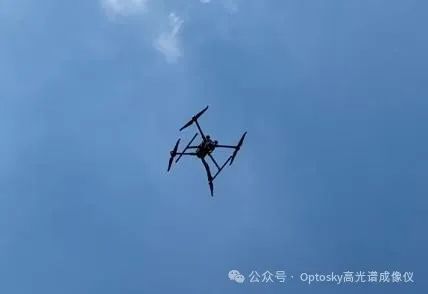
The Earth contains a variety of elements and their compounds, each displaying unique spectral characteristics due to differences in their composition, structure, and arrangement. Each element and compound produces distinct absorption and reflection properties within specific wavelength ranges, forming their "spectral fingerprints." Hyperspectral remote sensing technology leverages these spectral features to identify surface objects by analyzing the shape of spectral curves. This technology uses imaging spectrometers to capture radiative information of the surface across dozens or even hundreds of continuous spectral bands. This approach not only provides spatial images of the surface but also generates continuous spectral curves containing diagnostic spectral features for each pixel. In other words, hyperspectral remote sensing technology can identify surface materials such as soil, vegetation, or water, and delve into the internal composition and properties of these materials. For instance, when scanning the surface, this technology can not only identify the covered area of soil but also analyze its components, such as moisture content, organic matter content, or heavy metal pollution.
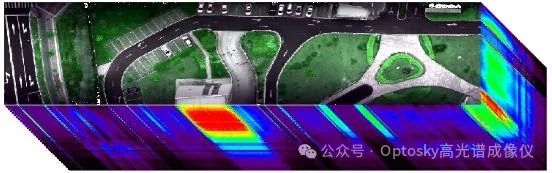
Using UAV-based hyperspectral imaging technology to acquire the spectral response characteristics of soil heavy metals, and combining these with measured soil heavy metal values, a model for inverting soil heavy metal content is constructed. This model is used to explore the distribution of soil heavy metal content within the study area. Compared to traditional soil heavy metal monitoring methods, this approach enables real-time and rapid monitoring of soil heavy metal pollution, achieving quick surveys of soil conditions over large areas.
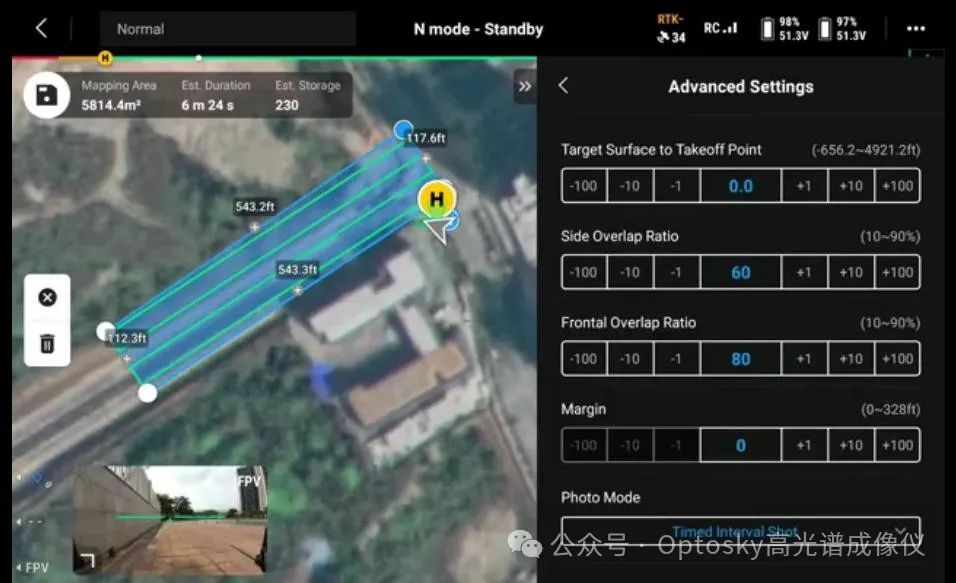
In this study, Optosky ATH9010 was used to collect hyperspectral data. Field sampling provided 30 soil samples from the plow layer. Adaptive reweighted sampling techniques were employed to select wavelengths with large absolute values of regression coefficients in the Partial Least Squares (PLS) model and to remove wavelengths with smaller weights. Based on the filtered results, inversion models were established using methods such as MLPR, SVM, and RF, and model accuracy was evaluated. The inversion results were used to assess the heavy metal pollution in the study area.
Fluorescence Spectroscopy Unveils Carbon Cycle Changes
Ore Sorting Based on Hyperspectral Imaging Principles
Related Article

Discover Optosky’s air–ground collaborative hyperspectral solution for mine ecological restoration monitoring. Combining UAV hyperspectral imaging, fixed-point rotating-scan systems, and field spectroradiometers, it supports vegetation, soil, mineral alteration, and water environment monitoring for green mine evaluation and restoration acceptance.
Applications | Hyperspectral Mine Restoration Monitoring
Compare single InGaAs and CMOS+InGaAs detector architectures in hyperspectral imaging. Learn why both can cover 400–1700 nm, how visible-light-extended InGaAs works, and the trade-offs in calibration, spectral registration, and system integration for applications in agriculture, food safety, and industrial inspection.
Technology | Single InGaAs vs. CMOS+InGaAs in Hyperspectral Imaging
Discover how hyperspectral imaging combined with multi-feature fusion (PCA + 2DCOS + CARS) enables non-destructive three-level grading of chili pepper sunburn with 97.2% accuracy. Learn about the ATH3000 system and Optosky's customized solutions for horticultural crop quality inspection and damage classification.
Can Sunburned Chili Peppers Be Non-Destructively Graded? Hyperspectral Imaging ATH3000 Offers a New Answer
Discover the Optosky ATH9600 multi-lens UAV-borne multispectral imaging system—featuring 67° ultra-wide FOV, synchronous snapshot, 3.75 μm large pixel, and native DJI X-Port integration. Ideal for large-area farmland monitoring, orchard management, pest early warning, water quality inversion, and complex crop classification. Born for efficient, all-weather low-altitude remote sensing.
Born for Large-Area Remote Sensing! Optosky Releases the ATH9600 Multi-Lens UAV-Borne Multispectral Imaging System